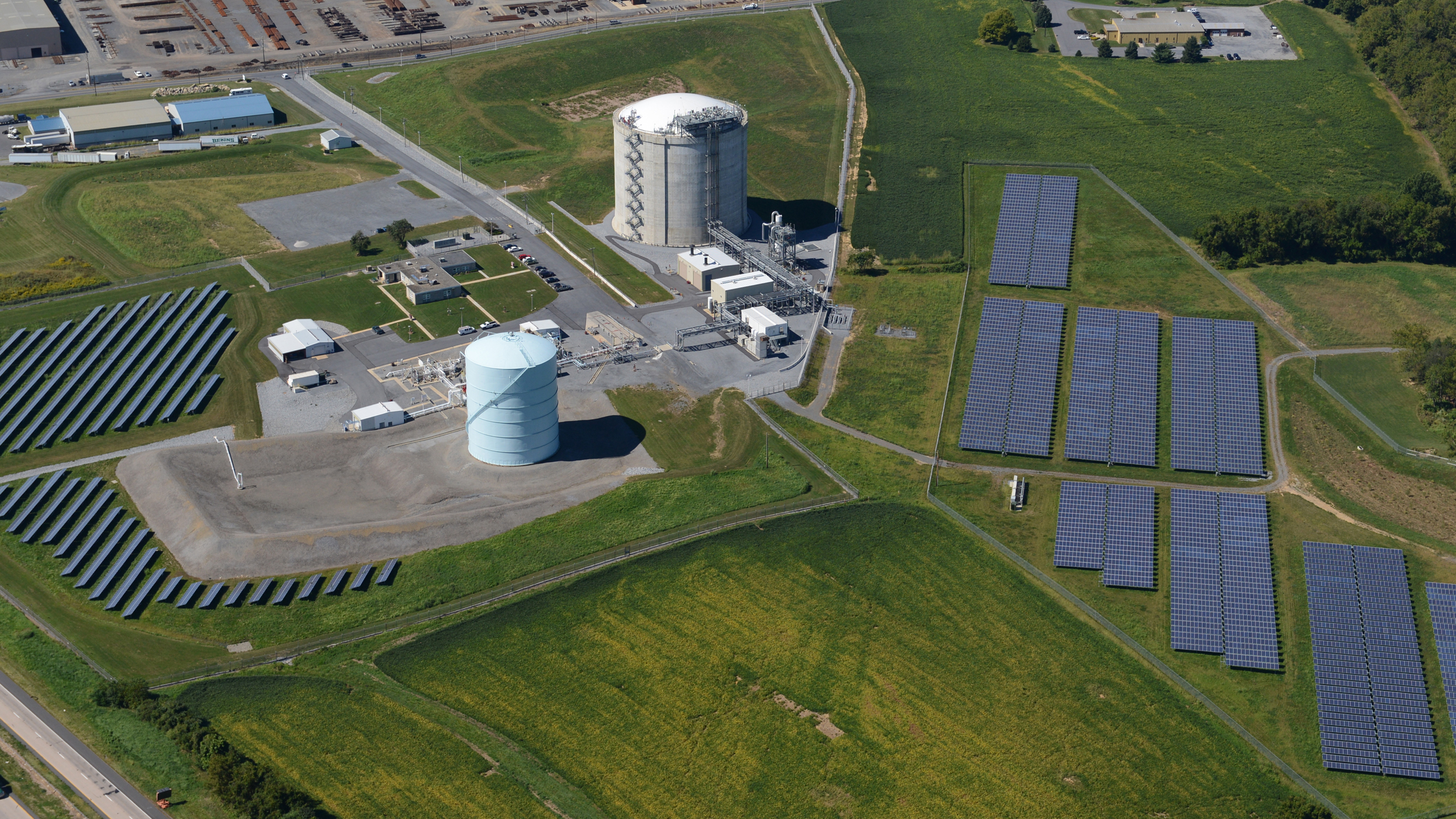


Pennsylvania was a pioneer on renewable energy before the fracking boom upended that trajectory, and environmental advocates think it’s past time for state leaders to once again prioritize clean forms of power.
The nonprofit PennFuture outlined ways for Pennsylvania to do so in a new report, accusing the state’s legislature of “policy inertia” for failing to pass bills that would increase adoption and reduce the cost of energy for consumers.
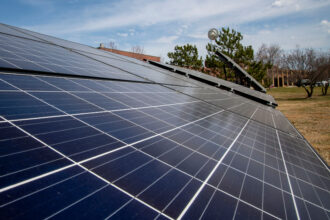
The advocacy group said a majority of state lawmakers favor a policy of “more gas now” rather than enabling the development of increasingly cheap renewable energy and battery storage that would cut climate pollution. Among the measures that PennFuture suggested legislators support: allowing community solar, a way for renters and others who can’t install their own panels to tap into local solar arrays.
“Thoughtful solar policies can also facilitate development of PV [photovoltaic] panels on the countless rooftops of warehouses and distribution centers that populate the landscape,” the report said.
The report called on lawmakers to increase the share of renewable energy required by the state’s Alternative Energy Portfolio Standards, which currently mandate that some 18 percent of the electricity utilities distribute come from renewable sources. Neighboring New Jersey, by contrast, required utilities to source double that share last year and 50 percent by 2030.
David Hess, a former secretary of the state’s Department of Environmental Protection, said the Pennsylvania House, which has a slim Democratic majority, has passed many bills that would enable programs such as community solar, warehouse solar and expanding energy-efficiency programs at utilities.
But the bills have not become law because of opposition from the Republican majority in the state Senate, he said.
“Senate Republicans are using the same talking points they’ve been given by the natural gas industry for the last 15 years to lock us into a ‘one-of-the-above’ energy strategy — natural gas — and the price spikes and instability that comes from a market tied to LNG exports and international markets,” Hess wrote in an email.
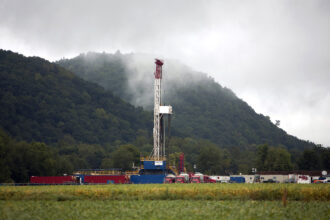
Some 60 percent of Pennsylvania’s electricity is generated by gas. The state has a large supply, but over-reliance on one source does not promote stable electricity prices and ignores renewables that are cheaper than natural gas, Hess said.
Stephanie Catarino Wissman, executive director of the American Petroleum Institute Pennsylvania, said the report failed to consider all possible energy sources. “Pennsylvania needs an all-of-the-above strategy, including its abundant natural gas resources, along with permitting reform that allows us to build the infrastructure every energy source depends on. Natural gas will remain critical to delivering reliable, affordable energy while supporting continued emissions reductions,” she said.
Gas, when burned, is less polluting than coal. But it still contributes to the climate pollution that’s worsening costly, dangerous extreme weather in the state.
Republican Sen. Gene Yaw, who as chair of the environmental resources and energy committee has outsized power over the fate of renewables legislation, did not respond to a request for comment.
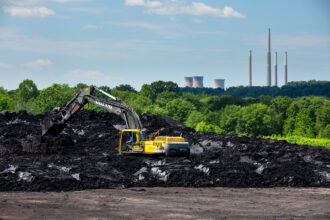
The PennFuture report also called for deploying energy-storage projects more rapidly, incentivizing solar development on industrial brownfield sites and developing solar fields on Pennsylvania’s many shuttered coal mine sites and former coal-fired power stations.
The alternative to boosting natural gas is to create a “new energy economy powered by clean energy, energy efficiency strategies and decarbonization technology,” the report said. “Pennsylvania can shake free its over-reliance on fossil fuels, do right by coal communities left behind, and lead the nation in innovation and clean energy.”
This story is funded by readers like you.
Our nonprofit newsroom provides award-winning climate coverage free of charge and advertising. We rely on donations from readers like you to keep going. Please donate now to support our work.
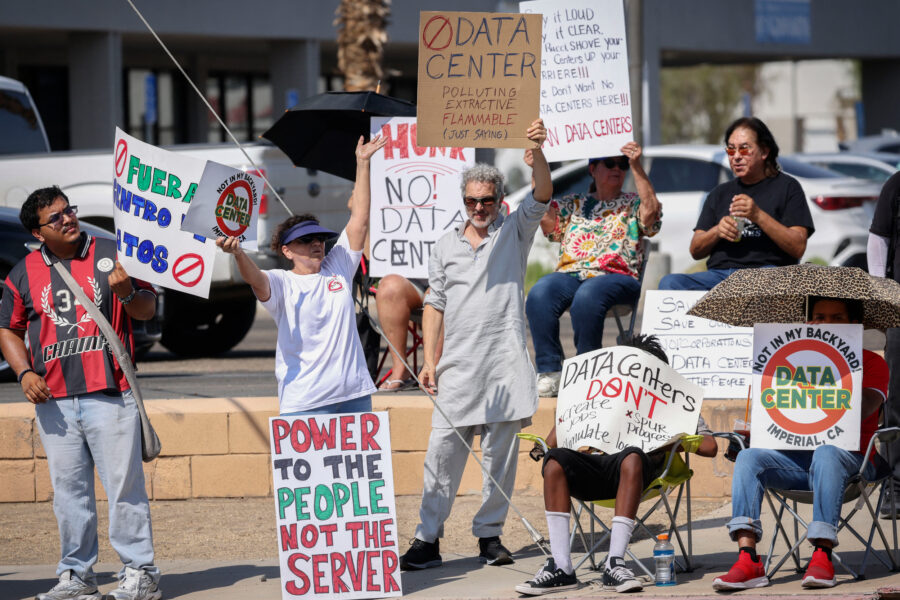
Donate NowData centers—more than 50 of which are planned for Pennsylvania—are driving big new demand for electricity, much of which may end up generated by natural gas. Residential electric rates in the state have risen by around 12 percent in the last year in anticipation of the new demand and the high costs of upgraded transmission.
Last week, Pennsylvania Gov. Josh Shapiro, a Democrat, issued an executive order directing data center developers to provide their own power and pay the full cost of transmission upgrades without shifting costs to ratepayers. The order, issued after growing community opposition to data center plans across the state, also requires the centers to buy an increasing amount of their power from renewable sources, including solar, advanced nuclear and battery storage, rising to 32 percent by 2035.
Donna Kohut, author of the PennFuture report, said Shapiro’s order for increasing renewable use was a step in the right direction but is no guarantee that the legislature will follow with measures that mandate greater use of renewables.
“Now that we’ve got this bit of momentum from the governor, it’s up to the state legislature to move forward,” she said in an interview.
David Masur, executive director of the nonprofit PennEnvironment, welcomed the report’s policy prescriptions.
“It’s been clear for a long time that the question isn’t one of technological capability or effectiveness of the policies but whether our elected officials have the political will and the intestinal fortitude to implement these much-needed energy policies,” Masur wrote in an email. “It’s time we take the policy steps necessary to move our energy systems out of the 19th century and into … the 21st century.”
Pennsylvania, he said, ranked 47th in the nation for renewable energy growth in the last 10 years.
“Red and blue states alike are rapidly pivoting to more renewable energy and stronger renewable-energy policies to stimulate that growth,” Masur said.
About This Story
Perhaps you noticed: This story, like all the news we publish, is free to read. That’s because Inside Climate News is a 501c3 nonprofit organization. We do not charge a subscription fee, lock our news behind a paywall, or clutter our website with ads. We make our news on climate and the environment freely available to you and anyone who wants it.
That’s not all. We also share our news for free with scores of other media organizations around the country. Many of them can’t afford to do environmental journalism of their own. We’ve built bureaus from coast to coast to report local stories, collaborate with local newsrooms and co-publish articles so that this vital work is shared as widely as possible.
Two of us launched ICN in 2007. Six years later we earned a Pulitzer Prize for National Reporting, and now we run the oldest and largest dedicated climate newsroom in the nation. We tell the story in all its complexity. We hold polluters accountable. We expose environmental injustice. We debunk misinformation. We scrutinize solutions and inspire action.
Donations from readers like you fund every aspect of what we do. If you don’t already, will you support our ongoing work, our reporting on the biggest crisis facing our planet, and help us reach even more readers in more places?
Please take a moment to make a tax-deductible donation. Every one of them makes a difference.
Thank you,