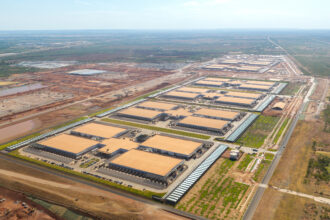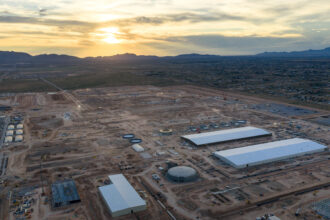
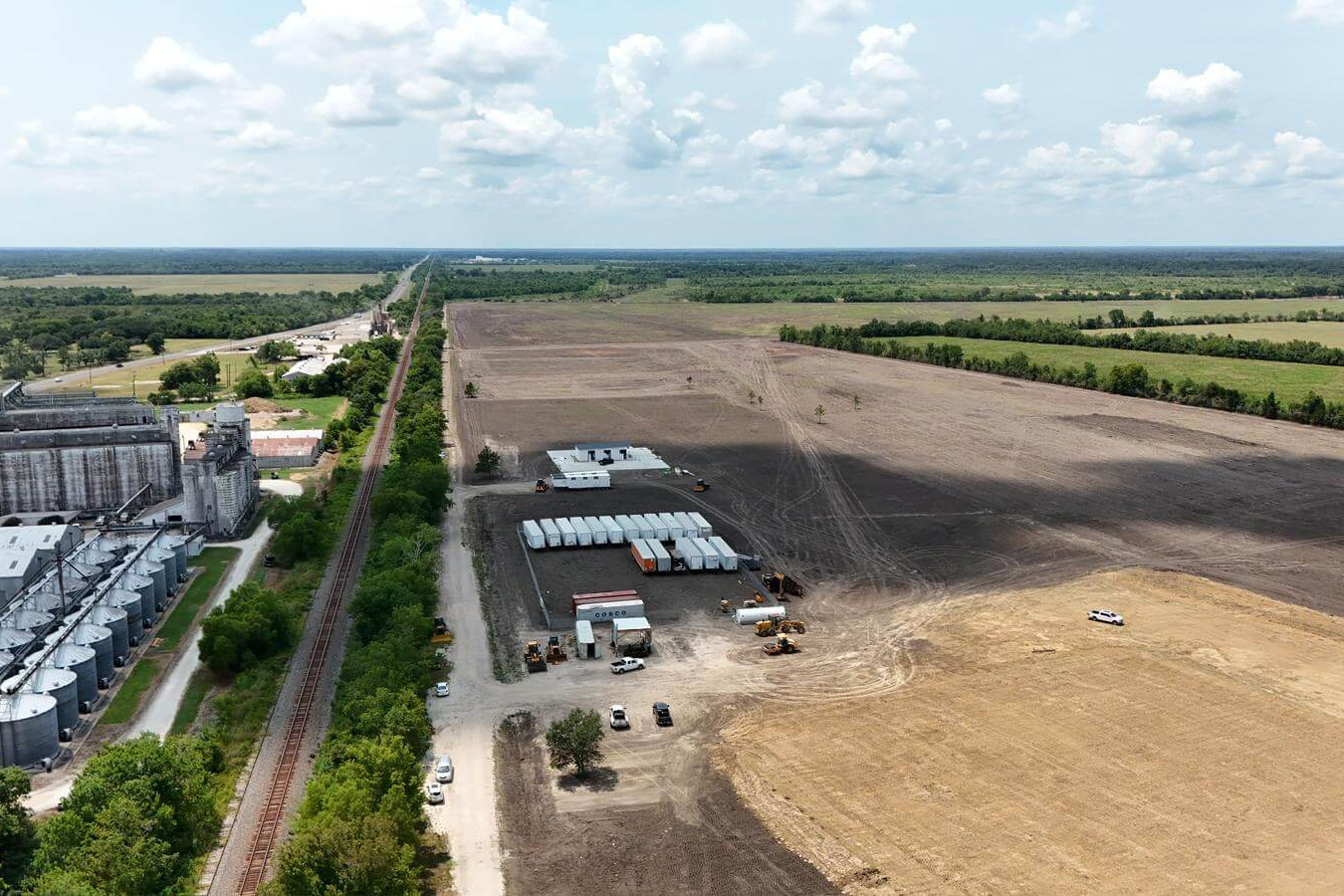


When BaRupOn LLC, a California-based developer, bought land in East Texas for a 700-acre industrial campus in 2023, the company received a warm welcome from the state. The developer set out to build numerous data centers and rare-earth manufacturing facilities at the site, as well as its own power plants.
At first, Gov. Greg Abbott’s office worked closely with BaRupOn, said Balaji Tammabattula, the chief operating officer.
The governor’s office staff would recommend site locations for future projects and which county officials they should get in touch with, Tammabattula said. Developers were encouraged to seek out incentives and tax breaks. The governor’s office, which was just a phone call away, even gave the planned industrial campus, in Liberty, Texas, the codename of “Project Tough,” Tammabattula said.
“Texas used to be the best place,” he said. “Fast forward to 2026, it’s impossible to have [the governor’s office] respond to our emails.”
The climate around data centers has soured so severely that new developments in Texas are essentially on pause until after November’s elections. The land, energy and water usage of the large warehouses filled with server racks have elicited strong protest across the country—even becoming a bipartisan issue among midterm election candidates, including in Texas.
Abbott has gone against his typical business-first approach and led some companies to rethink their major data center investments in Texas, analysts and developers said. Those seeking to keep their spot in the lengthy line for grid power are laboring to not only secure state permits but social permission from communities across the state.
The data center industry flocked to invest billions of dollars in the state to quickly construct the physical infrastructure required for tech companies to develop the most mature artificial intelligence and other advanced technologies. The developers, many of whom were new to the industry, saw a state not only open to doing business but a grid committed to connecting projects to power faster than anywhere else. Texas became the epicenter of A.I. development as Abbott willed last year. But that tune changed fast.
The state has long been seen as the best place for business development in the country, with its previously unfussy regulatory environment. It’s a reputation that’s carried throughout Abbott’s 11 years in office. Yet that’s changed amid the staunch opposition data centers have ignited and a race which could result in a Democrat representing Texas in the U.S. Senate for the first time in more than 30 years. And there’s another unanticipated outcome for Abbott: his own unusually tight race for reelection against Democratic state Rep. Gina Hinojosa from Austin.
Andrew Mahaleris, Abbott’s press secretary, said Abbott has taken decisive action to set clear guardrails to protect Texans against intrusive data center development.

In August, he ordered the state’s utilities regulator, the Public Utility Commission, and its grid operator, the Electric Reliability Council of Texas, to audit how much power and water every data center project being developed would consume. In September, he ordered the Texas Water Development Board to enforce water-use reporting requirements on data center projects.
“Data centers must pay their own way, protect our grid and water, and complete the ERCOT and TWDB audits,” Mahaleris said in a statement to Inside Climate News. “Until they do, no state agency will issue related permits, and any project that fails those standards will be denied.”
Abbott’s audit and directive to pause all environmental permits is on top of new regulations and planning processes implemented after the last legislative session, which seek to verify the validity of the massive amounts of data center projects trying to connect to the grid.
Six months ago, the industry in Texas was most concerned about how fast their projects could get interconnected to the grid, said Olivier Beaufils, a head researcher at Aurora Energy Research. Now, the industry is nervous, Beaufils said, because there’s more political uncertainty than there was earlier this year, when developers were solely dealing with the wave of new rules.
“Political backlash and political risk was sort of a remote risk that people weren’t considering as their core problem they had to deal with,” Beaufils said. “That has shifted very rapidly.”
There’s anguish within the industry over whether the political issues they’re facing today will subside after the midterms are over, or whether they will multiply during the legislative session in January, Beaufils said.
“I think there’s a recognition that this is not a risk that is going to disappear in November,” Beaufils said. “This is something they’re going to have to engage with over the next six months until there’s a bit more clarity.”
After Diode Ventures, a data center developer, withdrew its plans for a data center near a residential community in Henderson County as a result of Abbott’s directives and community pushback about its water usage, Abbott celebrated the company’s decision.
“Data centers that want to do business in Texas must meet a clear standard. This project did not,” Abbott said in a July statement. “Diode did the right thing by withdrawing their project. If other data center developments refuse to meet these standards, I expect them to do the same.”
This story is funded by readers like you.
Our nonprofit newsroom provides award-winning climate coverage free of charge and advertising. We rely on donations from readers like you to keep going. Please donate now to support our work.
Donate NowBeaufils said he expects to see more projects withdrawn as there’s more community opposition.
Abbott stated that he plans to seek legislation to require large data centers to annually report electricity and water usage data to the PUC and repeal any sales tax exemptions or other outdated or unnecessary incentives for the facilities.
Despite environmental and community groups, and many Democrats, seeing eye-to-eye with much of what amounts to Abbott’s data center moratorium, there’s skepticism among them about whether the directives, like reusing water and data centers bringing their own power, will become legislation that Abbott will sign once the midterms have passed. There’s also widespread skepticism among them about the timing of Abbott’s audit.
Texans understand Gov. Abbott rolled out the red carpet for data centers with some of the largest tax breaks in the country, said Jacob Long, a spokesman for Texas Democrats, in a statement.
“Greg Abbott is desperately trying to rewrite his own record, but Texans will not be fooled by his election year flip flops,” Long said. “Data centers will get every green light under the sun if Greg Abbott gets four more years.”
Tammabattula said the wider industry acknowledges the political moment the governor is in and expects that if Abbott is reelected, the new rules outlined in his directives would eventually be relaxed. “But it’s not going to be the same,” Tammabattula said. “It won’t be the same Texas anymore—where Texas is the best place and easy to do business for data centers—I don’t think so.”
Industry Forced To Ask Permission
For a long time, the data center industry, which built server closets in office basements and supported early web services, like online banking, flew under the radar of the general public. Now, the opposite is true as tech companies race to develop AI systems that require massive data centers that sprawl across large tracts of land.
“They say that all publicity is good publicity, but that’s really only true when engagement is the bottom line,” Matt Richesin, an analyst for S&P Global Energy Horizon’s 451 Research, said at a webinar on artificial intelligence infrastructure earlier this month. “For the data center industry, at least the developmental arm of it,” engagement has now become a battleground with both political parties in Texas vowing strong opposition.
Ongoing concerns in Texas about electricity and water use, air quality and further community impact has driven interest in more data center regulation both on the state level and within local communities, said Lilli Flynn, a senior analyst at DC Byte, a data center market intelligence firm.
That’s as data center capacity has tripled between 2020 and 2025 across the U.S., said Tony Lenoir, the market research firm’s associate director of data centers and energy. It’s expected to grow the same share, three times larger, by 2030.
Yet about two-thirds of the data center projects the research firm is tracking across the country are at risk from community pushback or pending legislation, said Dan Thompson, research director of data center services and infrastructure at 451 Research.
The opposition data centers have garnered in the last year is much stronger than garden variety “not in my backyard” syndrome, in which people agree a development has merit, as long as it’s not too close to where they live, Richesin said. Now, people want developers to build no data centers anywhere, near anyone, or anything. The opposition, Richesin said, is “a bit more extreme and straightforward.”
The industry traditionally approaches early-stage planning by following a decide, announce, then defend, process. “That’s probably not going to work well now with the opposition the way that it is,” Richesin said.
Developers can no longer count on overcoming communities’ opposition, Richesin said. No matter what developers say, there are likely some communities that just don’t want data centers anywhere near them. “There’s not a whole lot that’s going to be able to be done,” Richesin said.
The industry is learning that it needs new engagement strategies in this era of near-total opposition if it is going to achieve its growth objectives in Texas, and across the country, Beaufils said. “I think we’re seeing a change in behavior there, right?”
In 2023 and 2024, BaRupOn didn’t do any community events, Tammabattula said. In 2025, they did two. And so far in 2026, they’ve done eight. Tammabattula said his colleagues now dread working community-outreach events, as nearby residents have hard-set views against data centers.
When it comes to their East Texas campus, Tammabattula said that communication with residents has tended to feel like a one-way conversation. “That’s an unfortunate thing where they are so angry they don’t want to even engage into any kind of dialogue,” Tammabattula said.
Even though these town hall events result in heated discussions, Tammabattula said they still have to be done in the hope that some new understanding can emerge.
When BaRupOn began looking to develop a new project in Gillette, Wyoming, given the opposition it faced in Texas, they met with all the neighbors. For a prospective facility in North Dakota, BaRupOn is planning to make the landowners small equity owners of the project. Involving the community ahead of purchasing land has become a new best practice to avoid pushback down the road, he said.
Since the pause of environmental permits in Texas, Tammabattula said his firm has redirected its priority to developing sites outside the state.
But Beautfils said that only so many developers will seek to move to states with more available space, lower land costs and more supportive legislatures. Because while states like Wyoming, North Dakota and New Mexico may now be offering developers faster scenarios, they are all limited in how many huge hyperscale data centers they can handle, and offer a less-developed grid than Texas.
“If there is too much crowding in one given area, then we’ll probably see the same problem emerge again,” Beaufils said.
At Aurora Energy Research, more than half of the 277 gigawatts of project capacity the research firm is tracking across the country—most of it in Texas—is from companies that have never developed a data center before. Only 81 gigawatts were being developed by what the researchers called proven operators—companies like Meta, Beaufils said, that had developed data centers before.
Some 145 gigawatts of capacity, which have submitted interconnection requests and have the land or permits necessary to advance, are newcomers, and have no operational capacity, Beaufils said. The more than 400-gigawatt pipeline in Texas is full of speculative projects, he said. It’s clearly vastly more than what the industry is capable of building and paying for, Beaufils added.
“They’re coming into this business as it looks attractive and juicy,” Beaufils said. “As it becomes more difficult, I would expect a number of these projects to just disappear.”
About This Story
Perhaps you noticed: This story, like all the news we publish, is free to read. That’s because Inside Climate News is a 501c3 nonprofit organization. We do not charge a subscription fee, lock our news behind a paywall, or clutter our website with ads. We make our news on climate and the environment freely available to you and anyone who wants it.
That’s not all. We also share our news for free with scores of other media organizations around the country. Many of them can’t afford to do environmental journalism of their own. We’ve built bureaus from coast to coast to report local stories, collaborate with local newsrooms and co-publish articles so that this vital work is shared as widely as possible.
Two of us launched ICN in 2007. Six years later we earned a Pulitzer Prize for National Reporting, and now we run the oldest and largest dedicated climate newsroom in the nation. We tell the story in all its complexity. We hold polluters accountable. We expose environmental injustice. We debunk misinformation. We scrutinize solutions and inspire action.
Donations from readers like you fund every aspect of what we do. If you don’t already, will you support our ongoing work, our reporting on the biggest crisis facing our planet, and help us reach even more readers in more places?
Please take a moment to make a tax-deductible donation. Every one of them makes a difference.
Thank you,

Arcelia Martin
Reporter, Texas Renewables
Arcelia Martin is an award-winning journalist at Inside Climate News. She covers renewable energy in Texas from her base in Dallas. Before joining ICN in 2025, Arcelia was a staff writer at The Dallas Morning News and at The Tennessean. Originally from San Diego, California, she’s a graduate of Gonzaga University and Columbia University Graduate School of Journalism.