


Environmentalists worldwide are celebrating the re-election of Brazilian President Luiz Inácio Lula da Silva as a win for the Amazon’s future and global climate policy.
The three-term incumbent narrowly defeated right-wing Senator Flávio Bolsonaro, who climate activists warned would have stripped away environmental policies and institutions protecting the world’s largest rainforest if elected.
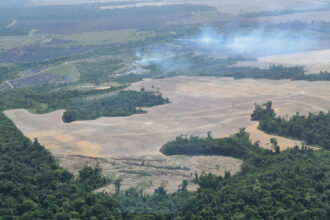
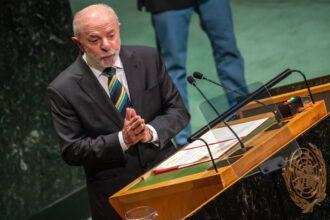
The victory gives Lula, who turns 81 on Tuesday, another four years to pursue his pledge to end deforestation by 2030 after the greatest slowdown in forest loss in years. Between August 2025 and March 2026, deforestation in the Brazilian Amazon fell by 36 percent from the previous year.
This comes as nearly one-fifth of the Amazon has already been deforested. Coupled with climate change, the forest is nearing an irreparable tipping point, scientists say, and tree loss could dry out the region and further accelerate climate change.
Carlos Nobre, a professor of climate and sustainability at the University of São Paulo, said preventing the irreversible transformation of vast areas of the Amazon is still possible, but time is running out.
“The reduction in deforestation over recent years has been crucial, but much more needs to be done,” Nobre said in a statement. “The next four years will be decisive for the future of the world’s largest tropical rainforest and for climate stability in Brazil and around the world.”
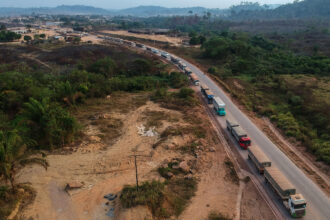
Despite these warnings, governments across the Amazon, including Lula’s administration, continue to expand oil drilling, mining and industrial agriculture. It’s impacted local communities and environmental defenders.
Lula’s re-election also preserves Brazil’s role in international climate diplomacy after hosting COP30 in Belém in 2025. The government has pledged to implement its Paris Agreement commitments and accelerate the transition away from fossil fuels.
In November 2025, Lula’s administration formally recognized 20 Indigenous territories covering more than 6 million acres, and gave the communities firmer legal grounds to protect the forests on their land from exploitation or seizure.
Climate activists have called for Lula to speed up the recognition of other Indigenous territories, pressure agriculture businesses to stop using illegally deforested land, better protect environmental defenders and cancel oil and road projects that threaten the progress his administration has made.
“The Lula administration has shown that progress is possible, but much more remains to be done,” said Brad Adams, executive director of Climate Rights International.
Lula’s victory doesn’t shield the country from other political challenges, said Maurício Voivodic, the executive director of World Wildlife Fund Brazil. Voters elected Bolsonaro’s far-right Liberal Party to the most seats in both chambers of National Congress.
The newly elected Congress poses a significant risk to the president’s environmental and social agenda, Voivodic said in a statement. An analysis by the Brazilian climate advocacy group Observatorio do Clima found that nearly 70 percent of elected lawmakers have low or very low alignment with environmental protection policies.
“This increases the risk of rollbacks in environmental and social legislation, with consequences for forest protection and deforestation,” Voivodic said. “Continued vigilance and public mobilization will be essential to defending the progress achieved.”
Meanwhile, Sen. Bolsonaro is continuing the populist movement built by his father, former president Jair Bolsonaro, who is serving a 27-year prison sentence for plotting a coup after losing the 2022 election.
Academic researchers report that Jair Bolsonaro systematically dismantled environmental regulations to enable corporate exploitation of natural resources while targeting Indigenous and traditional peoples, non-governmental organizations, scientists and other environmental defenders across Brazil.
In 2019, the first year of Jair Bolsonaro’s presidency, Brazil’s deforestation numbers spiked to the highest levels since satellite data became available. With Lula’s re-election, Adams said, Brazil’s forests and the people defending them have dodged a bullet.
“Flávio Bolsonaro could have brought back his father’s disastrous policies, which devastated forests and put communities and defenders in danger,” Adams said in a statement. “But the forests and their defenders are still at risk, and Lula should now double down on efforts to protect them.”
About This Story
Perhaps you noticed: This story, like all the news we publish, is free to read. That’s because Inside Climate News is a 501c3 nonprofit organization. We do not charge a subscription fee, lock our news behind a paywall, or clutter our website with ads. We make our news on climate and the environment freely available to you and anyone who wants it.
That’s not all. We also share our news for free with scores of other media organizations around the country. Many of them can’t afford to do environmental journalism of their own. We’ve built bureaus from coast to coast to report local stories, collaborate with local newsrooms and co-publish articles so that this vital work is shared as widely as possible.
Two of us launched ICN in 2007. Six years later we earned a Pulitzer Prize for National Reporting, and now we run the oldest and largest dedicated climate newsroom in the nation. We tell the story in all its complexity. We hold polluters accountable. We expose environmental injustice. We debunk misinformation. We scrutinize solutions and inspire action.
Donations from readers like you fund every aspect of what we do. If you don’t already, will you support our ongoing work, our reporting on the biggest crisis facing our planet, and help us reach even more readers in more places?
Please take a moment to make a tax-deductible donation. Every one of them makes a difference.
Thank you,

Arcelia Martin
Reporter, Texas Renewables
Arcelia Martin is an award-winning journalist at Inside Climate News. She covers renewable energy in Texas from her base in Dallas. Before joining ICN in 2025, Arcelia was a staff writer at The Dallas Morning News and at The Tennessean. Originally from San Diego, California, she’s a graduate of Gonzaga University and Columbia University Graduate School of Journalism.