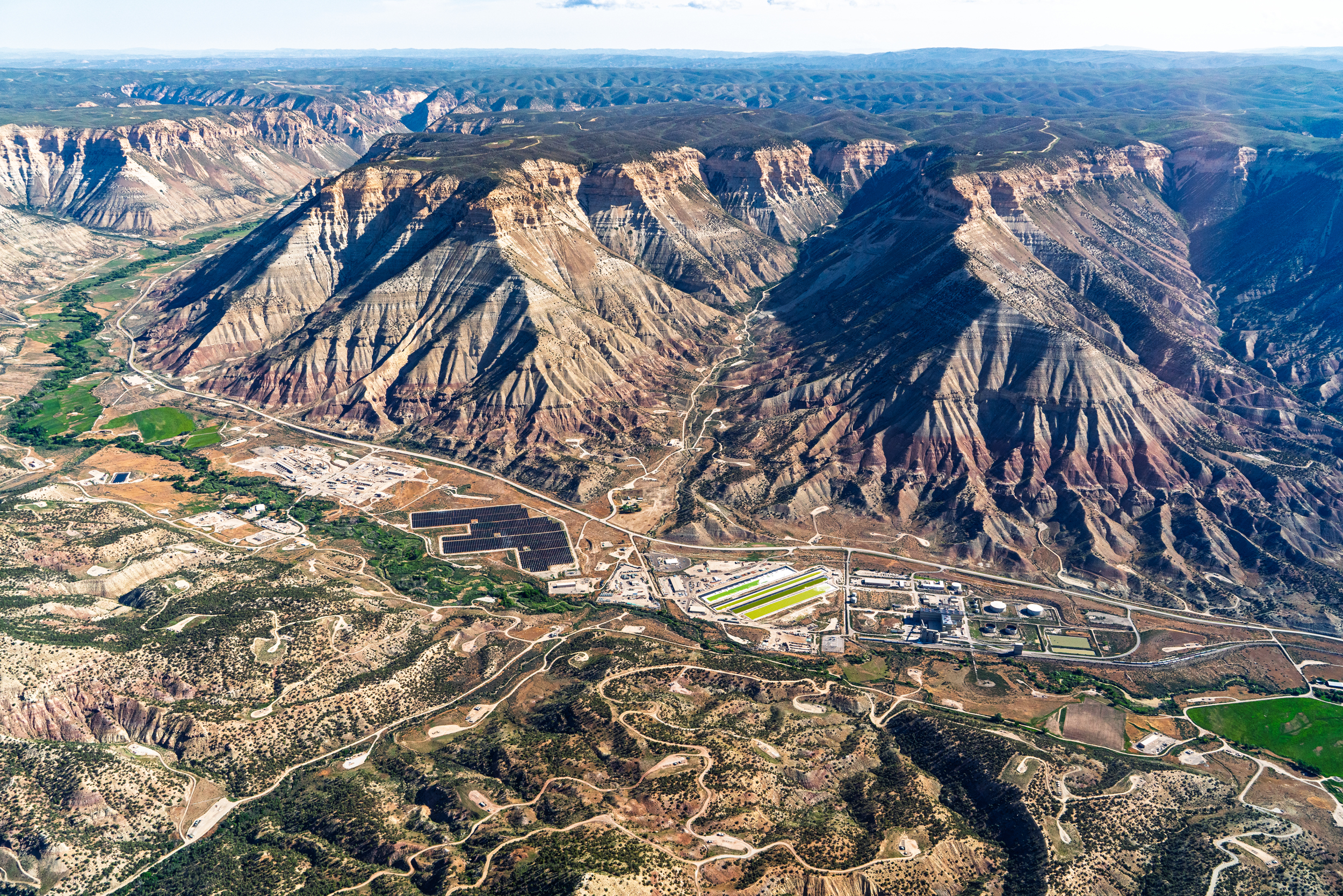


Almost a decade after a compromise between the Bureau of Land Management, conservationists and local governments safeguarded about 90 percent of the Roan Plateau in Western Colorado from gas drilling, those federal protections are being unraveled in the Trump administration’s push to open more public lands for resource extraction.
The Bureau of Land Management first proposed permits for oil and gas development on the plateau in 2007, spawning years of protests and lawsuits from environmental groups as well as hunters and anglers. In 2008, the BLM auctioned 55,186 acres of the iconic plateau for fossil fuel extraction, earning more than $114 million. At the time, it was the most revenue raised from a single lease sale in the contiguous United States.
But in 2012, a U.S. District Court judge in Denver ruled the agency hadn’t followed proper protocol in developing the leasing plan and ordered that it be updated after the BLM conducted additional analysis of air quality impacts and considered an alternate plan, the “Community Alternative.” After two more years of litigation, the plaintiffs and the BLM reached a settlement in 2014 that canceled all but two leases on top of the plateau.
Those protections are now in doubt. The second Trump administration’s push to increase resource extraction on public lands has reopened the possibility of development on lands that were previously protected. This December, the Bureau of Land Management will offer four parcels atop the Roan as part of the quarterly statewide lease sales mandated by 2025’s One Big Beautiful Bill Act.
For Coloradans, if the hard-won safeguards on the Roan aren’t durable, what is?
“There was such broad consensus on the ground in this local community to protect this very special place,” said Chris Winter, a natural resources and environmental lawyer who runs the University of Colorado Law School’s Getches-Wilkinson Center for Natural Resources, Energy, and the Environment. “And then the administration can come in and just override that local consensus. I think that should concern everybody across the West.”
But not everybody on and around the Roan Plateau is opposed to more drilling there.
“There’s nobody out here who lives out here who wants to ruin the land,” said Wade Haerle, Executive Director of Club 20, a Western Slope advocacy organization that promotes resource development as essential for area economies. “We have been in support of leasing it as soon as practical … and we firmly believe that hunting and fishing, and oil and gas, [are all appropriate uses of] public lands, and they can coexist together.”
East/West Divide
The Roan Plateau rises 3,500 feet above the Colorado River Valley between De Beque and Rifle on Colorado’s Western Slope. It sits atop the southern margin of the Piceance Basin, one of the most heavily drilled natural gas fields in the West; the federal land at the center of the fight covers some 73,600 acres.
The western top of the plateau is privately owned and already industrialized, pockmarked with gas pads linked by dusty doubletrack roads that branch across the mesa like dendrites. On this side, the Roan is scrub-oak brown near its base with scattered stands of aspen and fir toward its rim, where the beige pads and road cuts break up the green.
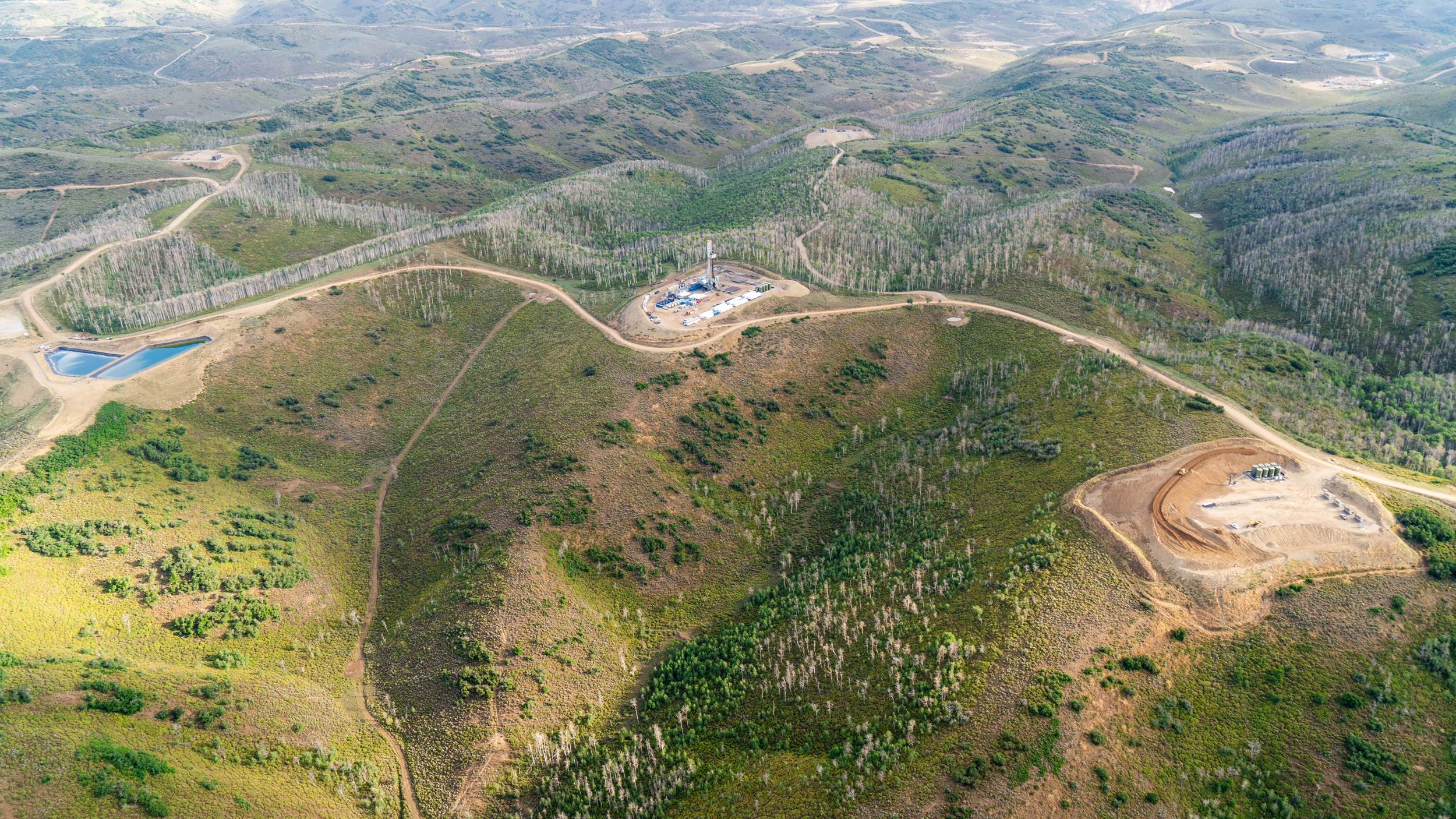
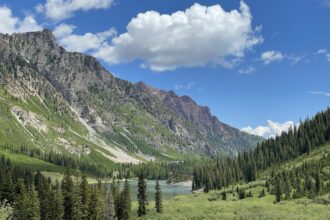
The public land just to the east stands in sharp contrast, with emerald-green alpine meadows, aspen and Douglas fir giving way to Gambel oak on the lower slopes.
Mule deer and elk browse on the trees as they migrate across the plateau. In the Roan’s deep folds run streams the state has designated as “Outstanding Waters,” among them East Fork Parachute Creek, where genetically pure Colorado River cutthroat trout spawn within the boundaries of the parcels now proposed for leasing.
Giving Industry Leverage on Public Lands
The One Big Beautiful Bill Act, passed in the summer of 2025, transformed the leasing of federal open space from a discretionary process in which agencies had more leeway to balance multiple uses for public lands into a mandatory proceeding that gives industry more sway. Now, lease sales are required quarterly in each of nine producing states, and once industry nominates a parcel that a management plan leaves open to leasing, land agencies no longer have the latitude to hold it back from a sale. Each quarterly sale must offer at least half of the available nominated parcels, and nominated land must be made available within 18 months. If a sale is canceled, delayed, or deferred, the BLM must hold a replacement sale in the same fiscal year.
The Department of Interior said the bill bars the BLM from adding restrictions beyond those already included in resource management plans.
So new leases on the Roan would carry the stipulations that are baked into the management plan written in 2016, such as requiring extraction techniques with a smaller surface footprint, limiting the timing of extraction operations to protect seasonal high-traffic migration windows and controlling surface use to place any potential development under strict conditions set by the BLM. However, the original stipulations cannot be revised, even as land managers and wildlife experts say the plan is already outdated and needs to incorporate updated science and more stakeholder input.
New science, including a 2017 study documenting the negative impacts of energy development on ungulates, cannot be incorporated into new stipulations. Neither can new protections requested by land managers, such as occupancy protections that allow companies to lease and extract minerals while prohibiting surface infrastructure. Colorado Parks and Wildlife requested similar protections at Tuttle Ranch in Moffat County during a June 2026 lease sale.”The BLM only offers leases that conform to local resource management plans,” an agency spokesperson told Inside Climate News in an email.
But that backward-looking test asks whether a plan drafted years ago permits leasing, not whether drilling the Roan is a sound idea today. Federal law doesn’t require regular updates to plans, some of which date back to the 1980s and 1990s, and rewriting them can take the better part of a decade.
A Broadly Celebrated Agreement Torn Apart
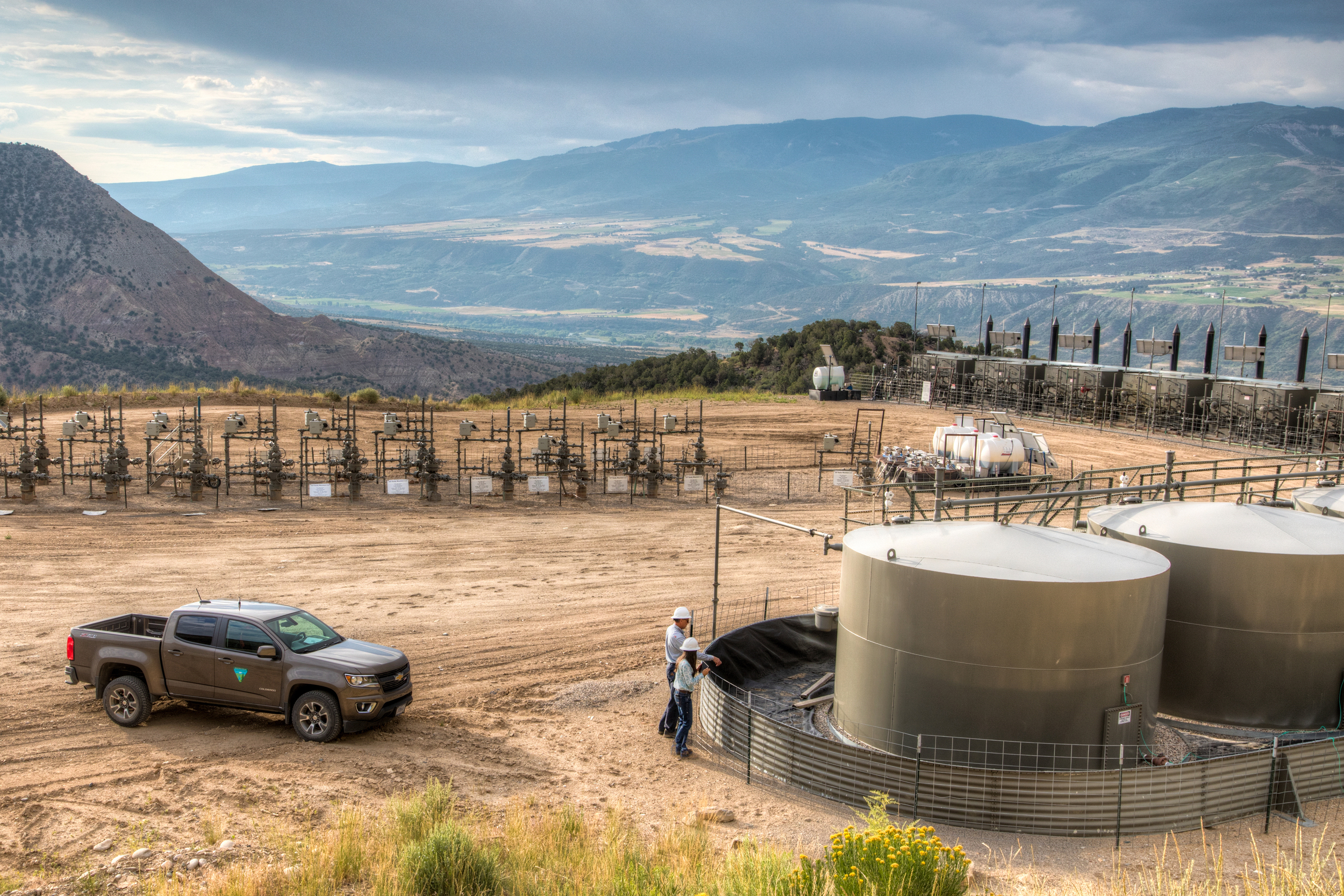
In 2014, a landmark settlement between the Bill Barrett Corp., which hoped to drill for gas on the plateau, the Interior Department and ten conservation and sportsmen’s groups ended the Roan’s first leasing war. The BLM canceled 17 leases atop the plateau, refunded $47.6 million and, in the subsequent Resource Management Plan, closed about 34,000 acres, roughly 54 square miles, to new leasing. Two leases the company declined to surrender stayed open, but with conditions: a cap of seven well pads, strict disturbance limits, mandatory wildlife consultations. The deal was broadly celebrated by the public, conservationists, hunters and anglers, county commissioners from both parties and the company itself. Where, when and how the Roan could be drilled, everyone thought, had been settled.
“The settlement represented the culmination of decades of conflict over one of Colorado’s most important public landscapes,” said Jim Ramey, Colorado’s state director for The Wilderness Society, an environmental non-profit that advocates for conservation of the Roan.
After six years of litigation to establish protections for the Roan, the One Big Beautiful Bill Act has put those decisions back in question, requiring nominated lands to be offered for lease within 18 months.
And while a lease issued this winter will be based on a decade-old management plan, it will last at least ten years, and more if it meets the lease requirement of producing enough oil or gas to cover the well’s operating costs and lease payments.
Critical Wildlife Habitat
The plateau’s public lands have become an island of intact habitat surrounded by heavy development. Of particular concern to area residents and environmentalists is a rare, genetically distinct strain of cutthroat trout that evolved to tolerate warmer water.
“Cutthroat are generally cooler water dwellers, so the specific genetics of these fish make them unique and special,” said Dean Riggs, who retired in 2020 as deputy regional manager for Colorado Parks and Wildlife after three decades with the agency, much of it spent working with the BLM and drillers to blunt development’s impact on wildlife. “Losing them would mean we wouldn’t have those genetics to take to other locations around the state as waters warm.”
Building wellpads and other infrastructure removes vegetation and disturbs the soil, causing rainwater and snowmelt to carry more water into streams, fill spaces between gravel that trout use for spawning, and limit the oxygen available to buried eggs. Culverts and roads can fragment habitat, preventing trout from reaching cold-water refuges or spawning habitat further upstream, a problem that is exacerbated by drought, wildfires and floods.
When vegetation is cleared, there’s less shade, and stream temperatures increase, which is especially harmful to finicky cutthroat trout that depend on cold, well-oxygenated water.
This story is funded by readers like you.
Our nonprofit newsroom provides award-winning climate coverage free of charge and advertising. We rely on donations from readers like you to keep going. Please donate now to support our work.
Donate NowAccording to Riggs, the area is also the “center of the universe” for deer and elk in Colorado, providing a lush migration corridor that allows them to build the fat reserves that carry them through the winter. The plateau produces more elk than any other herd in the state, he said, and the mule deer here are the southern end of one of the largest migratory populations in the U.S. The Roan also holds valuable lek sites that are vital for mating within the herds.
Noise and traffic lead deer and elk to stay far away from well sites, and infrastructure can cause cervids to steer clear for over 15 years after wells close. Even if development doesn’t completely block a migration route, human interference alters when animals move, where they stop and how much they eat. Displacement pushes animals onto worse forage or already crowded habitat, increasing energetic costs when deer and elk most need to conserve fat stores for the winter.
In a state that just posted its lowest snowpack on record, the disruption to wildlife habitat from gas extraction leases is just one of the environmental pressures on the Roan Plateau.
“All of these changes are of course happening as we struggle with the accelerating impacts of climate change,” Winter said. “And now on the flip side we have an administration which is strongly favoring oil and gas extraction and is in an all-out war on renewables.”
Limiting Public Participation
The BLM’s proposed Oil and Gas Leasing rule, published in June, would compress public involvement in leasing decisions from 90 days to a 10-day protest window, eliminating two earlier stages that allowed for public comment. It would also eliminate the balancing of mineral development against the value of wildlife habitat and cultural resources, potentially removing a safeguard that could have protected the Roan from drilling. It would also revive noncompetitive leasing, reduce bonding requirements and require $1 per-page-fee on protests exceeding 50 pages. The rule has not been finalized.
“The folks who live on the ground and who use this area know it best, and the scientific community studies this area,” Winter said. “The ability for all of those normal everyday folks to weigh in on the future of an area like the [Roan] Plateau is being curtailed as we speak.”
The comment period on the sale closed Sept. 11. On October 9, the BLM announced the sale would be held December 8th.
Asked whether the agency would offer parcels for lease inside the area that was protected by the previous settlement, the BLM said only that it would continue gathering public input and update the sale’s planning page as proposed parcels and acreage change.
Colorado Parks and Wildlife protested the June lease sale because some parcels overlapped state conservation easements; the BLM denied the state’s claim, reasoning that conservation easements protect the surface of the land, but do not preclude development of underground mineral rights.
“I don’t know if they’ll protest on this December lease sale,” Ramey said.
“We will see what happens if and when these lease sales are challenged in the federal courts,” Winter said. “One issue that is unresolved is how much discretion does the agency have to withhold these areas from being leased based on these resource [concerns].”
Nothing in the sequence of events that will bring gas drilling to areas of the Roan Plateau that were previously safeguarded requires breaking a deal. The protections were always provisional. Winter says permanent protection generally has to come from Congress, which creates wilderness areas, national parks and wildlife refuges.
The current Congress has primarily pushed to roll back public lands protections, rather than establish new ones. So, the Roan may offer an early warning of another strategy the administration will use to expand extraction on public lands—by targeting less permanent land management designations.
Riggs doesn’t expect lawsuits to prevent drilling in the previously protected parcels on the plateau.
“In my estimation it’s highly likely that these are gonna be developed,” he said, noting how much of the privately-owned western portion of the plateau has been drilled. “When you see that much development, and right next door is a piece that’s undeveloped, you intuitively know that the companies are gonna go after those parcels, because they’re gonna produce just as well.”
About This Story
Perhaps you noticed: This story, like all the news we publish, is free to read. That’s because Inside Climate News is a 501c3 nonprofit organization. We do not charge a subscription fee, lock our news behind a paywall, or clutter our website with ads. We make our news on climate and the environment freely available to you and anyone who wants it.
That’s not all. We also share our news for free with scores of other media organizations around the country. Many of them can’t afford to do environmental journalism of their own. We’ve built bureaus from coast to coast to report local stories, collaborate with local newsrooms and co-publish articles so that this vital work is shared as widely as possible.
Two of us launched ICN in 2007. Six years later we earned a Pulitzer Prize for National Reporting, and now we run the oldest and largest dedicated climate newsroom in the nation. We tell the story in all its complexity. We hold polluters accountable. We expose environmental injustice. We debunk misinformation. We scrutinize solutions and inspire action.
Donations from readers like you fund every aspect of what we do. If you don’t already, will you support our ongoing work, our reporting on the biggest crisis facing our planet, and help us reach even more readers in more places?
Please take a moment to make a tax-deductible donation. Every one of them makes a difference.
Thank you,