


As utilities struggle to keep pace with the explosive electricity demand from AI data centers, developers are increasingly bringing their own power. In Georgia, the first known company to test that strategy has already run into trouble.
Georgia has become a hotspot for data center development, but long waits for electric grid connections are pushing some companies to seek alternatives. Serverfarm became the first developer in the state to pursue a so-called “pop-up” power plant, hiring Houston-based VoltaGrid to build a natural gas power plant next to its data center. Environmental groups and state regulators say construction began before the companies secured the required environmental permits and may violate state utility law.
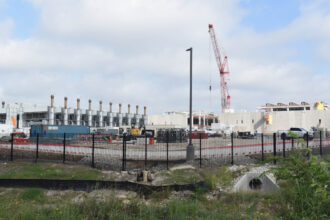
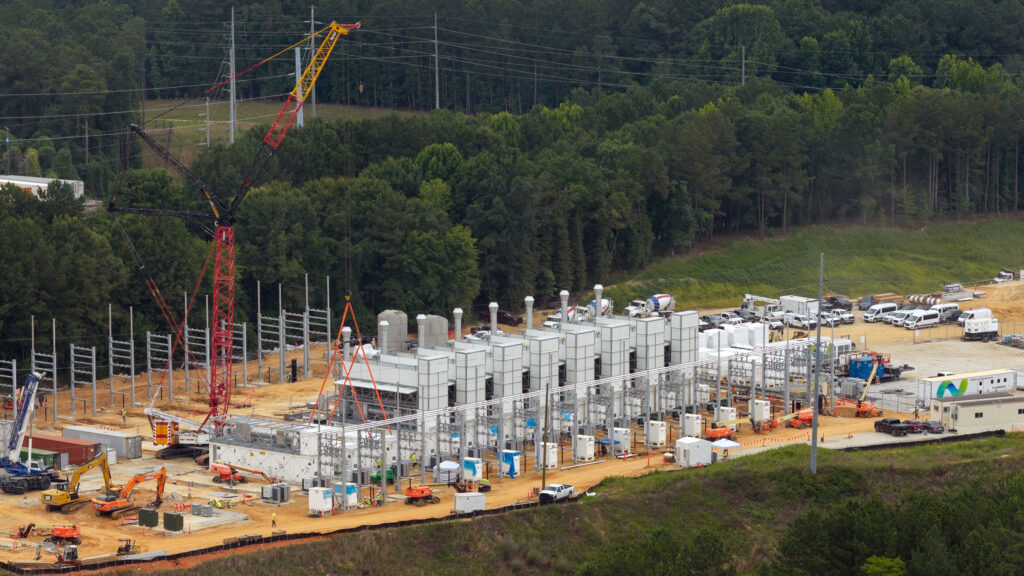
Concerns first surfaced after a nearby resident noticed construction activity at the site in Covington, about 30 miles east of downtown Atlanta. Driving past the project in June, the resident observed that six of VoltaGrid’s planned 33 natural gas-fired engines had already been installed, despite the company not yet receiving the required air permit.
Last year, VoltaGrid applied to the Georgia Environmental Protection Division for permits to build and operate a 90-megawatt natural gas-fired power plant that would provide around-the-clock electricity to Serverfarm’s data center. Under the federal Clean Air Act, which Georgia has authority to enforce, the company was required to obtain an air permit before construction could begin.
“The whole concept of permitting is to allow regulators and the public the opportunity to weigh in on the appropriate protections and controls to address a project’s environmental impacts,” said Jennifer Whitfield, a senior attorney at the Southern Environmental Law Center. “Beginning construction before that process is complete undermines it, and it’s illegal.”
Two weeks after the resident documented the construction, Sustainable Newton, Altamaha Riverkeeper and the Southern Environmental Law Center sent a letter to the Georgia Environmental Protection Division urging the agency to investigate and take enforcement action.
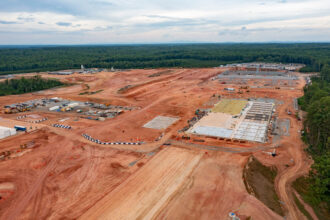
In addition to the six natural gas generators already under construction, the groups alleged that Serverfarm had started its own construction before obtaining the required permits. The company had proposed installing 37 diesel backup generators, but aerial photographs included with the letter showed that 36 had already been built.
The questions surrounding Serverfarm and VoltaGrid come as similar disputes are emerging nationwide. Last week, environmental groups notified two San Antonio-area data center companies, including VoltaGrid, that they intend to sue under the Clean Air Act, alleging the companies improperly permitted on-site natural gas plants as minor pollution sources rather than major emitters.
Neither Serverfarm nor VoltaGrid responded to requests for comment. But a Serverfarm spokesperson told The Atlanta Journal-Constitution, “Every action taken on this development project has been in careful consultation with the applicable authorities having jurisdiction.”
Following the letter, the Georgia Environmental Protection Division issued notices of violation to both companies, alleging they began construction before obtaining the required air permits. The agency has since issued an air permit for Serverfarm’s backup generators but will determine whether additional enforcement actions or civil penalties are warranted for the alleged violations. VoltaGrid has had to cease construction.
The notices of violation have intensified concerns residents have raised since the project was first proposed. Opponents have questioned the project’s air pollution impacts and its proximity to a drinking water reservoir, neighborhoods and a nature preserve. The proposed natural gas engines would emit pollutants including nitrogen oxides, particulate matter, formaldehyde and carbon monoxide. Local groups say the alleged permitting violations have heightened concerns that the project moved forward before those potential impacts were fully evaluated.
This story is funded by readers like you.
Our nonprofit newsroom provides award-winning climate coverage free of charge and advertising. We rely on donations from readers like you to keep going. Please donate now to support our work.
Donate Now“Communities deserve transparency and equal protection when massive industrial projects are proposed in our neighborhoods, and we are relying on Georgia regulators to ensure these laws are fully enforced,” said Maurice Carter, president of Sustainable Newton, a grassroots nonprofit group focused on environmental sustainability in Newton County.
According to the Southern Environmental Law Center, companies are not guaranteed an air permit simply because they submit an application. During the review process, regulators can require additional pollution controls, revise permit conditions or, in some cases, deny a permit altogether.
Separate from the permitting dispute, the project could also face scrutiny from the Georgia Public Service Commission. Under the Georgia Territorial Electric Service Act of 1973, utilities generally have exclusive rights to provide electric service within designated territories. Commissioners are considering whether to investigate whether VoltaGrid is legally allowed to generate electricity for Serverfarm instead of the local utility.
The PSC’s decision could set an important precedent, according to the Southern Environmental Law Center’s Whitfield. As data center developers look for ways to bypass long waits for grid connections, the ruling could determine whether similar pop-up power plants are allowed to operate in Georgia and under what conditions.
But the implications extend beyond data centers. Whitfield said Georgia’s Territorial Electric Service Act has long been cited as a barrier to non-utility renewable energy projects and microgrids. Advocates argue that if the PSC finds a way to accommodate privately operated natural gas plants, it should also consider whether similar flexibility could apply to solar and other renewable energy projects.
“What applies to one should apply to both,” Whitfield said.
About This Story
Perhaps you noticed: This story, like all the news we publish, is free to read. That’s because Inside Climate News is a 501c3 nonprofit organization. We do not charge a subscription fee, lock our news behind a paywall, or clutter our website with ads. We make our news on climate and the environment freely available to you and anyone who wants it.
That’s not all. We also share our news for free with scores of other media organizations around the country. Many of them can’t afford to do environmental journalism of their own. We’ve built bureaus from coast to coast to report local stories, collaborate with local newsrooms and co-publish articles so that this vital work is shared as widely as possible.
Two of us launched ICN in 2007. Six years later we earned a Pulitzer Prize for National Reporting, and now we run the oldest and largest dedicated climate newsroom in the nation. We tell the story in all its complexity. We hold polluters accountable. We expose environmental injustice. We debunk misinformation. We scrutinize solutions and inspire action.
Donations from readers like you fund every aspect of what we do. If you don’t already, will you support our ongoing work, our reporting on the biggest crisis facing our planet, and help us reach even more readers in more places?
Please take a moment to make a tax-deductible donation. Every one of them makes a difference.
Thank you,