

A federal judge ruled Tuesday that the Trump administration’s efforts to shut down New York’s congestion pricing program are unlawful.
U.S. District Judge Lewis Liman, an appointee of President Donald Trump, handed down the decision. Liman also granted an injunction in May that allowed the congestion pricing to continue while the lawsuit played out in court.
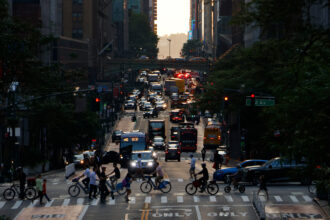
The congestion-pricing program charges drivers a fee to enter New York City’s central business zone—all of Manhattan at or below 60th Street. Since it began, air quality has improved across NYC and in nearby New Jersey, research has shown. The program has also drawn multiple lawsuits.
The legal battle settled this week began in February 2025, when U.S. Transportation Secretary Sean Duffy sent a letter to New York Gov. Kathy Hochul, revoking federal approval of the program.
In a statement at the time, Duffy argued that the program was “a slap in the face to working-class Americans and small business owners.” The toll for an average passenger vehicle is $9 during peak hours, and large trucks can pay up to $21.60.
The state-run Metropolitan Transportation Authority, along with other state agencies and advocacy groups including Sierra Club and Riders Alliance, pushed back in court, arguing that the Trump administration’s legal grounds for termination were “arbitrary and capricious.”
Dror Ladin, a senior attorney at Earthjustice—the law firm that represented Sierra Club and Riders Alliance in the case—said: “The Trump administration has basically asserted a right to just hack through any agreements it doesn’t like.”
He added, “This is an example of the court standing up and saying, ‘No, that’s not how this democratic process works.”
During his 2024 presidential campaign, Trump vowed to end congestion pricing and has criticized it since he took office.
In response to questions from Inside Climate News, a spokesperson for the U.S. Department of Transportation wrote in an email that they “disagree with the court’s ruling.”
“These Green New Scam policies have made federally funded roads inaccessible to commuters without providing a toll-free alternative,” the spokesperson said. “We are reviewing all legal options—including an appeal—with the Justice Department.”
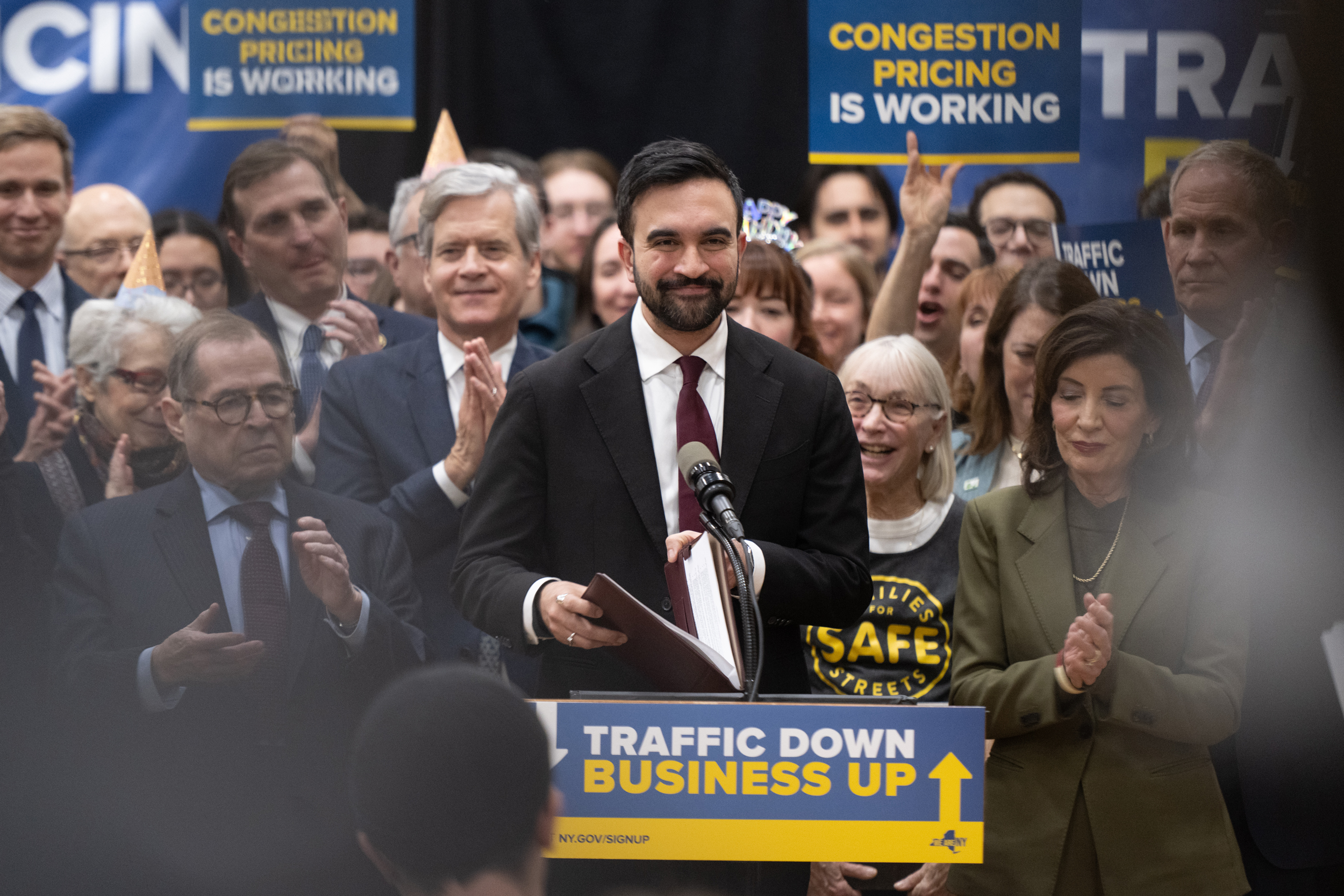
In a statement, Hochul called congestion pricing “a once-in-a-lifetime success story,” and vowed that the program was “here to stay.” Initially, the governor was a reluctant supporter, pausing its implementation in 2024, several weeks before it was supposed to go into effect, to “avoid added burdens to working- and middle-class families.”
Late that year, Hochul reversed course and implemented the program with lower tolls. The state recently celebrated one full year with the program and touted the benefits—like less traffic, faster buses and better air quality.
One study found that the program’s implementation was associated with a 22 percent drop in fine particulate matter—emitted by gasoline- and diesel-powered vehicles as they move through the city—on Manhattan blocks below 60th Street.
Among the most harmful air pollutants, fine particulate matter is a nasty brew of chemicals and heavy metals that can cause health impacts ranging from childhood asthma to cancer and heart disease. According to city data, long-term exposure contributes to an estimated 2,000 premature deaths a year in New York City, or 1 in 25 deaths there.
Congestion pricing reduces the number of cars entering downtown Manhattan, one of the city’s busiest areas, and redirects funds to the state-run agency that oversees mass transit, the Metropolitan Transportation Authority, which has long struggled financially.
The tolls will help fund improvements to mass transit—some of which will further reduce the emission of greenhouse gases and harmful pollutants. A January report from the Metropolitan Transportation Authority said the program would help it purchase 460 electric buses.
A report by the New York City Environmental Justice Alliance, an organization that advocates for communities burdened by environmental problems, found that 75 percent of New York City bus depots were located in communities of color.
“The decision by the judge clearly shows that congestion pricing is legal,” said Kevin Garcia, the senior transportation planner for the alliance, which has long supported the program. “This means that our communities are guaranteed the system-wide improvements that they deserve and have long been deprived of for decades.”
Last April, a memo written by the federal government’s lawyers, which detailed the weaknesses of the administration’s case, was accidentally inserted into court documents. Originally reported by Streetsblog, the memo said that there was “considerable litigation risk” in defending the arguments that the transportation secretary made in his February 2025 letter.
About This Story
Perhaps you noticed: This story, like all the news we publish, is free to read. That’s because Inside Climate News is a 501c3 nonprofit organization. We do not charge a subscription fee, lock our news behind a paywall, or clutter our website with ads. We make our news on climate and the environment freely available to you and anyone who wants it.
That’s not all. We also share our news for free with scores of other media organizations around the country. Many of them can’t afford to do environmental journalism of their own. We’ve built bureaus from coast to coast to report local stories, collaborate with local newsrooms and co-publish articles so that this vital work is shared as widely as possible.
Two of us launched ICN in 2007. Six years later we earned a Pulitzer Prize for National Reporting, and now we run the oldest and largest dedicated climate newsroom in the nation. We tell the story in all its complexity. We hold polluters accountable. We expose environmental injustice. We debunk misinformation. We scrutinize solutions and inspire action.
Donations from readers like you fund every aspect of what we do. If you don’t already, will you support our ongoing work, our reporting on the biggest crisis facing our planet, and help us reach even more readers in more places?
Please take a moment to make a tax-deductible donation. Every one of them makes a difference.
Thank you,

Lauren Dalban
Reporter, New York City
Lauren Dalban is a New York City-based reporter with a background in local journalism. A former ICN fellow, she now covers environmental issues in all five boroughs. Originally from London, she earned a B.A. in History and English from the University of Virginia, and an M.S. from Columbia Graduate School of Journalism.