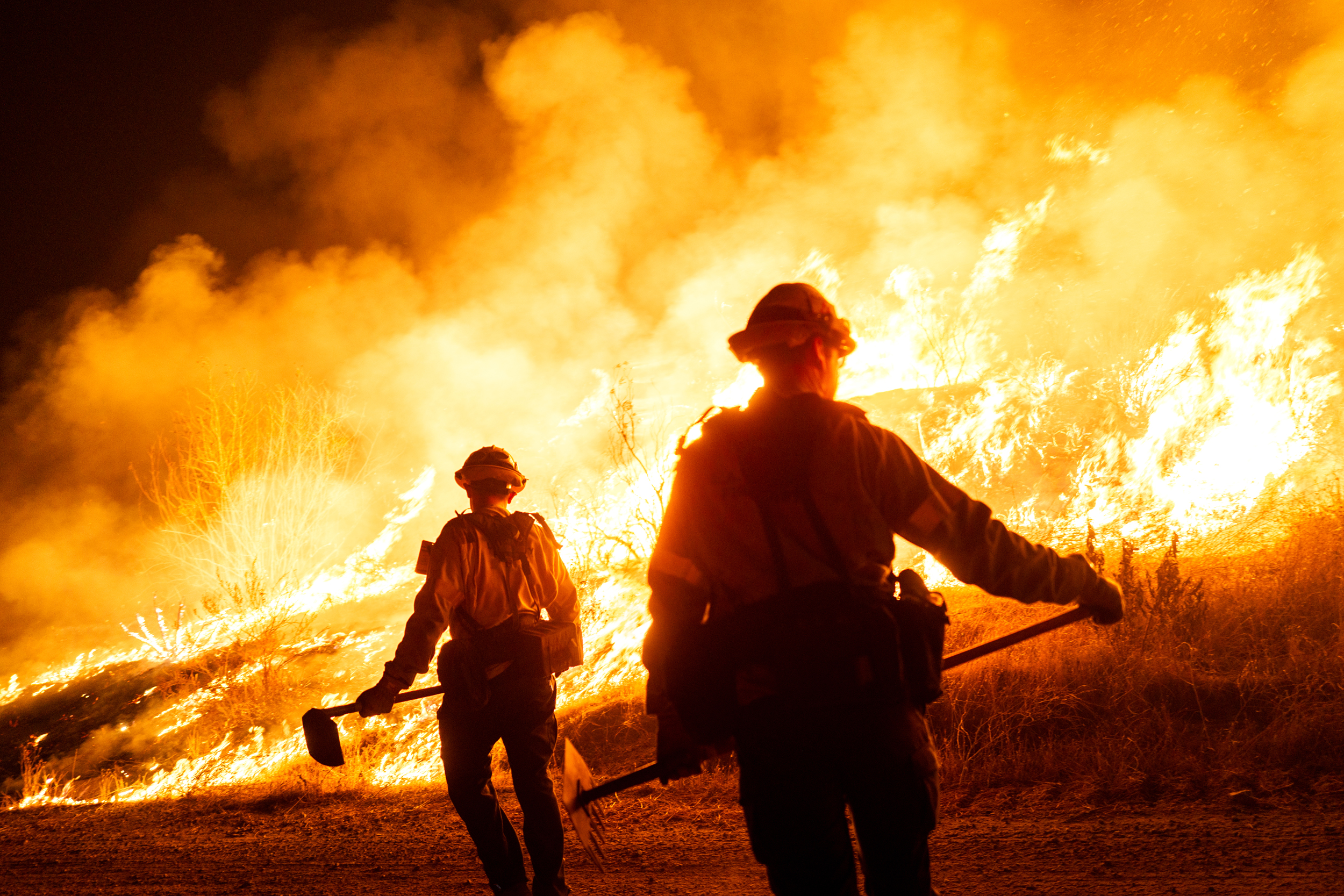


As bad as things got in Los Angeles in January 2025, when 31 people died and more than 16,000 buildings were destroyed by wildfires roaring into residential neighborhoods, many wildland firefighters look back on the rest of last year as a dodged bullet.
Across the nation, according to the National Interagency Fire Center (NIFC), which coordinates the federal wildfire response, the total area burned in 2025 was about two-thirds of the average over the past 10 years.
This year is shaping up to be a very different prospect, wildfire experts warn. Key environmental indicators show that the nation is a tinderbox, gripped by widespread drought and with a light snowpack in the mountains that will offer little relief as its remnants melt away.
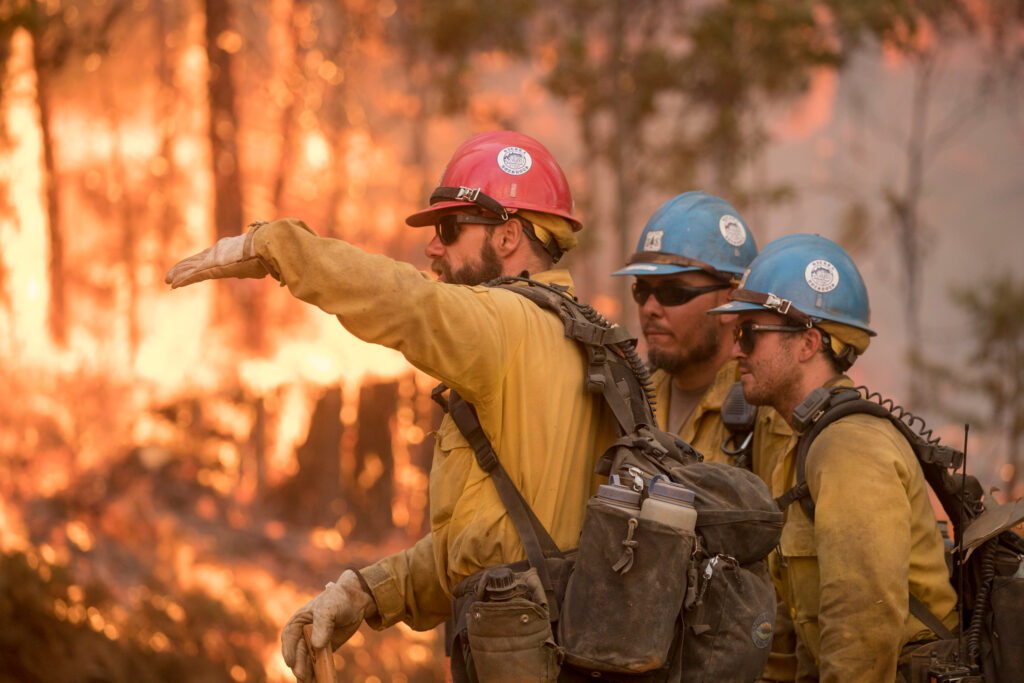
At the same time, upheaval in the federal wildland firefighting effort and the loss of many staff qualified to join wildfire incident teams since Donald Trump took power for the second time have left firefighters deeply concerned about their ability to mount an effective response.
“I think this is going to be the year,” warned Timothy Ingalsbee, co-founder and executive director of Firefighters United for Safety, Ethics and Ecology. “The conditions are just ripe for some really bad outcomes.”
Indeed, 2026 is already off to an inauspicious start.
As of Friday, the NIFC reported that some 2.4 million acres had burned in wildfires for which it had generated incident reports. That’s almost double the 10-year average for the time of year.
So far, much of the area burned this year has been in the southeast U.S. and Plains states, including Nebraska, Kansas and Oklahoma. For the most part, these have been grass fires.
Now we are moving toward peak wildfire season for much of the West, where the availability of moisture to help prevent forests from igniting across the summer months depends heavily on the slow melting of snow that has accumulated over the previous winter.
And that’s thin on the ground.
This chart is derived from the National Oceanic and Atmospheric Administration’s Snow Data Assimilation System, which combines satellite data and ground-based observations to estimate the extent and condition of the U.S. snowpack.
Following a mild winter in which precipitation frequently fell as rain, mountain ranges including the Rockies and California’s Sierra Nevada were left with one of the lightest snowpacks in recent history. This means that its continued melting won’t do much to dampen forests on lower slopes that are the focus of concern as the West moves into the peak of fire season.
Soil moisture content across the nation has also been low—although this is a much more volatile measure that can change rapidly with a burst of storms. This chart, derived from data from NASA’s Soil Moisture Active Passive satellite mission, shows that soil moisture has been low across the year so far.
Indeed, much of the nation remains unusually and worryingly dry.
This chart, showing a U.S. Drought Monitor measure summarizing the extent and severity of drought across the nation, reveals that current conditions are drier for the time of year than they have been so far this century.
As this map shows, the severity of drought varies widely across the nation, with the Southeast, the southern part of the Great Plains and the Mountain West among the most affected. As we move into the summer months, the Upper Colorado Basin and the Four Corners region—where Utah, Colorado, Arizona and New Mexico meet—will likely experience the most severe wildfire risks.
California, frequently wracked by drought, looks in better shape this year after some heavy rains, despite its minimal snowpack. “California is a little bit more of a wildcard. I’m not sure how it is going to go,” said Daniel Swain, a weather and climate scientist with University of California Agriculture and Natural Resources.
While things look primed for a severe Western fire season, Swain and other experts say much will depend on regional weather patterns in the coming months that are very hard to predict.
“I personally think it’s hard to say, ‘This is what the season is going to be,’” said Craig Clements, director of the Fire Weather Research Laboratory at San José State University.
This story is funded by readers like you.
Our nonprofit newsroom provides award-winning climate coverage free of charge and advertising. We rely on donations from readers like you to keep going. Please donate now to support our work.
Donate NowOne big unknown is what will happen with the North American Monsoon, which typically brings afternoon and evening thunderstorms to Arizona and New Mexico from July to September. These storms are expected to increase in intensity with emerging El Niño conditions. And while that should bring increased rainfall to the Southwest, reducing fire risk, there is also the possibility in its early stages of storms that feature lightning strikes but little rain, igniting parched vegetation—similar to the dry lightning storms of August 2020 that triggered the most extensive wildfires in California history.
“It’s a bit of a double-edged sword,” said Swain. “Those early storms could be a big problem. They could ignite many lightning fires.”
Are Federal Firefighters Ready?
The vagaries of weather systems are not the only unknown. The federal firefighting effort is in the midst of a major shake-up directed by the Trump administration, and its readiness for an unusually bad year is not at all clear.
While coordinated by the NIFC, for years federal wildland firefighters have worked across multiple agencies. The Forest Service, part of the U.S. Department of Agriculture, has the biggest firefighting force. Others have been employed by four agencies within the Department of the Interior.
But in June 2025, Trump issued an executive order directing the secretaries of Agriculture and the Interior to “consolidate their wildland fire programs.”
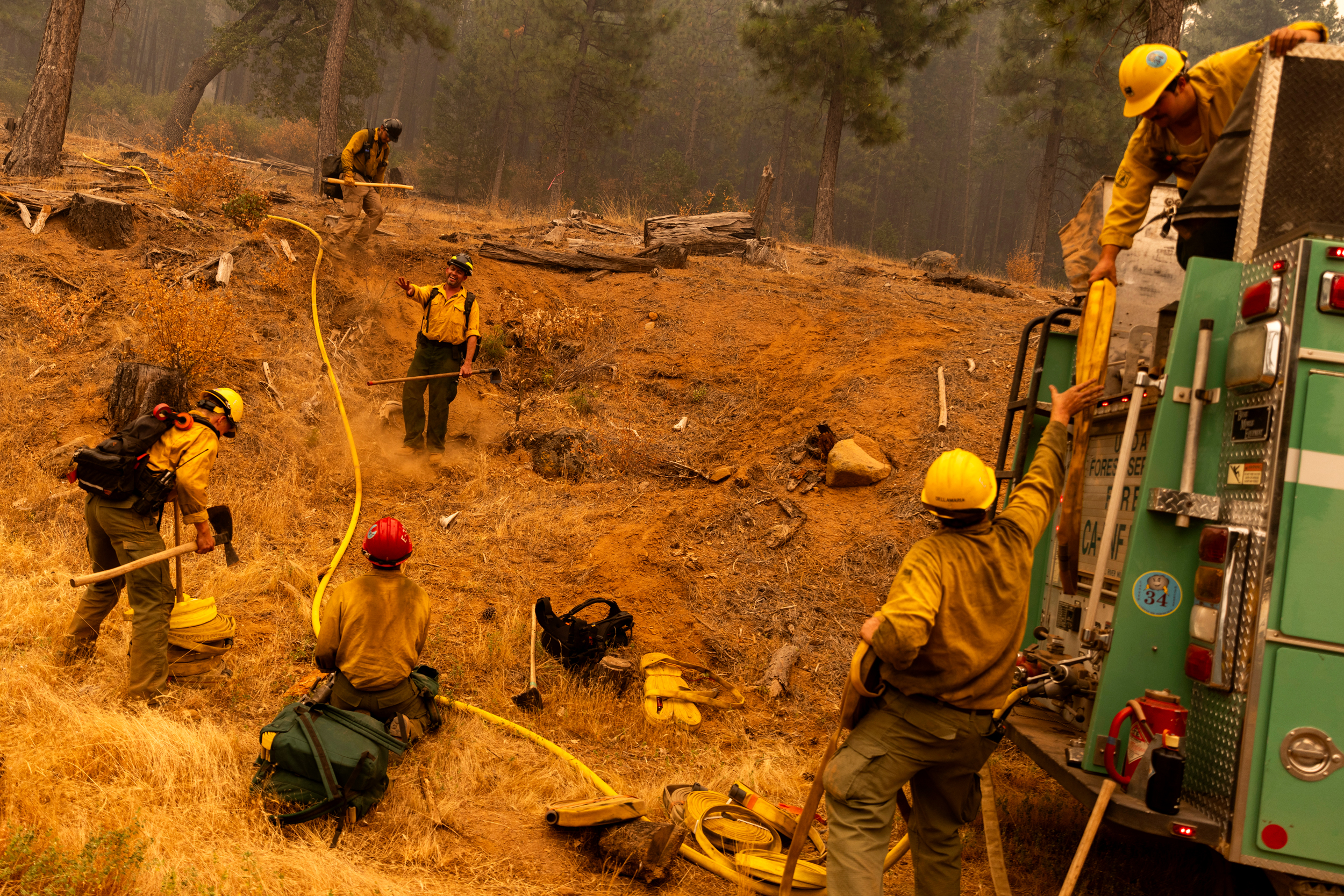
In September, Interior Secretary Doug Burgum announced plans to unite his department’s programs into a new U.S. Wildland Fire Service. The Forest Service, which would lose a large part of its funding if its firefighting programs were merged into the new Interior agency, is promising to coordinate while retaining its independent workforce.
Forcing consolidation across the Interior Department and the Forest Service would in any case likely require approval from Congress, which has shown little enthusiasm for the Trump administration’s plans and did not appropriate funds for Interior’s Wildland Fire Service for the 2026 fiscal year.
Burgum’s previous efforts to centralize power at Interior drew complaints about the organizational chaos that followed: Some 5,000 staff were moved from the department’s component agencies to his office in May 2025, and almost 1,800 quit, retired or were pushed out afterward. That’s sparked concern about how smooth his overhaul of the department’s firefighting efforts will be.
“The bottom line is it’s disorganization,” said Ingalsbee.
Beyond the federal reorganization, the main concern is how many staff remain at both Interior and the Forest Service with “red card” certification to work on wildfire incident teams, many of whom provide vital logistic support to those battling the blazes on the fireline itself.
Data on the number of red-carded staff is not publicly available, but as of the end of March the Department of the Interior had lost about 17 percent of its total staff during the second Trump administration, while the Forest Service had lost almost 11 percent, according to an Inside Climate News analysis of federal workforce data.
This loss of staff may help explain why the Forest Service treated roughly 35 percent fewer acres across the nation last year with prescribed fires, forest thinning and brush clearing to reduce hazardous fuels than in 2024, leaving communities “more exposed to the risk of catastrophic wildfire,” according to an analysis from the Center for Western Priorities in Denver.
The Interior Department did not respond to requests for comment.
As of May 11, the Forest Service announced that it had almost 10,500 wildland firefighters. In a statement to Inside Climate News, the service said it was on track to meet its hiring goals for the peak of the 2026 wildfire season, including dedicated firefighters and red-carded staff: “Across the agency, we have about 10,000 non-fire employees who are also qualified to perform essential roles during wildfire response, even though their everyday job is not firefighting.”
But former wildland firefighters argue that staffing targets have long been too low, given the increasingly severe blazes being driven by climate change. And they worry that 2026 is poised to throw a severe challenge at teams that are overworked and low on morale.
“You’re not talking about firefighters who are making $150,000 a year like a city firefighter,” said Bobbie Scopa, executive secretary of Grassroots Wildland Firefighters, which campaigns for the rights of those tasked with battling wildfires. “Their base salaries are like $60,000 to $70,000. So you’re asking an awful lot from a workforce that has not been taken care of.”
About This Story
Perhaps you noticed: This story, like all the news we publish, is free to read. That’s because Inside Climate News is a 501c3 nonprofit organization. We do not charge a subscription fee, lock our news behind a paywall, or clutter our website with ads. We make our news on climate and the environment freely available to you and anyone who wants it.
That’s not all. We also share our news for free with scores of other media organizations around the country. Many of them can’t afford to do environmental journalism of their own. We’ve built bureaus from coast to coast to report local stories, collaborate with local newsrooms and co-publish articles so that this vital work is shared as widely as possible.
Two of us launched ICN in 2007. Six years later we earned a Pulitzer Prize for National Reporting, and now we run the oldest and largest dedicated climate newsroom in the nation. We tell the story in all its complexity. We hold polluters accountable. We expose environmental injustice. We debunk misinformation. We scrutinize solutions and inspire action.
Donations from readers like you fund every aspect of what we do. If you don’t already, will you support our ongoing work, our reporting on the biggest crisis facing our planet, and help us reach even more readers in more places?
Please take a moment to make a tax-deductible donation. Every one of them makes a difference.
Thank you,

Peter Aldhous
Data Journalist
Peter Aldhous is a science and data reporter based in San Francisco. He got his break in journalism in 1989 as a reporter for Nature in London, fresh from a Ph.D. in animal behavior. Later he worked as European correspondent for Science, news editor for New Scientist and chief news & features editor with Nature, before moving to California in 2005 to become New Scientist’s San Francisco bureau chief. From 2015 to 2022 he worked on the science desk at BuzzFeed News. Peter also teaches investigative and policy reporting, data visualization, and news features writing in the Science Communication Program at the University of California, Santa Cruz. He is a two-time winner in the Global Editors Network Data Journalism Awards. His reporting has also been honored by the Association of British Science Writers, the Association of Health Care Journalists, the Society of Environmental Journalists, and the Royal Statistical Society.