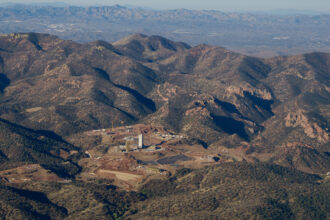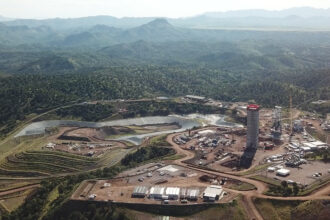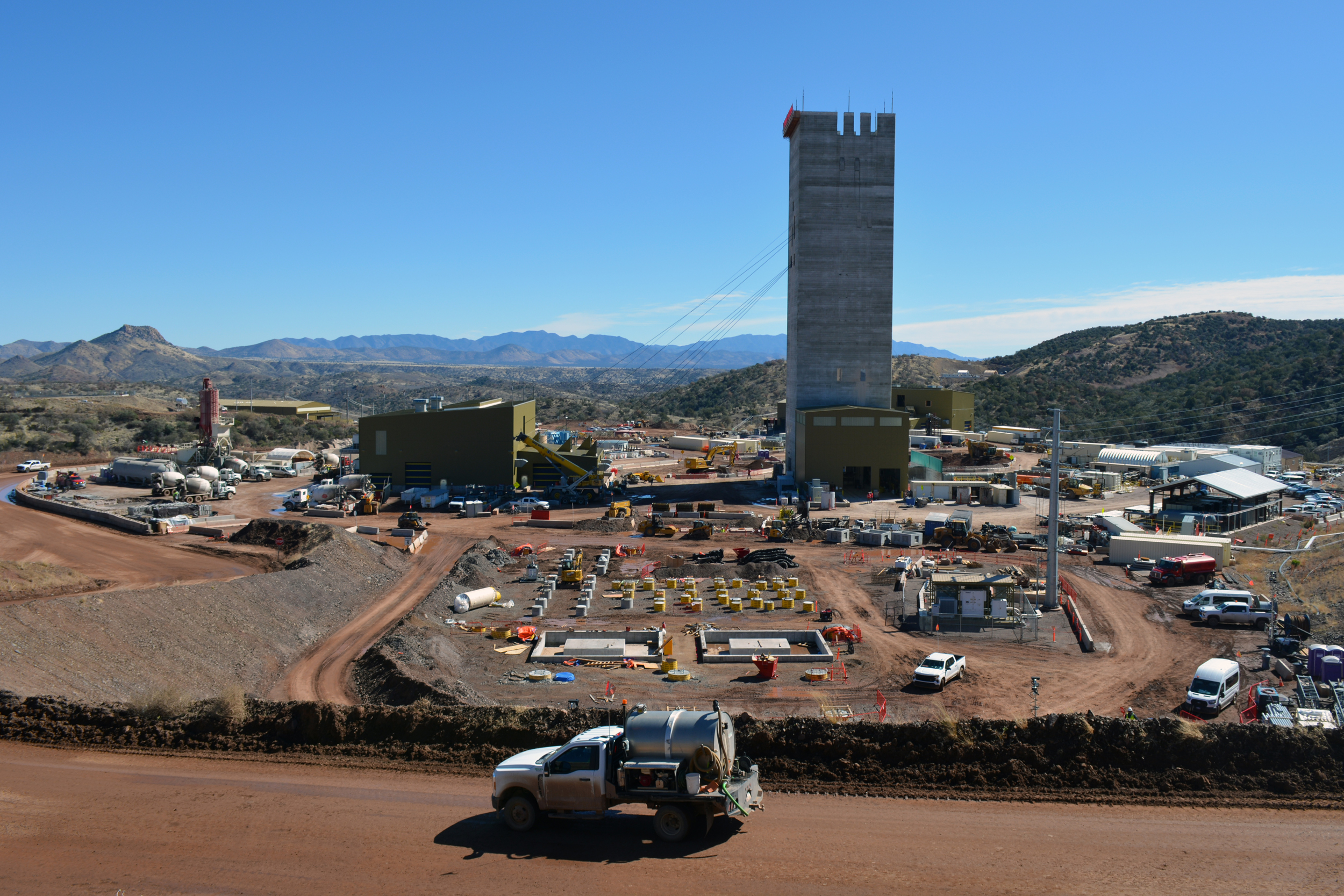


The U.S. Forest Service Tuesday approved a proposed mine in southern Arizona that will extract up to five critical minerals and was the first added to a program designed to streamline federal permitting.
Local environmental groups quickly condemned the decision, alleging the federal agency failed to address fundamental legal questions and environmental concerns before approving the project, such as permitting mining infrastructure through habitat for jaguars and Mexican spotted owls, both listed under the Endangered Species Act. The approval grants 31 exemptions under the Coronado National Forest Plan, which were critical for the project’s proposed actions and which the environmental groups say conflicts with guidance for the area’s public lands, and defers analysis of long-term concerns like impacts to local water resources.
“Our community has spent years participating in this process because we believed the agencies responsible for protecting our public lands would carefully evaluate the facts before making a decision,” said Anna Darian, executive director of the Patagonia Area Resource Alliance. “Instead, the Forest Service approved this project while serious legal questions remain unresolved, leaving many residents wondering whether these agencies are still serving the public interest.”
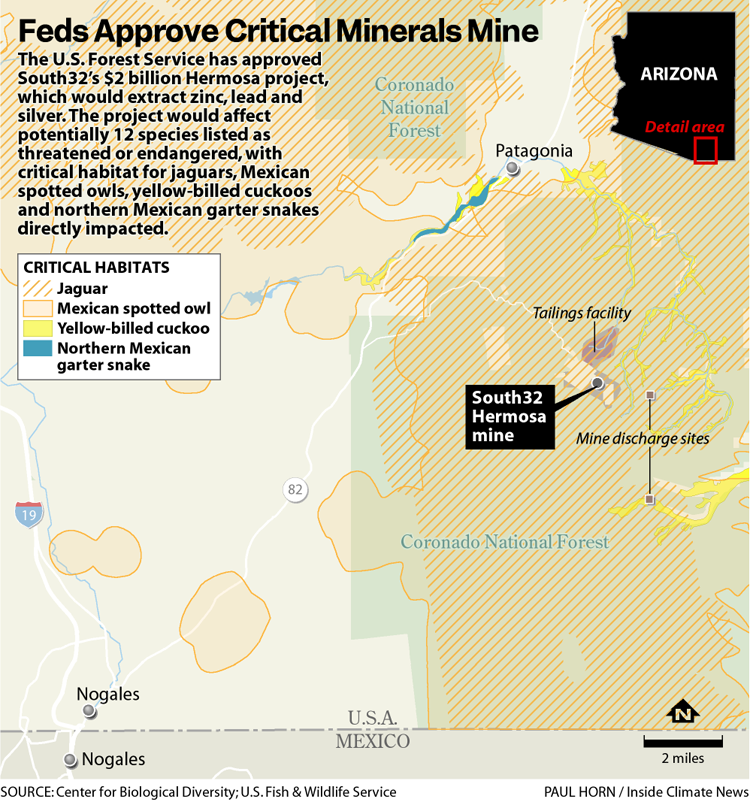
South32’s Hermosa project is located in Patagonia, Arizona, one of the state’s “sky islands,” a series of mountain ranges across the Sonoran desert famed for biodiversity. Their elevation, which provides isolated refuges from the hot desert floor, both inspires their island moniker and serves as a bridge for wildlife. The Patagonia Area Resource Alliance and Center for Biological Diversity said they would be evaluating “all available options moving forward,” including potential litigation.
The underground mine will extract zinc, lead and silver, with the potential for manganese and copper. Most of the project is on private land, with construction over halfway complete. The project site contains one of the largest undeveloped zinc resources in the world and enough battery-grade manganese to supply all current domestic demand. However, the project has encountered major issues this year, with capital costs for the project increasing by 50 percent, from $2.2 billion to $3.3 billion, and production pushed back a year, to 2028.
The federal approval permits the construction of a Primary Access Road across Coronado forest lands that bypass the town of Patagonia in order to prevent traffic through the town, a 138-kV transmission line to power the mine and a large tailings facility where mine waste will be stored.
“From the beginning, we designed Hermosa to be a different kind of mine, and the federal review process helped make it even better,” said Pat Risner, South32 Hermosa’s president, in a statement. “Years of agency review, Tribal consultation and community engagement strengthened environmental protections, informed project refinements and shaped a project that can transform the local economy.”
In 2023, under the Biden administration, the mine was the first to be added under the Fixing America’s Surface Transportation Act of 2015. The FAST-41 program is intended to improve the timeliness, predictability and transparency of federal permitting for selected projects. The Trump administration has added 57 other mining projects to the program, and has cited the Hermosa project for laying that groundwork.
“President Trump has launched an all of government mandate to strengthen and secure America’s critical minerals supply chains,” said Secretary of Agriculture Brooke Rollins in a statement. “The Hermosa Critical Minerals Project shows how increasing domestic production can reduce our dependence on vulnerable foreign sources … with one of the world’s largest undeveloped zinc resources and key minerals such as zinc and manganese, it’s a strategic investment in America’s energy and manufacturing future.”
Increasing domestic mineral production to wean the U.S. off foreign supplies, largely from China, has been one of the few bipartisan issues this decade.
“If we’re serious about bringing supply chains back to America and reducing our dependence on foreign countries, we need to responsibly produce more critical minerals here at home. This is exactly what the Hermosa project is doing,” said U.S. Senator Mark Kelly (D-Ariz.), in a statement.
The mine will provide around 900 direct jobs and thousands more through indirect economic activity, with the company committed to hiring 80 percent of its workforce from Santa Cruz County.
But major concerns still exist for the local communities, with the town of Patagonia, city of Nogales and Santa Cruz County in active talks to form a community benefits agreement with the mine.
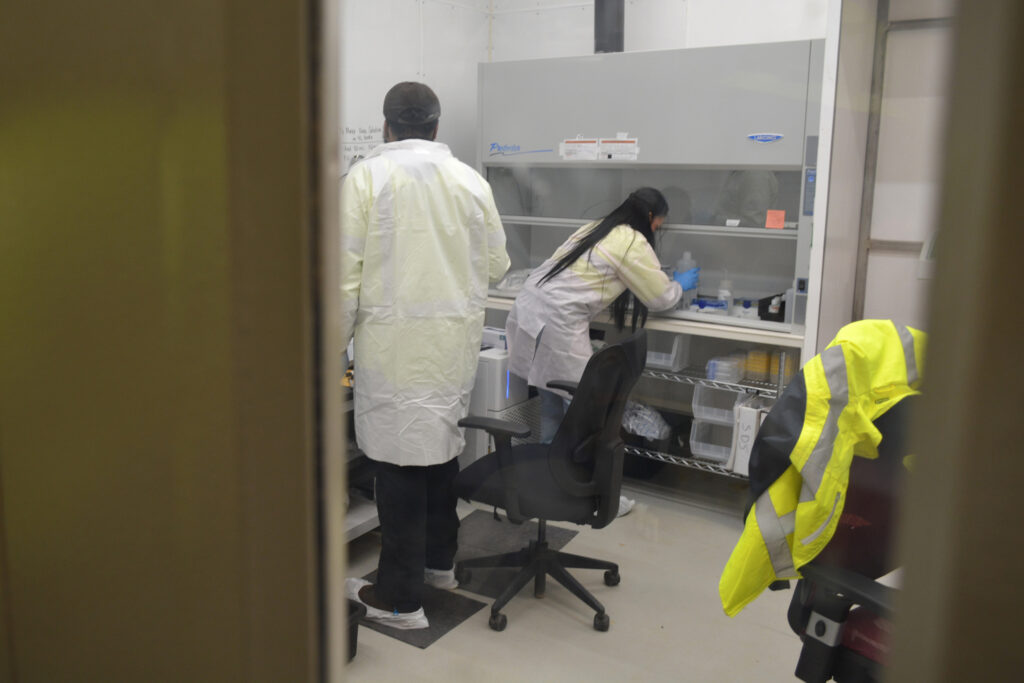
Prior to federal approval, the mine had dewatered the local aquifer in order to access the ore below. Over the projected 70-year life of the mine, an estimated 195,000 acre-feet of water would be removed from the aquifer. One acre-foot is 325,851 gallons, enough water for two to three households a year.
Though the plan outlines discharging that water into three local creeks, the dewatering will lead to a cone of depression, with the water table drawn down by 250 feet, stretching across nearly 50 square miles and affecting wells within three miles of the mine, according to the environmental impact statement.
Treated groundwater has already been dumped into one of the creeks as the mine’s construction has gone on, and resulted in violations of the company’s permits with the state for exceeding permitted antimony levels. Those levels have gone down since South32 made additional investments in its wastewater treatment plant, but concerns remain in the local community.
Twelve species on the Endangered Species List may be adversely affected by the project, the U.S. Forest Service found. Big cats like ocelots and jaguars have been found in the area as climate change pushes their habitat farther north into Arizona from Mexico.
The tailings facility for the mine the Forest Service approved is directly on critical habitat for the jaguar. In their comments during permitting, environmentalists objected to that for both its environmental impact, but also due to a lack of evidence a valuable mineral deposit exists beneath it. Recent court cases brought on by environmental groups for another Arizona mining project found that federal law requires a valid mineral right must exist at a tailings site if done on federal land.
“Political fanfare can’t hide the fact that this permit is a disaster for Arizona’s rural communities and endangered species like jaguar and ocelot who live in the area,” said Russ McSpadden, Southwest conservation advocate at the Center for Biological Diversity, in a statement. “This fight is far from over.”
About This Story
Perhaps you noticed: This story, like all the news we publish, is free to read. That’s because Inside Climate News is a 501c3 nonprofit organization. We do not charge a subscription fee, lock our news behind a paywall, or clutter our website with ads. We make our news on climate and the environment freely available to you and anyone who wants it.
That’s not all. We also share our news for free with scores of other media organizations around the country. Many of them can’t afford to do environmental journalism of their own. We’ve built bureaus from coast to coast to report local stories, collaborate with local newsrooms and co-publish articles so that this vital work is shared as widely as possible.
Two of us launched ICN in 2007. Six years later we earned a Pulitzer Prize for National Reporting, and now we run the oldest and largest dedicated climate newsroom in the nation. We tell the story in all its complexity. We hold polluters accountable. We expose environmental injustice. We debunk misinformation. We scrutinize solutions and inspire action.
Donations from readers like you fund every aspect of what we do. If you don’t already, will you support our ongoing work, our reporting on the biggest crisis facing our planet, and help us reach even more readers in more places?
Please take a moment to make a tax-deductible donation. Every one of them makes a difference.
Thank you,

Wyatt Myskow
Reporter, Phoenix
Wyatt Myskow covers drought, biodiversity and the renewable energy transition throughout the Western U.S. Based in Phoenix, he previously reported for The Arizona Republic and The Chronicle of Higher Education. Wyatt has lived in the Southwest since birth and graduated from Arizona State University with his bachelor’s degree in journalism.