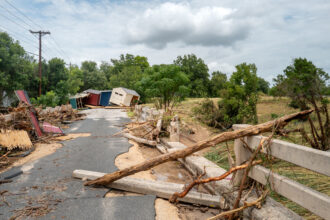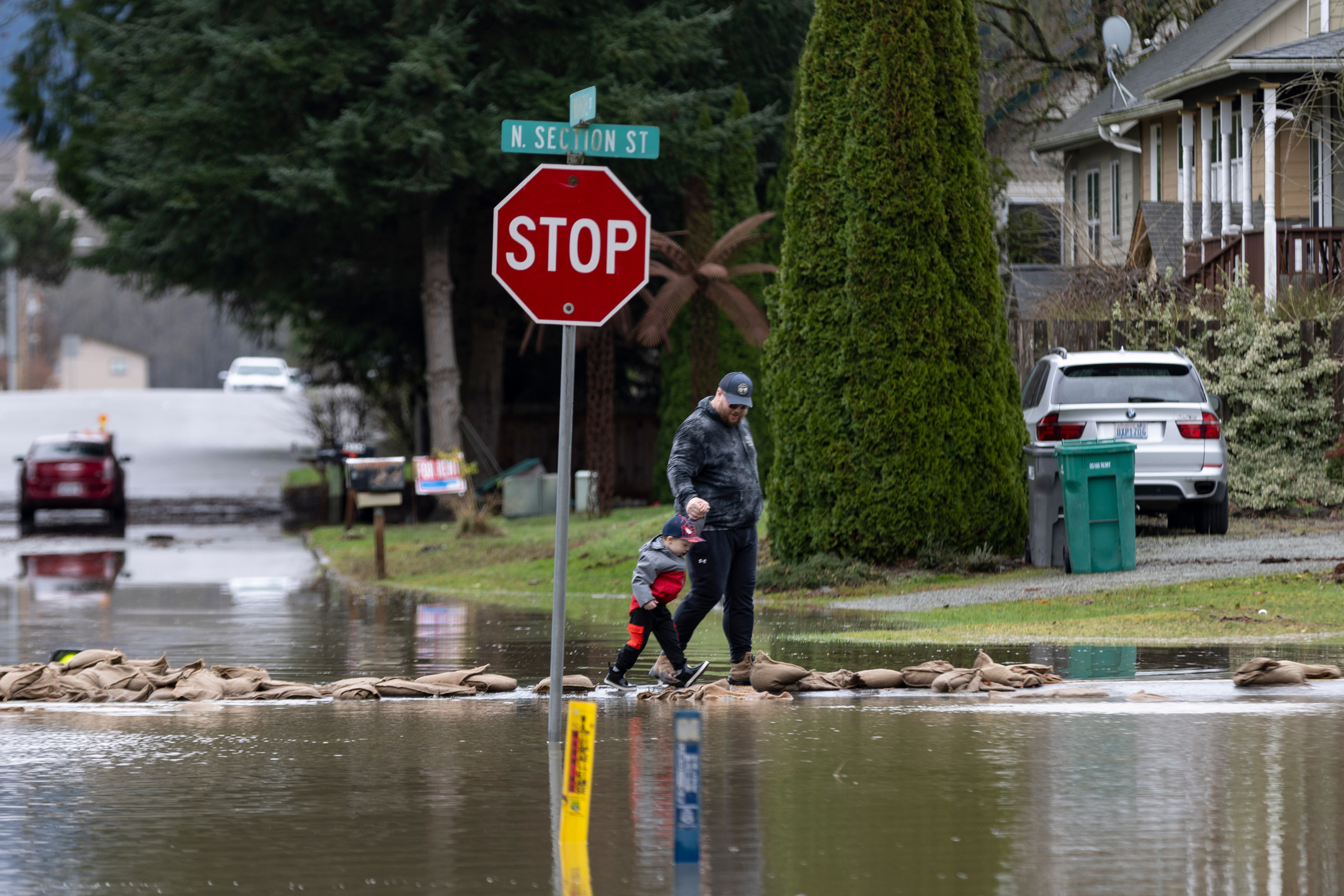


SEATTLE—In December 2025, torrential rains and catastrophic flooding hit western Washington. High precipitation levels, combined with the warmest December on record for the state, meant that many mountainous areas received rain rather than snow, leading to a deluge that broke through two levees and caused an estimated $182 million in damages to public infrastructure.
The lack of snowpack also led to drought later in the summer of 2026.
A draft legislative report and forecast, released this month by the Washington State Department of Ecology, reveals that changing precipitation patterns, like those seen in December 2025, are primed to leave their mark across the state as more snow falls as rain, particularly impacting eastern Washington—a reality that is far too familiar for agricultural communities in the region.
“ We are now in our unprecedented fourth consecutive year of significant drought in the Yakima River Basin,” said Urban Eberhart, manager of the Kittitas Reclamation District, which provides water for over 60,000 acres of primarily agricultural lands.
Multi-year droughts and hot spells, the report finds, are expected to increase in eastern Washington. For the Yakima Valley, the struggle is familiar. “There are a significant number of fields or areas within our district that are just completely fallowed,” said Eberhart. “… People are just really hanging on.”
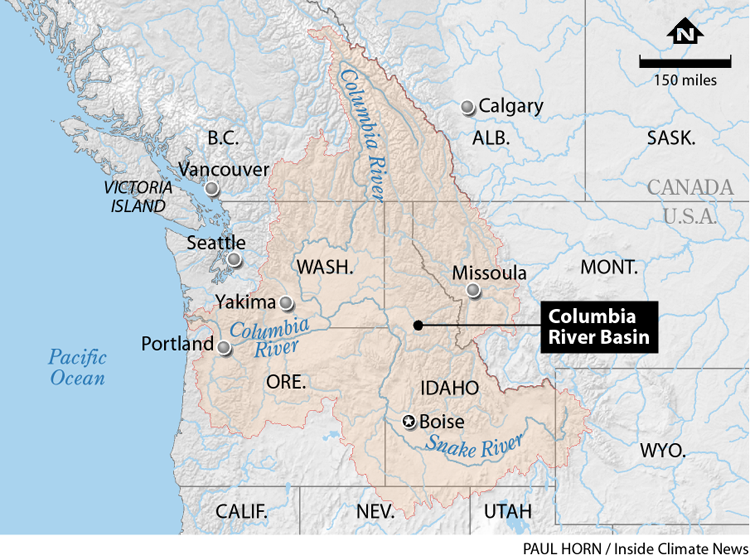
Yakima is unlike the rainy Washington most people would recognize. It is dry, and sagebrush pops out of rolling hills. Despite its aridness, the agricultural region produces around 77 percent of domestic hops in the United States and a significant amount of apples, cherries, grapes and pears. It is broadly part of the Columbia River Basin, reliant on east slope snowpacks from the Cascade Mountain range and reservoirs branching off the Yakima River, a tributary to the Columbia river, and aquifers for its water supply.
While the heavy December rains filled Yakima’s reservoirs, which supply about a third of the region’s water, by April Washington had issued a statewide drought declaration. A warm winter left the state with half of its usual snowpack, despite above-average precipitation levels. Simply put, too much snow fell instead as rain, leaving shortages for the summer months, a pattern that is expected to continue and increase over the next 20 years.
“Most of the climate change models show that over the course of the water year, we’re getting essentially the same amount of precipitation, but more of it’s falling as rain, less snowpack and you also have more intense weather events,” said Greg McLaughlin, program director for the Washington Water Trust.
According to the department’s report, by the 2040s, a higher incidence of heavy rainfall events are expected to occur, especially in western Washington. Consequential for agriculture, the Lower Yakima watershed expects a 47 percent decline in summer surface water supplies.
Without slow-melting snow or ample storage, water in eastern Washington will arrive before farmers can use it. “You have peak runoff happening earlier in the year, further away from when the higher demands are going to be in the summer,” Sasha McLarty, associate professor in the Department of Civil and Environmental Engineering at Washington State University and lead of the research team for the 2026 Forecast said.
These anticipated snow droughts are driving a push for increased storage and water infrastructure in the region. “As we have more and more snowpack droughts, we’re relying more on the rainwater as our predominant water supply. That means that it’s harder for us to have a full water supply, and it’s really highlighting the need for more storage in the basin,” said Sage Park, policy director for Rosa Irrigation District in the Yakima Valley.
Aquifers are also expected to decline across eastern Washington under current recharge and pumping rates, complicating storage. “There’s a lot that we don’t yet know about where and how groundwater recharges or is naturally replenished in eastern Washington,” McLarty said. The recharge rates (how quickly an aquifer naturally replaces its water) calculated in this year’s report are likely an overestimate, she said.
A large contingent of eastern Washington’s municipalities rely on deepwater aquifers, which are believed to naturally recharge at slow rates. And while projects to store water in aquifer layers and stave off depletion in eastern and central Washington are underway, the solution will not be immediate. “ You can’t just turn taps off. And in many cases, groundwater is the only water supply source that our communities have,” McLarty said.
Overall what is clear, is that change is imminent and under way in eastern Washington. Increased multi-year drought and declining aquifers are only expected to continue over the next 20 years, challenging an agricultural economy and watershed that is already facing hardships.
“As long as the temperatures keep rising, we have to run faster and faster with our ideas, you know, to sustain or in some ways save these watersheds and these aquatic systems,” McLaughlin said.
The state’s legislative report and forecast, which is conducted every five years to inform policy decisions, is up for public comment through July 31.
About This Story
Perhaps you noticed: This story, like all the news we publish, is free to read. That’s because Inside Climate News is a 501c3 nonprofit organization. We do not charge a subscription fee, lock our news behind a paywall, or clutter our website with ads. We make our news on climate and the environment freely available to you and anyone who wants it.
That’s not all. We also share our news for free with scores of other media organizations around the country. Many of them can’t afford to do environmental journalism of their own. We’ve built bureaus from coast to coast to report local stories, collaborate with local newsrooms and co-publish articles so that this vital work is shared as widely as possible.
Two of us launched ICN in 2007. Six years later we earned a Pulitzer Prize for National Reporting, and now we run the oldest and largest dedicated climate newsroom in the nation. We tell the story in all its complexity. We hold polluters accountable. We expose environmental injustice. We debunk misinformation. We scrutinize solutions and inspire action.
Donations from readers like you fund every aspect of what we do. If you don’t already, will you support our ongoing work, our reporting on the biggest crisis facing our planet, and help us reach even more readers in more places?
Please take a moment to make a tax-deductible donation. Every one of them makes a difference.
Thank you,

Claire Barber
Fellow
Claire Barber is a fellow at Inside Climate News and a master’s in journalism student at Stanford University. She is an environmental and outdoor journalist, reporting primarily in the American Southwest and the West. Her writing has appeared in The San Francisco Chronicle, Outside, Powder Magazine, Field & Stream, Trails Magazine and more. She loves to get lost in the woods looking for a hot spring, backpacking to secluded campsites and banana slugs.