

Planet China: Fifteenth in a series about how Beijing’s trillion-dollar development plan is reshaping the globe—and the natural world.
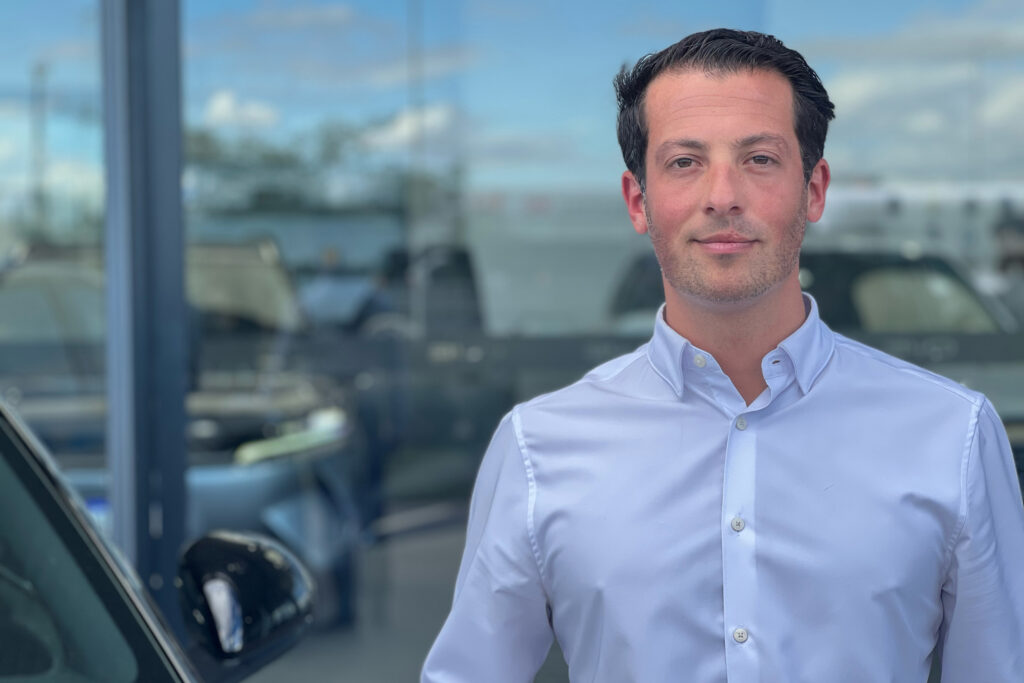
CÓRDOBA, Argentina—Franco Bornancini’s iPhone buzzed relentlessly in his glass-walled office at a BYD dealership, racking up 90 customer questions during an hour-long meeting. A few feet away, the sales floor buzzed with the energy of a tech product launch.
“We’re like the Apple of vehicles,” said Bornancini, the dealership’s sales manager. BYD, the Chinese EV manufacturer, isn’t just selling cars—it’s offering customers “a different way of living,” he said.
BYD sales reps are picking up weekend shifts just to keep pace, delivering 12 to 15 cars a day to customers trading in gas-powered vehicles for a brand that many had never heard of just six months earlier.
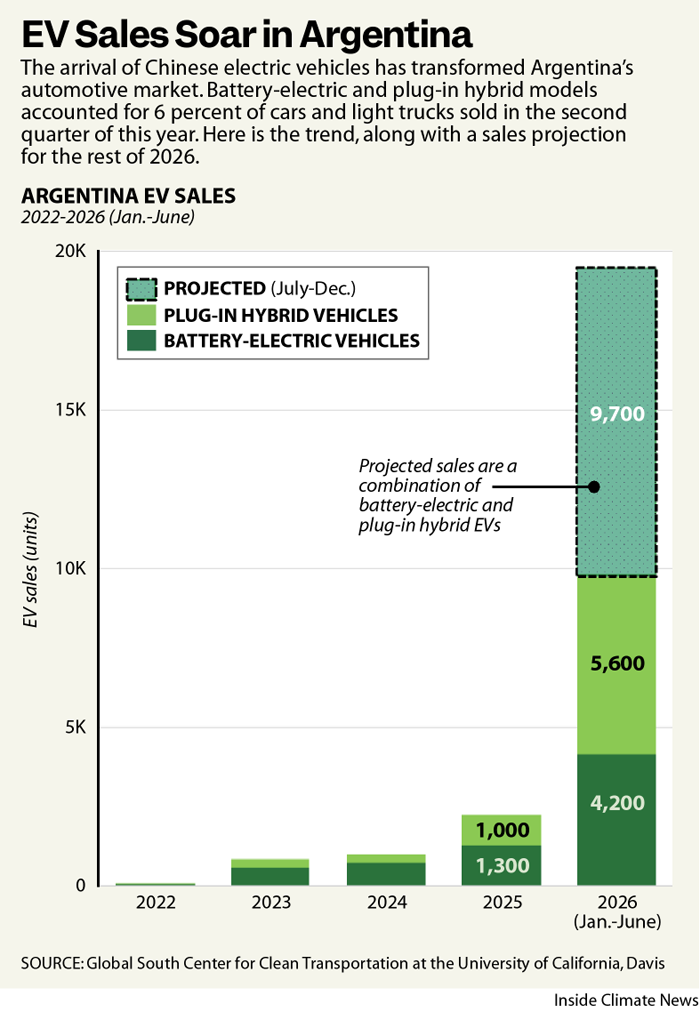
EV market share in Argentina has soared in the second quarter of this year to 6 percent of new cars sold, including all-electric and plug-in hybrid models, an increase from less than 1 percent in the second quarter of 2025, according to the Global South Center for Clean Transportation at the University of California, Davis.
That growth rate would be stunning if not for the way it follows a pattern seen in other emerging markets. Analysts call this a “leapfrog” moment, driven by investment from Chinese automakers and the economic interests of the host countries. The result is skyrocketing EV sales growth that exceeds progress in many of the world’s leading economies—a trend now supercharged by oil price volatility tied to the Iran war.
Indeed, Argentina may have a higher EV market share than the United States by the end of 2026 or early 2027, based on sales projections.
Many American and European automakers treated places like Argentina as peripheral—too volatile, too small, too complicated. BYD saw something different: an untapped market with millions of potential customers.
“The conditions are there now where any country in the world can see a very rapid boom in EV sales,” said Euan Graham, senior electricity and data analyst for Ember, a United Kingdom-based think tank. “Maybe 2026 is the year for Argentina.”
The leapfrog effect, which Ember observed in December, could change the outlook for global transportation emissions. Instead of being late EV adopters and remaining reliable gasoline consumers for decades, the developing world may shift to electric transportation much faster than previously expected.
But this is not a simple equation. Many of the countries with surging EV markets are also adding more gasoline-powered vehicles as rising incomes enable more people to buy cars and trucks. A long-term strategy for reducing transportation emissions will need to include investments in public transport along with infrastructure for walking and biking, said Aditya Ramji, an economist and director of the Global South Center for Clean Transportation.
“I am a strong believer now, with all the math we’ve done, that just vehicle electrification will not lead to transport decarbonization,” he said.
There are also risks when the boom in sales is tied to imports from a single country, or in this case a single company from a single country. Argentina’s EV sales could plummet if the government adds tariffs or BYD decides to scale back its presence.
Argentine President Javier Milei has reduced trade barriers, allowing for cheaper imports. But these policies could all change next year following the presidential election if a left-wing challenger defeats the far-right Milei.
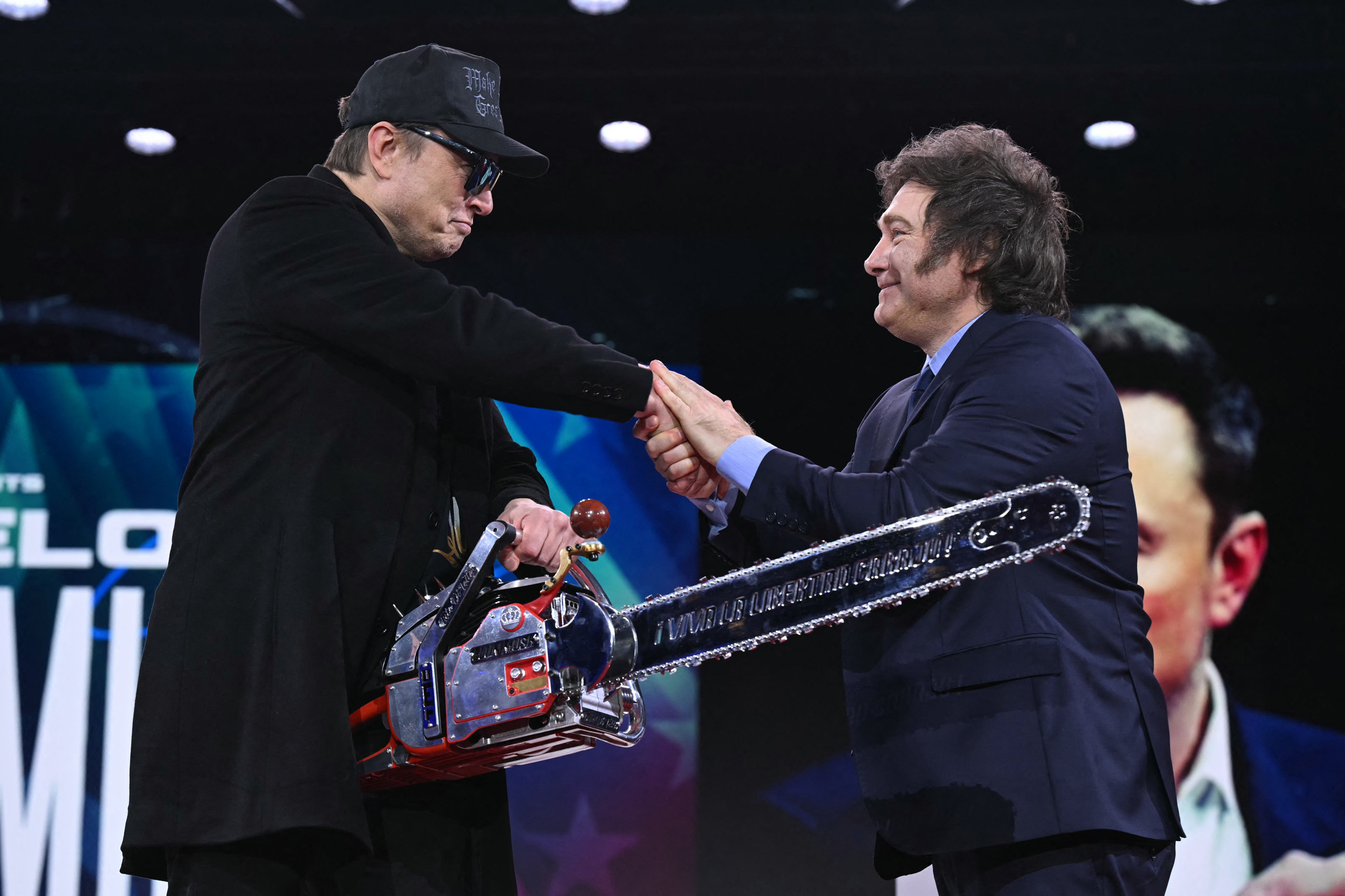
Tesla CEO Elon Musk has a kinship with Milei. It was Milei who, at a Conservative Political Action Conference in Maryland in 2025, gave Musk the gift of a giant chainsaw. Musk waved it and said, “This is the chainsaw for bureaucracy.”
But neither Tesla nor any other Western EV maker leaped into Argentina the way BYD did. Its aggressive expansion there reflects the company’s broader rise: in late 2025, BYD overtook Tesla to become the world’s leading EV manufacturer.
Cheering, and Helping, a Sudden Transformation
For years, Argentina’s auto market was dominated by expensive imports and lower-quality vehicles assembled within South America, according to Juan Martín Colombres, an early EV adopter and founder of the charging company EVTRON.
Speaking from a coffee shop in a suburb north of Buenos Aires, Colombres said import taxes made cars prohibitively expensive for many Argentines and shielded domestic manufacturers from competition.
“In Argentina, cars are not a work tool; they’re a luxury item,” he said, speaking in Spanish.
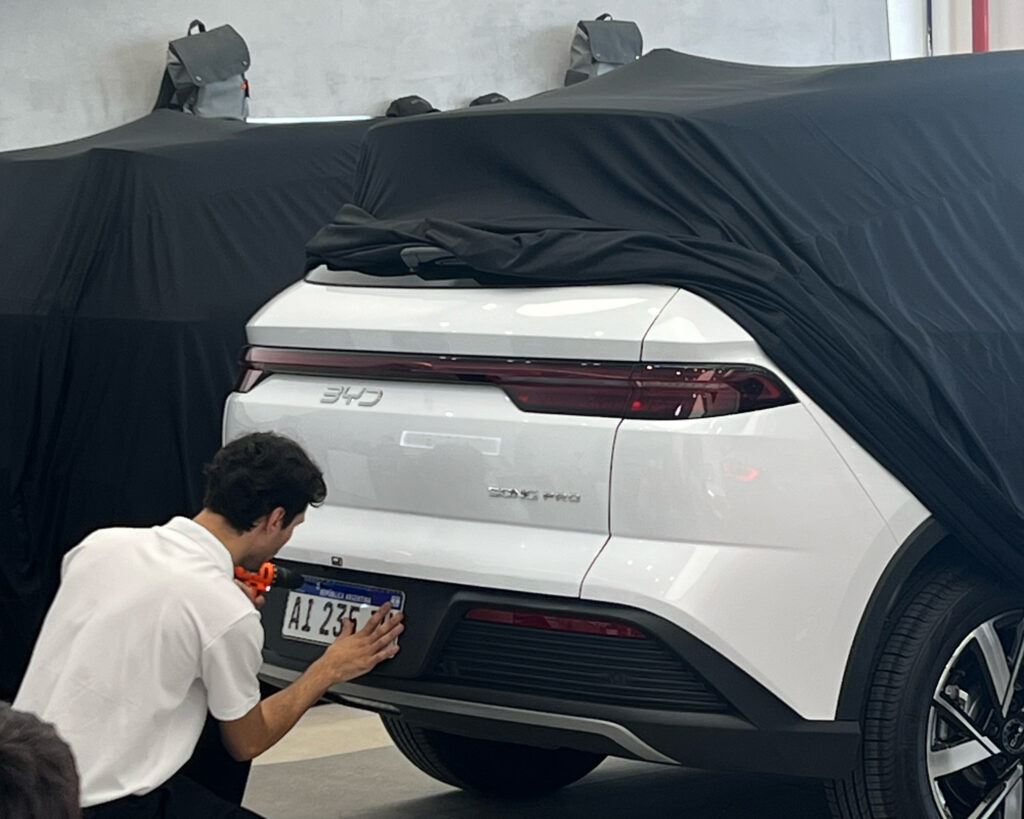
That began to change as Chinese automakers entered the market. Their arrival coincided with Milei’s lowering of trade barriers, including the elimination of import tariffs on qualifying lower-cost EVs, as part of a broader push to open Argentina’s economy to foreign competition.
Across the country, other incentives encourage EV adoption. In Córdoba, the provincial utility offers a discount on electricity bills for EV owners. In Buenos Aires, EV drivers are exempt from road tolls.
Colombres said those changes have given ordinary Argentines access to EVs with more advanced technology, enhanced safety and greater value than many of the vehicles available in the past.
Today, buyers of an internal combustion car from outside the South American trade block known as Mercosur can still face a hefty 35 percent import tariff. But for qualifying EVs with a pre-tax import value below $16,000—including BYD’s popular Dolphin Mini—the tariff is zero. After local taxes, dealer margins and other costs, the Dolphin Mini sells in Argentina for about $23,000, which is competitive with gasoline-powered vehicles.
Now, the biggest constraint isn’t the cars, it’s the charging network, Colombres said. Argentina has limited public charging capacity; most EV charging happens at home or at workplaces that install stations. Colombres said his company has installed about 100 charging stations over the past 18 months.
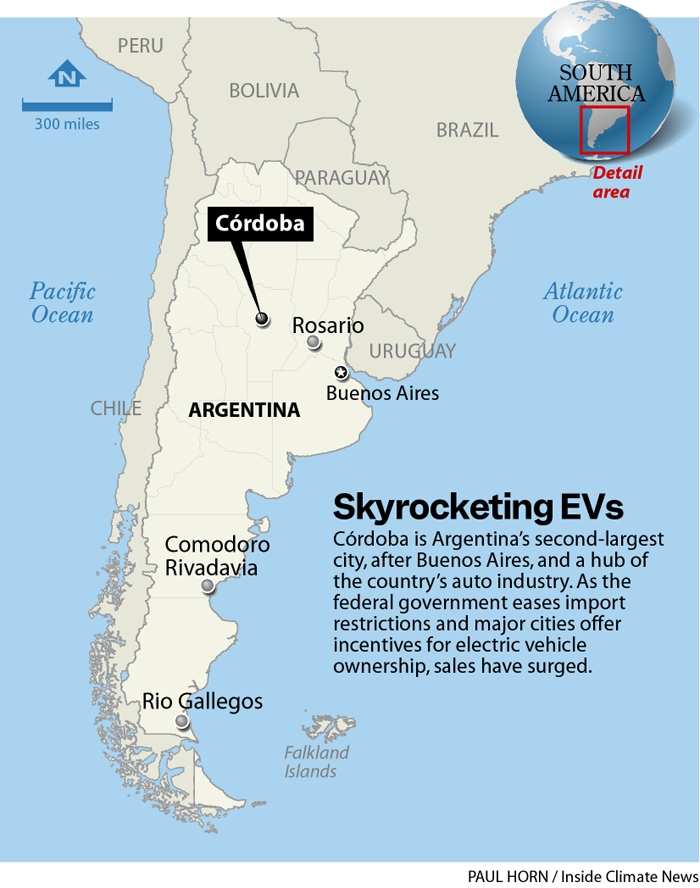
Building enough charging infrastructure will require significant investment, given the country’s size. It stretches more than 2,300 miles from Bolivia to Patagonia, with Antarctica not far from the southern tip. And Milei has frozen federal funding for many infrastructure projects, telling local governments “no hay plata,” or “there is no money.”
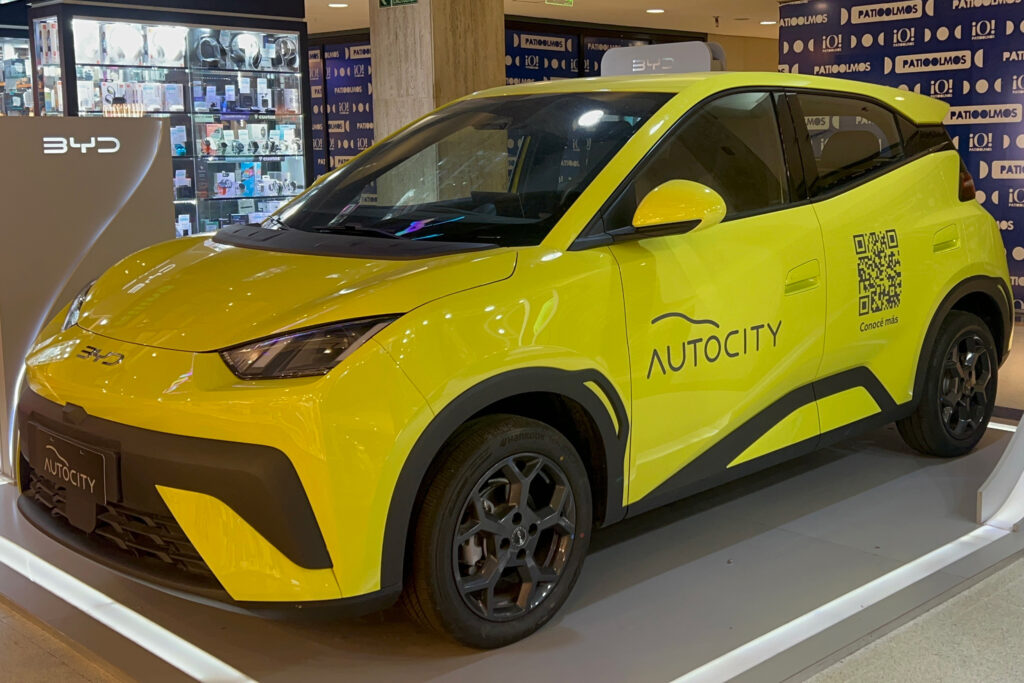
Even so, Colombres, who owns a black Dolphin Mini himself, remains bullish on Argentina’s EV market. He sees enthusiasm spreading by word of mouth, as drivers discover that the vehicles are quiet and smooth, with less pollution. The only people he thinks won’t be won over are drivers who regularly travel long distances—or those who are “in love with the noise” of a gasoline engine.
A Market Grows from Almost Zero
Each country’s auto market has a different story, but analysts said some common themes have emerged: Much of the growth in EV market share has come as Chinese automakers enter new countries.
Another major factor is the desire for fuel security, heightened this year by the Iran war. For example, Costa Rica has zero oil production and rapidly rising EV market share. But some oil-producing countries, including Argentina, have also joined in the EV boom.

Some governments embrace EVs to help address air pollution. Indonesia and Thailand are among the places with poor urban air quality and surging EV ownership.
Last year, one in four new cars sold worldwide was electric or plug-in hybrid, according to the International Energy Agency. In China, the world’s largest auto market and the leader in EV manufacturing, that number was 53 percent. Norway’s 97 percent was highest.
The United States, at 10 percent, was well below the global average, while the European Union was above it, with 27 percent.
Now, countries smaller and poorer than the United States could soon surpass it.
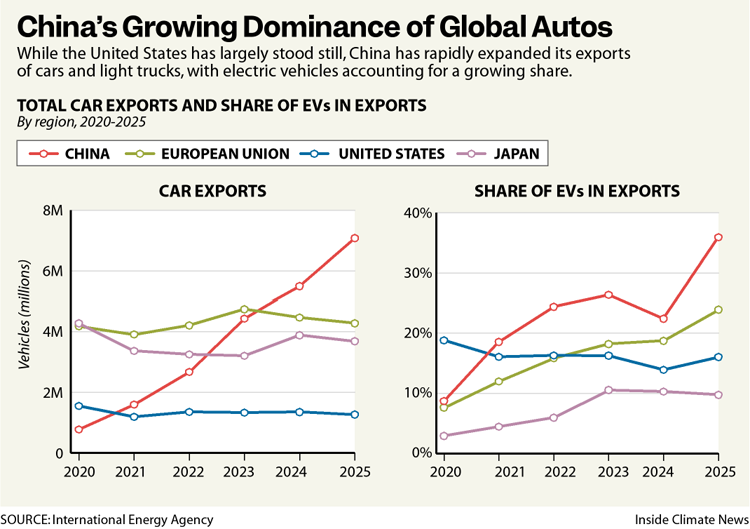
Predicting the next growth market is becoming easier. It’s going to be “whichever market BYD looks to target next,” said George Whitcombe, an EV analyst for Benchmark Mineral Intelligence in the United Kingdom. BYD’s spending on dealerships and advertising has yielded growth in places where others put little effort into selling EVs, he said.
Argentina, South America’s second-largest market for new car sales behind Brazil, is one example.
BYD launched in Argentina in mid-2025 with presales and marketing, followed by the opening of the first three dealerships, including the one in Córdoba, the country’s second-largest city. When preorders opened, 450 Argentines put down $500 deposits for cars they had never seen in person, touched or test-driven—an unusual response in a country where consumers typically greet unfamiliar products with skepticism, Bornancini said.
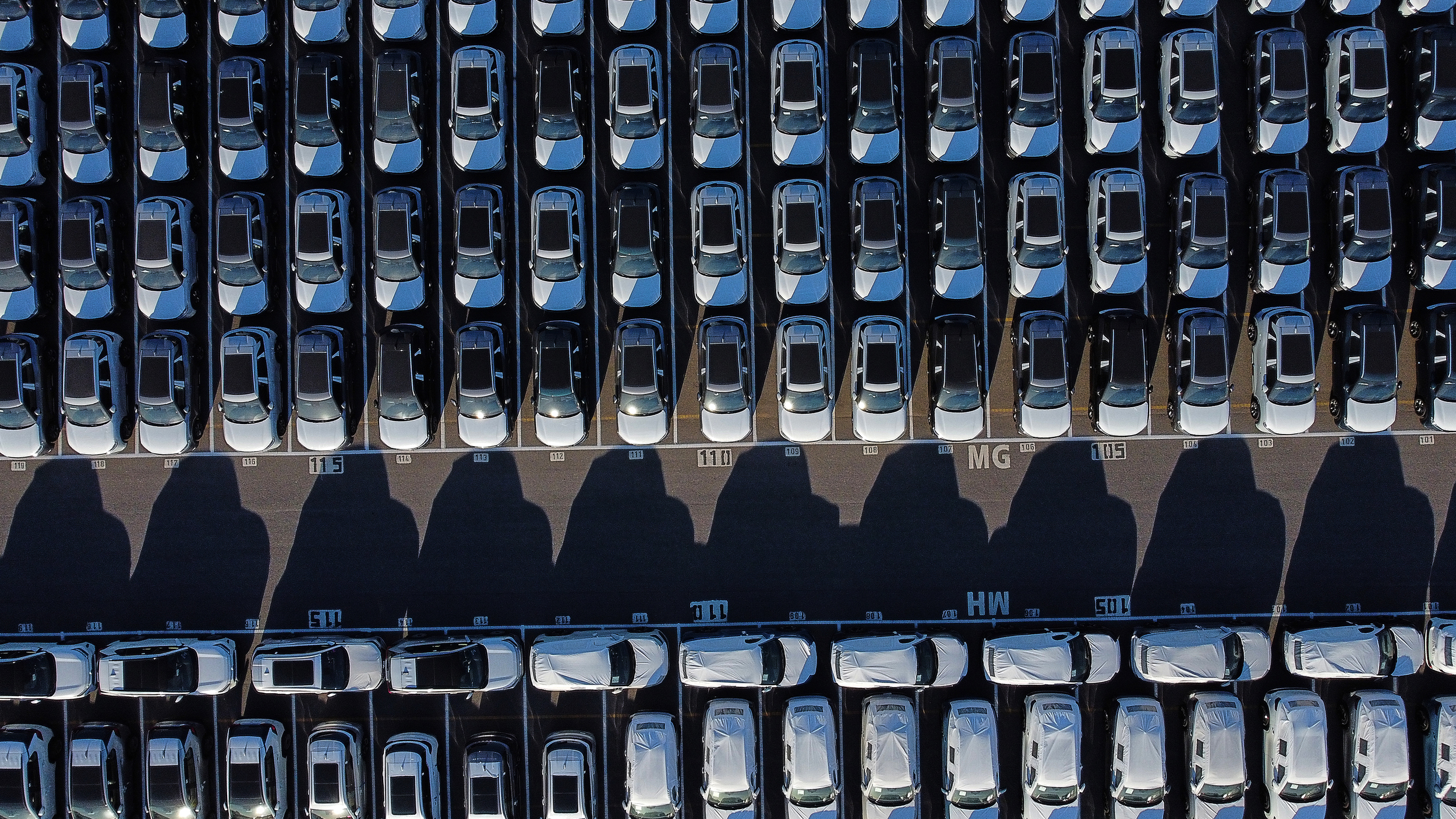
So far in 2026, BYD commands 89 percent of Argentina’s all-electric and plug-in hybrid sales and is in the top 10 overall, ranking ninth, as of May, according to registration data.
Argentina’s leading automobile brands are Toyota and Volkswagen, each with about 15 percent of new car sales.
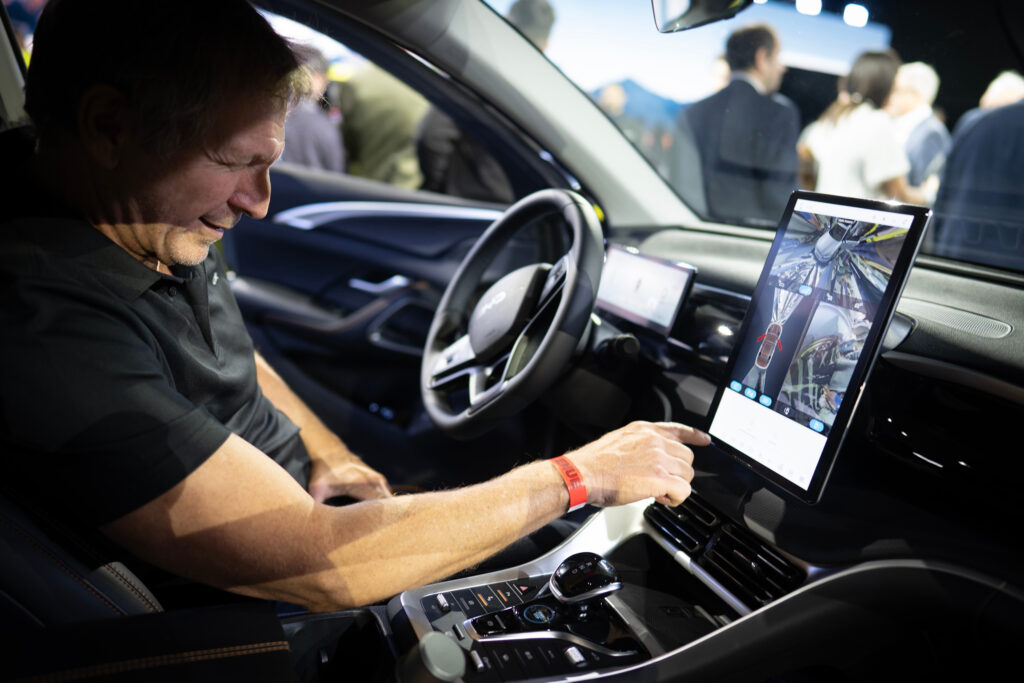
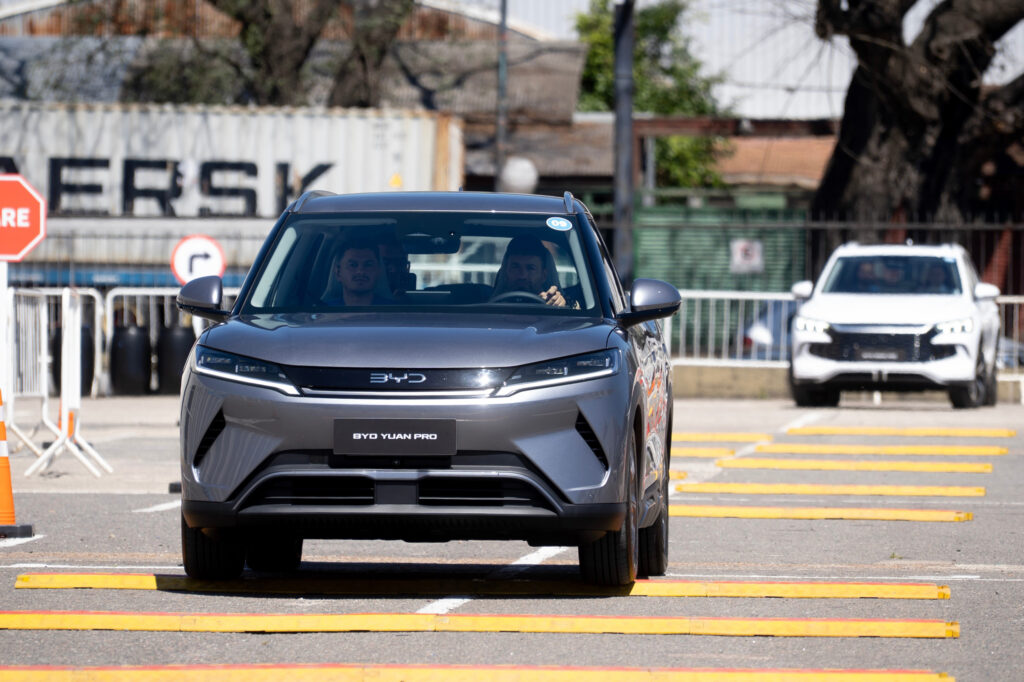
People test out BYD cars during a launch event in Buenos Aires, Argentina, on Oct. 8, 2025. Credit: Martin Zabala/Xinhua via Getty Images
Researchers urge caution when examining sales data because it may include quirks, including some used vehicles from Brazil that buyers drove over the border and registered in Argentina. The upshot is that observers can spot trends, such as the increase in EV share, but should view the figures as approximate.
A year ago, the Argentine EV market barely existed. Its locally based EV manufacturers are small, including Coradir, maker of the TITO, a subcompact car.
From BYD’s perspective, the growth in Argentina builds on momentum from Brazil, where BYD has sold cars since 2023. Brazil’s EV market share was 12.7 percent in the first quarter.
As the world shifts away from gasoline engines, the investment in South America is part of BYD’s long-term strategy to position itself as the preeminent automaker globally. The company has become the poster child for Beijing’s broader strategy to dominate foreign markets and make Chinese technology ubiquitous.
Avoiding Simple Conclusions
It may be tempting to view the rapid adoption of EVs in emerging markets as a reason for optimism about the world’s ability to reduce transportation emissions.
But the people who probe deeply into emissions data say the picture is hazy because of clashing trends. On one hand, the rising market share for EVs signals progress if it’s replacing gasoline or diesel vehicles. On the other hand, many low- and middle-income markets are seeing growth in overall vehicle ownership, including an increase in the share of the population driving two- and four-wheel gasoline vehicles.
“One of the trends that’s happening in general on vehicle ownership in a lot of these markets, including in Indonesia and India, is that people’s general perception of economic growth in society is that I graduate from owning a two-wheeler to buying a car, and then if you buy a car, then it’s a bigger car,” said Ramji, the director of the Global South Center for Clean Transportation.
Ramji previously worked as an economist for Mahindra, the Mumbai-based automaker, and an analyst with the International Energy Agency. At the University of California, Davis, he oversees a policy and research program that monitors EV adoption in emerging markets and advises governments.
His research has shown him that the way high-income countries think about the shift to electrified transportation bears little resemblance to the reality in developing countries.
In many of the lower-income countries where EV ownership is rising, many, if not most, people don’t have motorized transportation. Rising car use puts pressure on governments to build and maintain roads. It leads to palpable shifts in the rhythm of daily life, while also increasing emissions.
The larger point, Ramji said, is that sustainable emissions reductions will require a suite of policies and are more complex than simply increasing EV market share.
Sidestepping a Culture Clash
On a recent afternoon, young families and middle-aged couples filled the Córdoba BYD dealership on the outskirts of the city’s urban center.
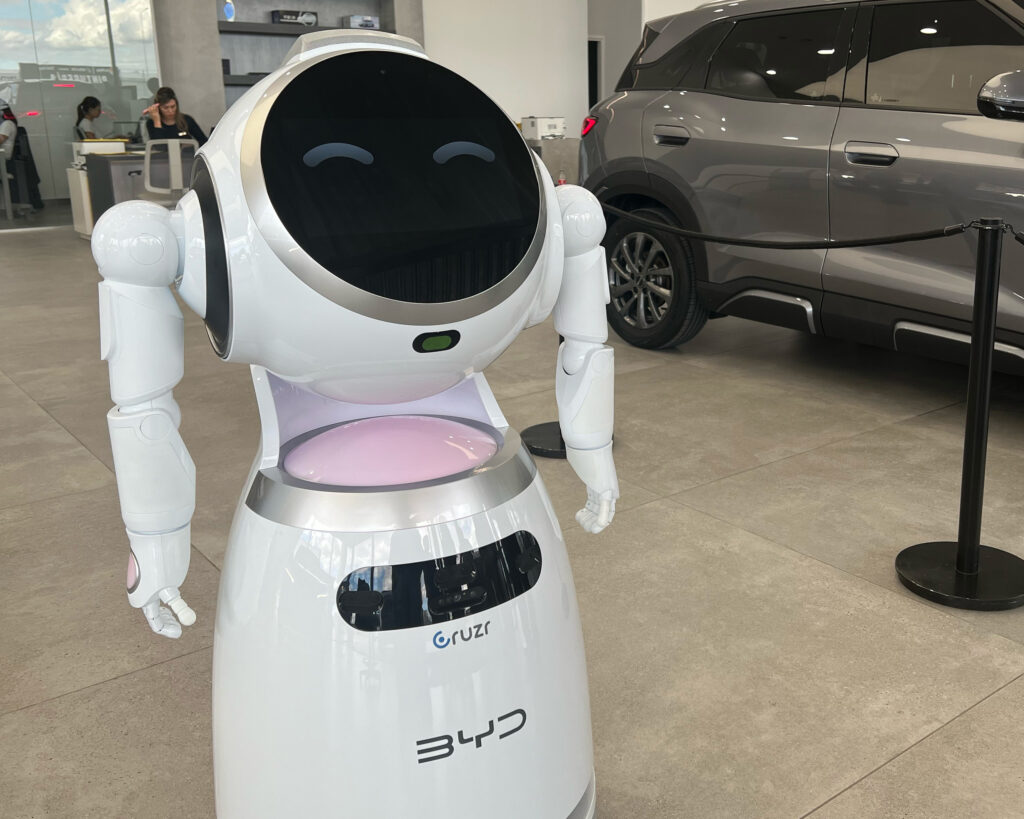
Customers drifted among SUVs and hybrid pickup trucks, pausing before touchscreens and peering into cabins bathed in soft light. Paid influencers filmed in front of a massive curved screen where images of the Eiffel Tower and soccer matches flickered by. A robot glided across the polished showroom floor.
BYD’s tech-heavy approach has helped overcome a longstanding perception among Argentines that Chinese products are inferior, but cultural and structural challenges remain.
In the showroom, signage is in English rather than Spanish or Mandarin—a deliberate choice to position the brand as global rather than distinctly Chinese, according to Bornancini, the sales manager.
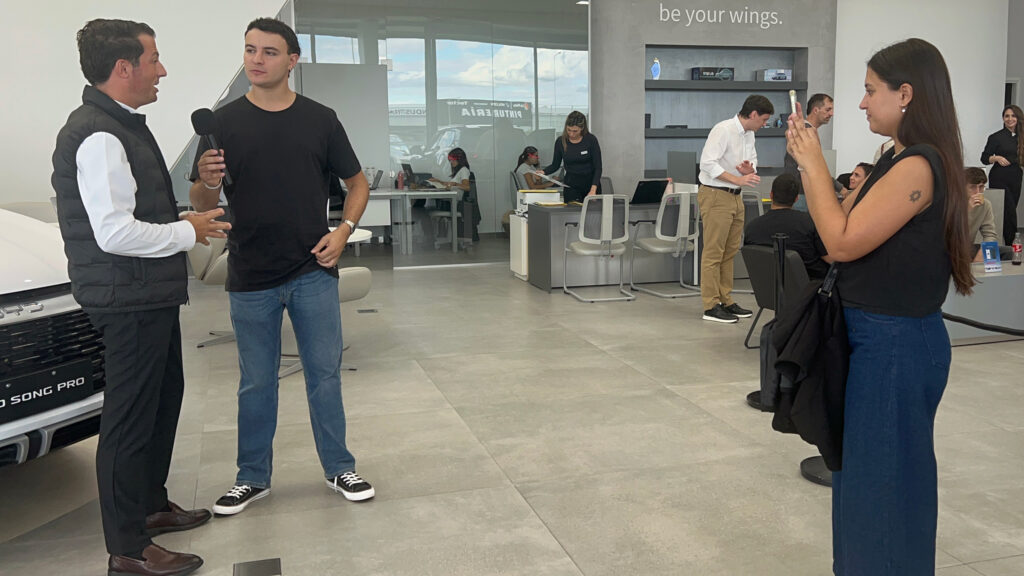
There is also the matter of cultural translation. Initially, company officials proposed greeting customers in the parking lot and escorting them inside the store, a practice that is part of BYD’s customer-service model elsewhere.
“We told them that if you approach an Argentine at their car, they’ll run thinking you’re going to rob them,” Bornancini said, laughing.
BYD has also positioned itself as part of the solution to climate change, claiming it can lower global warming by 1 degree Celsius—if it captures 80 percent of the world market share. The claim is aspirational; most climate scientists say that addressing climate change will take coordinated, global action across sectors.
“It’s a good play on marketing and capitalism,” Bornancini said. “We will do a good thing, but to do that we need to stampede the market.”
For some buyers, that message resonates.
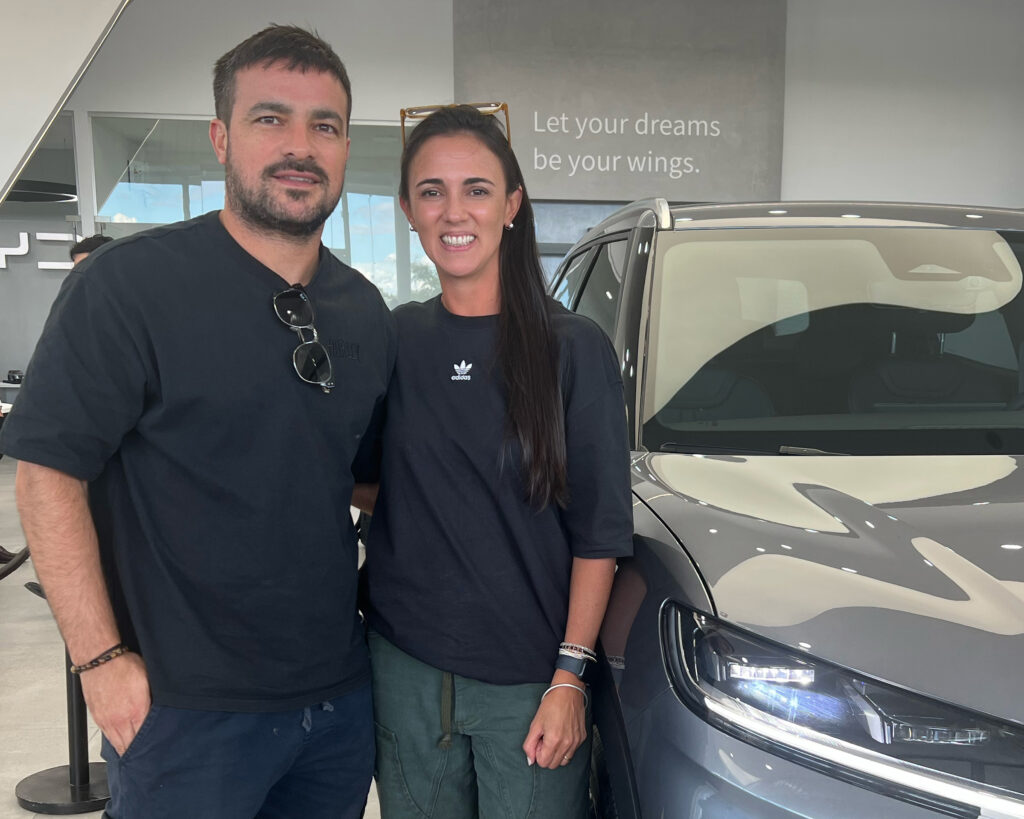
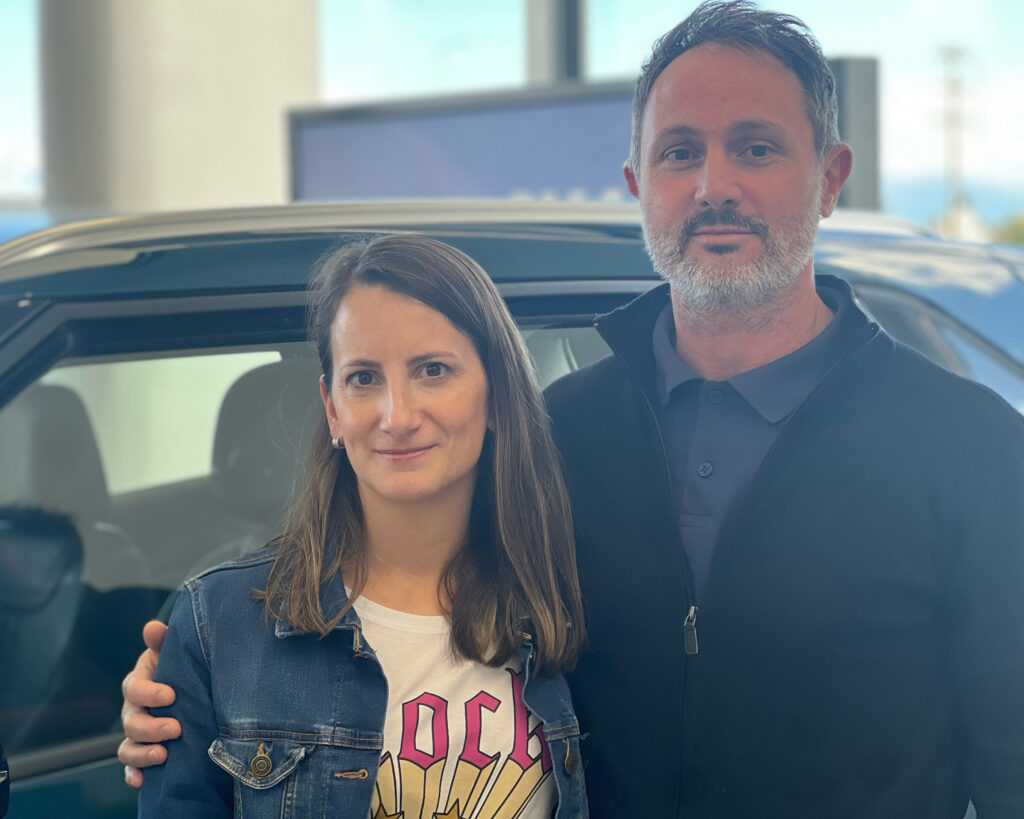
María Victoria Bruzzesi, 38, and Franco Martín Silvestre, 45, were first drawn by the technology—and then by the climate implications.
“When we have an opportunity to make greener choices, we do,” said Bruzzesi, a teacher who emphasizes sustainability in her classroom.
Their new purchase, a BYD Yuan Pro, briefly makes them a three-car household. But not for long. They plan to sell their other vehicles and replace them with another hybrid—likely a BYD, the couple said.
To Bornancini, that kind of loyalty is exactly what BYD is trying to build. “It’s not a car,” he said, reciting the company’s slogan, “it’s a BYD.”
Enticed by BYD’s success, other electric brands, including Tesla, are preparing to enter the market. BYD’s corporate office did not respond to a request for comment.
Bornancini is not concerned about potential competitors.
“They’re not catching up,” he said. “And they’re not going to catch up fast enough.”
About This Story
Perhaps you noticed: This story, like all the news we publish, is free to read. That’s because Inside Climate News is a 501c3 nonprofit organization. We do not charge a subscription fee, lock our news behind a paywall, or clutter our website with ads. We make our news on climate and the environment freely available to you and anyone who wants it.
That’s not all. We also share our news for free with scores of other media organizations around the country. Many of them can’t afford to do environmental journalism of their own. We’ve built bureaus from coast to coast to report local stories, collaborate with local newsrooms and co-publish articles so that this vital work is shared as widely as possible.
Two of us launched ICN in 2007. Six years later we earned a Pulitzer Prize for National Reporting, and now we run the oldest and largest dedicated climate newsroom in the nation. We tell the story in all its complexity. We hold polluters accountable. We expose environmental injustice. We debunk misinformation. We scrutinize solutions and inspire action.
Donations from readers like you fund every aspect of what we do. If you don’t already, will you support our ongoing work, our reporting on the biggest crisis facing our planet, and help us reach even more readers in more places?
Please take a moment to make a tax-deductible donation. Every one of them makes a difference.
Thank you,

Dan Gearino
Reporter, Clean Energy
Dan Gearino covers the business and policy of renewable energy and utilities, often with an emphasis on the midwestern United States. He is the main author of ICN’s Inside Clean Energy newsletter. He came to ICN in 2018 after a nine-year tenure at The Columbus Dispatch, where he covered the business of energy. Before that, he covered politics and business in Iowa and in New Hampshire. He grew up in Warren County, Iowa, just south of Des Moines, and lives in Columbus, Ohio.