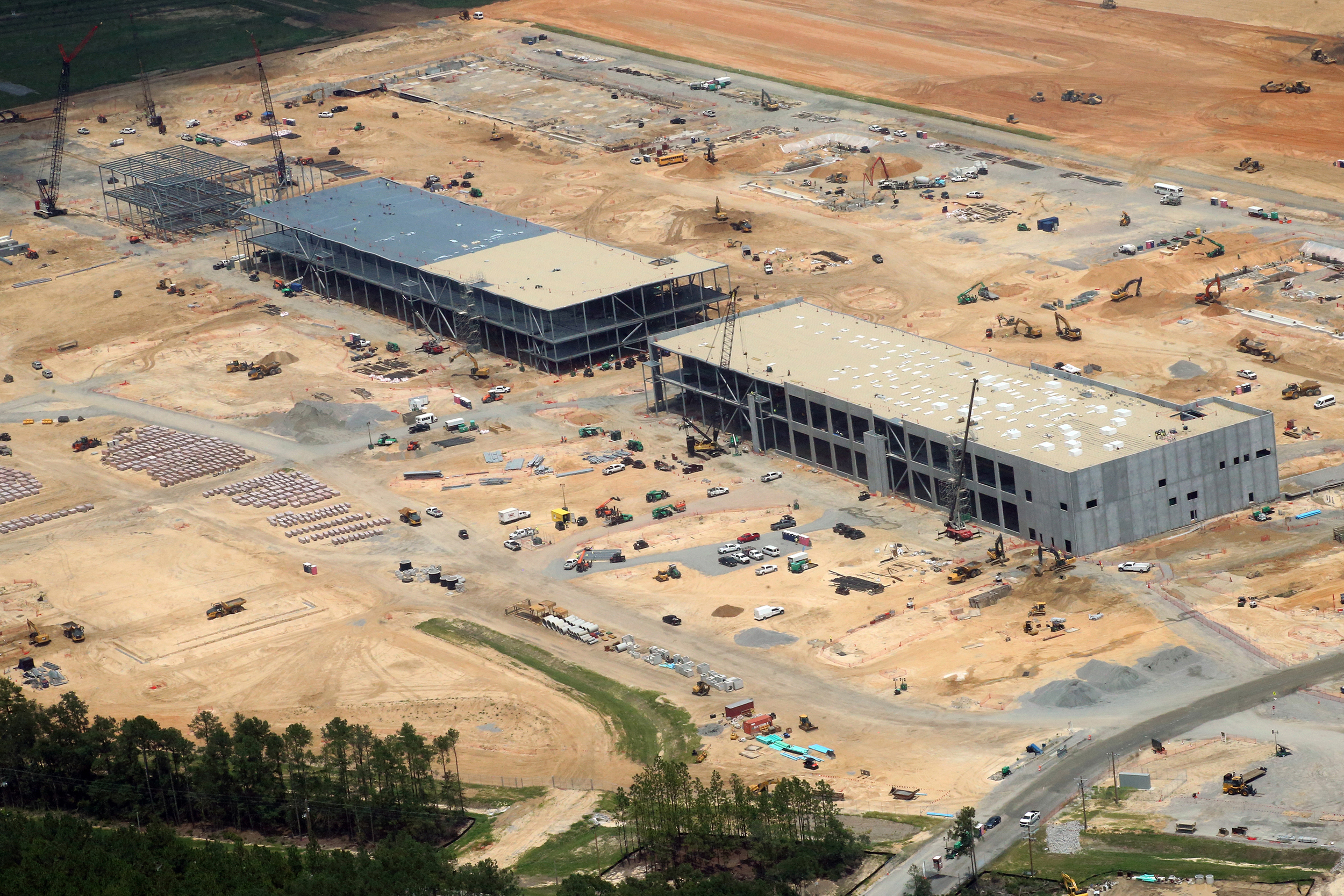


HENDERSON, N.C.—On a recent summer evening Mitzi Parrott, who lives in Vance County, saw a television commercial on the evening news that gave her pause. Kathie Hamm and Bobbie Lequire, also of Vance County, saw it, too, streaming on Sling and posted on Nextdoor.
The ad extolled the purported economic benefits of data centers, including the claim that these enormous power-hungry facilities pay their own energy costs so “North Carolina families don’t have to.”
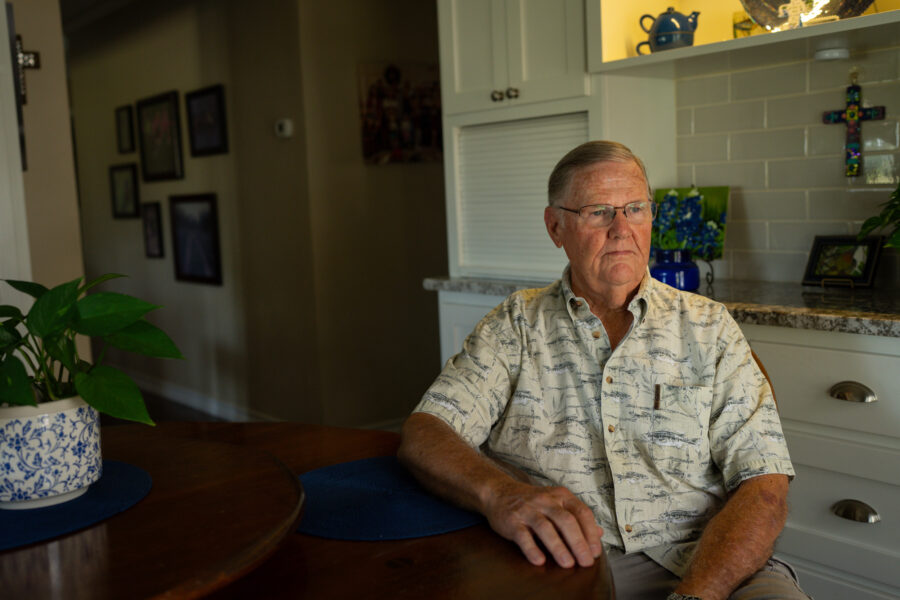
“I knew it wasn’t true, and it concerned me that other people wouldn’t know the other side,” said Parrott, whose land could back up to a proposed data center. “I figured somebody in the data center industry had to be behind it.”
Parrott was right.
Over the last two months, to counter the souring public sentiment, a group called North Carolina Connects has been running ads on TV, radio and social media promoting data centers.
What the ads don’t disclose is who’s behind North Carolina Connects: The Data Center Coalition, a powerful trade group composed of some of the largest tech corporations—Amazon, Microsoft and Google—as well as smaller companies that build, support or operate the facilities.
The Data Center Coalition is based in Virginia, which has the largest number of data centers in the U.S., 674, according to market intelligence firm Data Center Map. The coalition launched as a nonprofit group in 2019, federal tax records show, with total revenues of $304,000. As the data center industry expanded, the coalition’s fortunes grew: In 2024, the group reported $4.6 million in revenue.
The DCC has formed similar nonprofit groups in several states, such as Ohio, Virginia and Texas. The websites look alike and contain no contact information aside from an online form.
During a video interview with Inside Climate News, Dan Diorio, DCC’s executive vice president of state policy and government affairs, kept his camera off. He did not answer questions about the link between North Carolina Connects and the larger organization. Instead, he directed Inside Climate News to a company statement that reads in part:
“North Carolina Connects represents stakeholders from the data center ecosystem, including the Data Center Coalition, working to inform North Carolinians about the benefits of data centers. … Through North Carolina Connects, the industry seeks to better explain the role of data centers to the public—including how they operate, why they are important to our daily lives and the 21st-century economy, as well as information about the industry’s responsible usage of water and its commitment to paying for the energy it uses.”
The coalition touts the windfalls they say data centers deliver to communities. In North Carolina, the DCC says data centers generate $1.3 billion in state and local tax revenue, based on public documents. However, without fuller public disclosures it’s difficult, if not impossible, to verify some of the claims.
Diorio acknowledged that data centers keep some operational details confidential, but “what you’re seeing now is very much a concerted effort for the industry to get a better handle on what information is proprietary and confidential, and then how do we release the information.”
Developers frequently require local governments to sign non-disclosure agreements. They don’t release their energy and water use and their wastewater discharges. Amazon recently asked the state Division of Air Quality to keep confidential details of its air permit application, but relented after the regulators questioned the company’s reasoning.
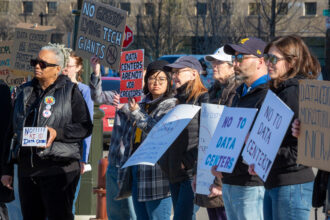
Opposition to data centers is increasing nationwide, according to a recent survey conducted by the Annenberg Public Policy Center (APPC) of the University of Pennsylvania. Of the 1,320 U.S. adults polled in mid-June through mid-July, 61 percent said they opposed the construction of new data centers in their area.
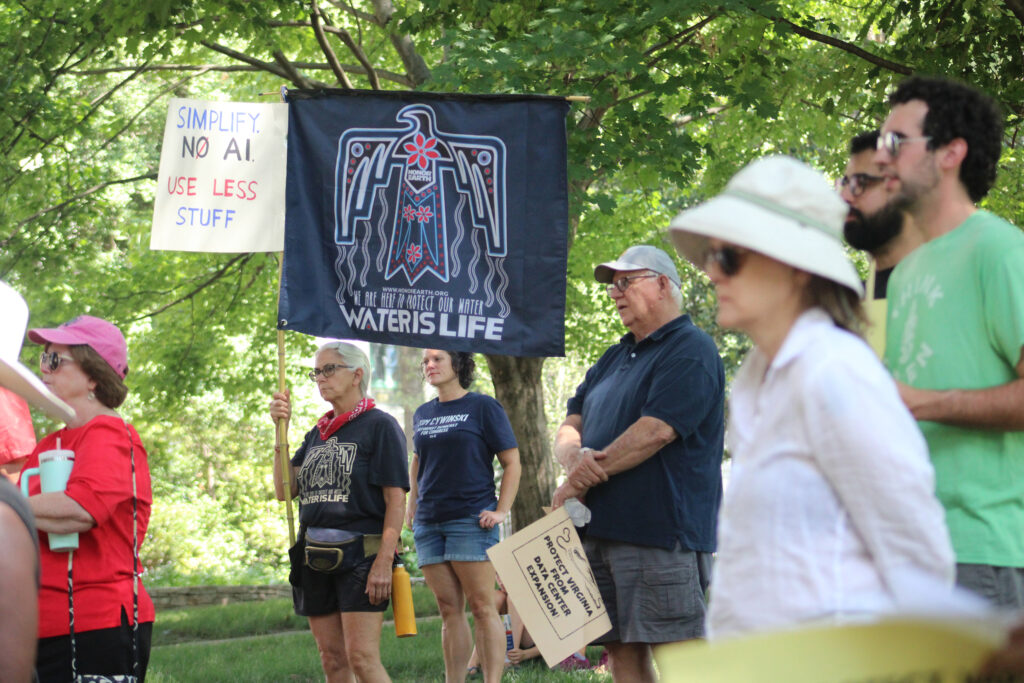
That figure is 12 percentage points higher than a similar survey conducted by the APPC in February and March.
The public relations push isn’t working, said Jeremy Solomon, president and founder of Learnewable. His company uses AI to analyze government ordinances, moratoria and public comments about data centers, renewable energy and electric transmission projects in each of the nation’s 3,144 counties.
Nationwide, approximately one in seven counties now has some form of restriction, Solomon said, and advertising won’t win the public’s trust.
“The real counter to a moratorium wave is disclosure,” he said. “Publish the energy load, the water and the actual value of the tax breaks.”
Microsoft announced last spring that it would no longer require local governments to sign NDAs, and the company terminated any existing ones, such as one with Person County officials over a planned data center north of Roxboro.
The Data Center Coalition has tried to counter public concerns about rising electricity prices and the facilities’ voracious appetite for energy. In the PJM territory, which includes northeastern North Carolina and a dozen more states, data center demand, coupled with a recent heat wave, tripled energy prices, according to Oil.com.
“We pay for every single kilowatt hour,” the North Carolina Connect ad says. “That’s building responsibly.”
This story is funded by readers like you.
Our nonprofit newsroom provides award-winning climate coverage free of charge and advertising. We rely on donations from readers like you to keep going. Please donate now to support our work.
Donate NowIt’s also common. Most businesses, such as factories, restaurants, hair salons and banks, as well as homeowners and renters also pay for all of their energy usage. What the North Carolina Connects ad omits is that until early July, when the legislature repealed an exemption for data centers, most paid no sales tax on electricity.
Under that exemption, a large project that consumed 100 megawatts of energy avoided paying as much as $2.2 million a year, state Commerce Department figures show.
“The legislature agreed to remove the data center’s sales tax exemption for electricity, so you and I will no longer be subsidizing their energy consumption,” Gov. Josh Stein said at a press conference in July as he signed the bill.
Lawmakers kept data centers’ sales tax exemption on certain equipment, worth more than $45 million that would otherwise go to state and local governments each year.
Anne Harvey David is chief counsel for environmental justice with the Southern Coalition for Social Justice, which has represented residents fighting data centers.
“There are just so many unanswered questions with every single one of these projects that I think it’s really a big part of why people are so opposed to having these data centers in their communities. It has a very cloak and dagger feel,” Harvey David said. “You don’t even know when there is an NDA, and communities don’t have a chance to oppose these data centers until it’s nearly a done deal for their community.”
Job Creation, Trade Secrets
The data center industry promises local governments that the facilities will create dozens, if not hundreds, of good-paying jobs. Amazon told Richmond County officials that 500 people will eventually work at its hyperscale data center in Hamlet.
In North Carolina, data centers aren’t required to publicly disclose their employment numbers, even if they receive tax breaks. Last year Google signed an agreement with the City of Lenoir designating the company’s job figures as a trade secret.
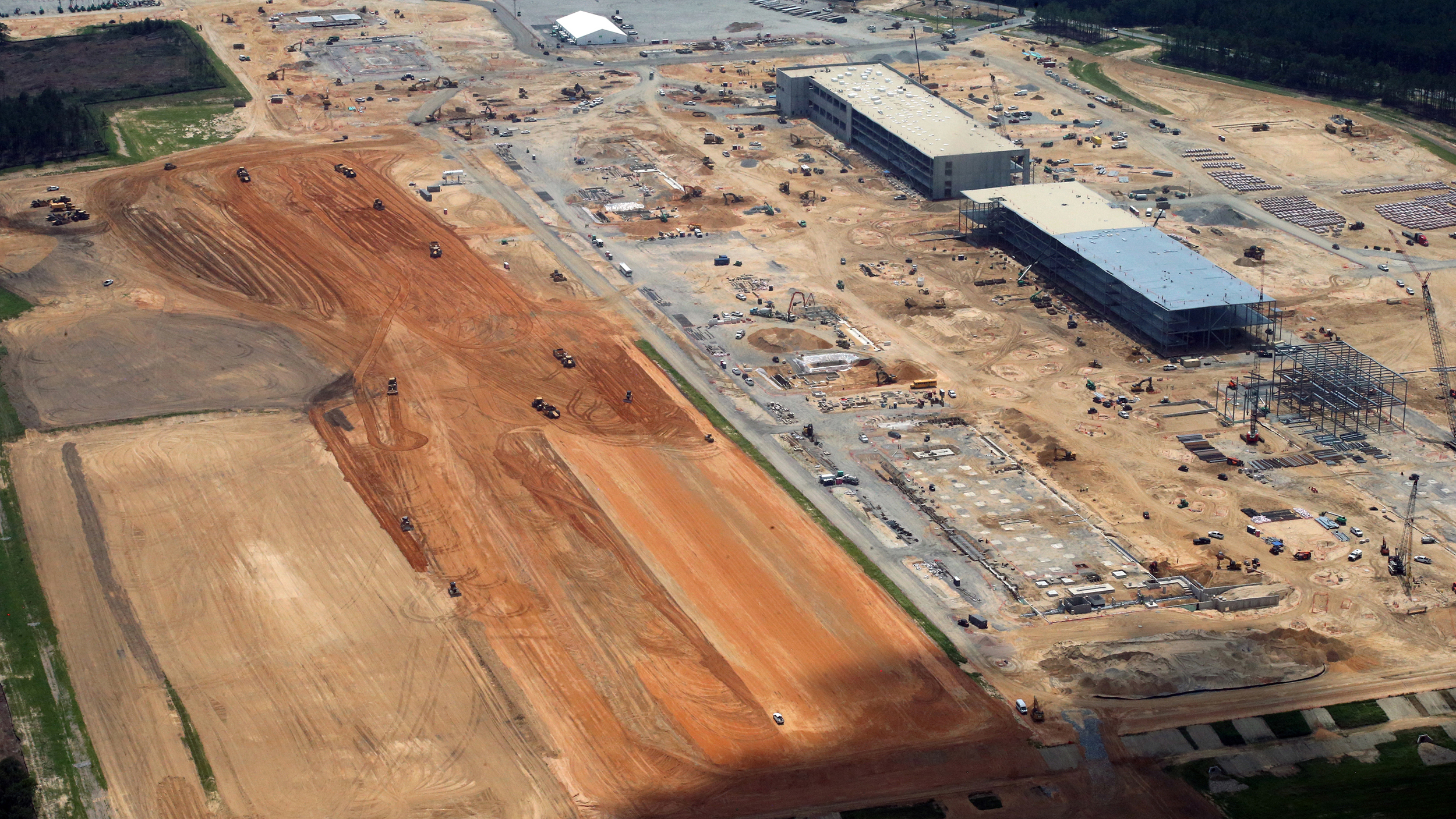
The Data Center Coalition commissioned a report by PWC, a research, management and consulting firm, to estimate the economic impact of data centers in the U.S. Using federal labor data, PWC calculated that the industry created 1 million direct jobs in 2024. Of those, 24,000 were in North Carolina.
Another 4.5 million “indirect and induced” positions were supported nationwide; 56 percent were service jobs, and 10 percent were in real estate, finance and insurance. North Carolina accounted for 107,000 of the indirect and induced positions.
The report doesn’t have a breakdown of the pay scales for the types of positions. The figures also include part-time workers, the self-employed and contractors, who might not qualify for company-supported health insurance or retirement plans.
DCC said that while it paid for the study, it did not dictate how PWC conducted its research or the results.
Diorio provided Inside Climate News with an example of how data centers can spark new or expanded companies. In Northern Virginia, two veterans started a portable toilet company and added data center construction sites to their clients. They’re now in five states, Diorio said, with 70 employees. “It’s been a huge part of how they’ve been able to expand.”
So far, those success stories aren’t resonating with many North Carolina residents and their elected officials.
Ten counties, 17 cities and the Eastern Band of Cherokee Indians have enacted their own temporary moratoria on data centers, according to information compiled by Frank Muraca, a former analyst with the N.C. Department of Commerce. Two local governments rejected a moratorium.
The terms range from one year to 32 months, the maximum allowed under state law. Local governments can’t pass a permanent development moratorium without legislative approval.
Data center developers encounter greater resistance in counties with more people, Solomon said. Learnewable’s most recent figures show developers are shifting toward lower-population counties in the Upper Midwest, Colorado, Wyoming and Alaska.
These areas have fewer restrictions, simpler permitting processes and could be lured by promises of additional tax revenue and employment benefits, according to Solomon. Fewer people could also mean fewer conflicts involving traffic, noise, water consumption and competing land uses.
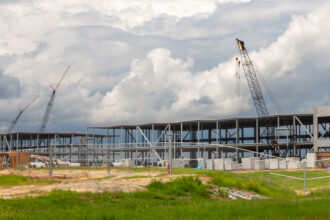
Vance County, a rural area that borders Virginia, doesn’t have any data centers yet. That could change. Despite public opposition, the county commissioners in April rezoned land to allow Natelli, a Maryland real estate company, to develop the land potentially for a data center. If built, the facility would be near five rural neighborhoods, a school and a church.
Natelli had planned to develop a data center site near Apex, in southern Wake County, but withdrew the proposal because of local opposition.
Kathie Hamm, who lives in Vance County, said the county hasn’t shared any information about the Natelli project. “Nothing but secrecy,” said Hamm, who is co-organizing her community against the proposals. “I’m not a protester, but this is what we’re faced with.”
The situation in Vance County illustrates what Learnewable’s analysis has shown.
“It doesn’t even take a finished building,” Solomon said. “Once a proposal shows up in a county’s public record, sentiment turns negative and the odds of maximum hostility nearly triple.”
There is no goodwill dividend for doing it well, Solomon added. Counties where past projects were positive and successful still score worse than counties that never had one.
“The most favorable counties are favorable,” he said, “because nobody has proposed anything there yet.”
About This Story
Perhaps you noticed: This story, like all the news we publish, is free to read. That’s because Inside Climate News is a 501c3 nonprofit organization. We do not charge a subscription fee, lock our news behind a paywall, or clutter our website with ads. We make our news on climate and the environment freely available to you and anyone who wants it.
That’s not all. We also share our news for free with scores of other media organizations around the country. Many of them can’t afford to do environmental journalism of their own. We’ve built bureaus from coast to coast to report local stories, collaborate with local newsrooms and co-publish articles so that this vital work is shared as widely as possible.
Two of us launched ICN in 2007. Six years later we earned a Pulitzer Prize for National Reporting, and now we run the oldest and largest dedicated climate newsroom in the nation. We tell the story in all its complexity. We hold polluters accountable. We expose environmental injustice. We debunk misinformation. We scrutinize solutions and inspire action.
Donations from readers like you fund every aspect of what we do. If you don’t already, will you support our ongoing work, our reporting on the biggest crisis facing our planet, and help us reach even more readers in more places?
Please take a moment to make a tax-deductible donation. Every one of them makes a difference.
Thank you,

Lisa Sorg
Reporter, North Carolina
Lisa Sorg is the North Carolina reporter for Inside Climate News. A journalist for 30 years, Sorg covers energy, climate environment and agriculture, as well as the social justice impacts of pollution and corporate malfeasance.
She has won dozens of awards for her news, public service and investigative reporting. In 2022, she received the Stokes Award from the National Press Foundation for her two-part story about the environmental damage from a former missile plant on a Black and Latinx neighborhood in Burlington. Sorg was previously an environmental investigative reporter at NC Newsline, a nonprofit media outlet based in Raleigh. She has also worked at alt-weeklies, dailies and magazines. Originally from rural Indiana, she lives in Durham, N.C.