

Natural gas is fading from California’s electricity mix more quickly than seemed possible just a few years ago.
The state hit its peak for gas-fired electricity in 2014 and has fallen in eight of the 11 years since. The retreat is accelerating, with a 15 percent decrease in 2025 compared to 2024, and a 26 percent drop in the first half of this year compared to the first half of 2025, according to the U.S. Energy Information Administration.
Renewable sources now generate more of California’s electricity than gas. So how did this happen?
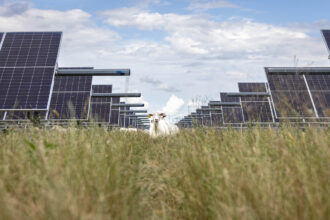
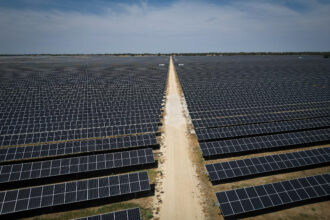
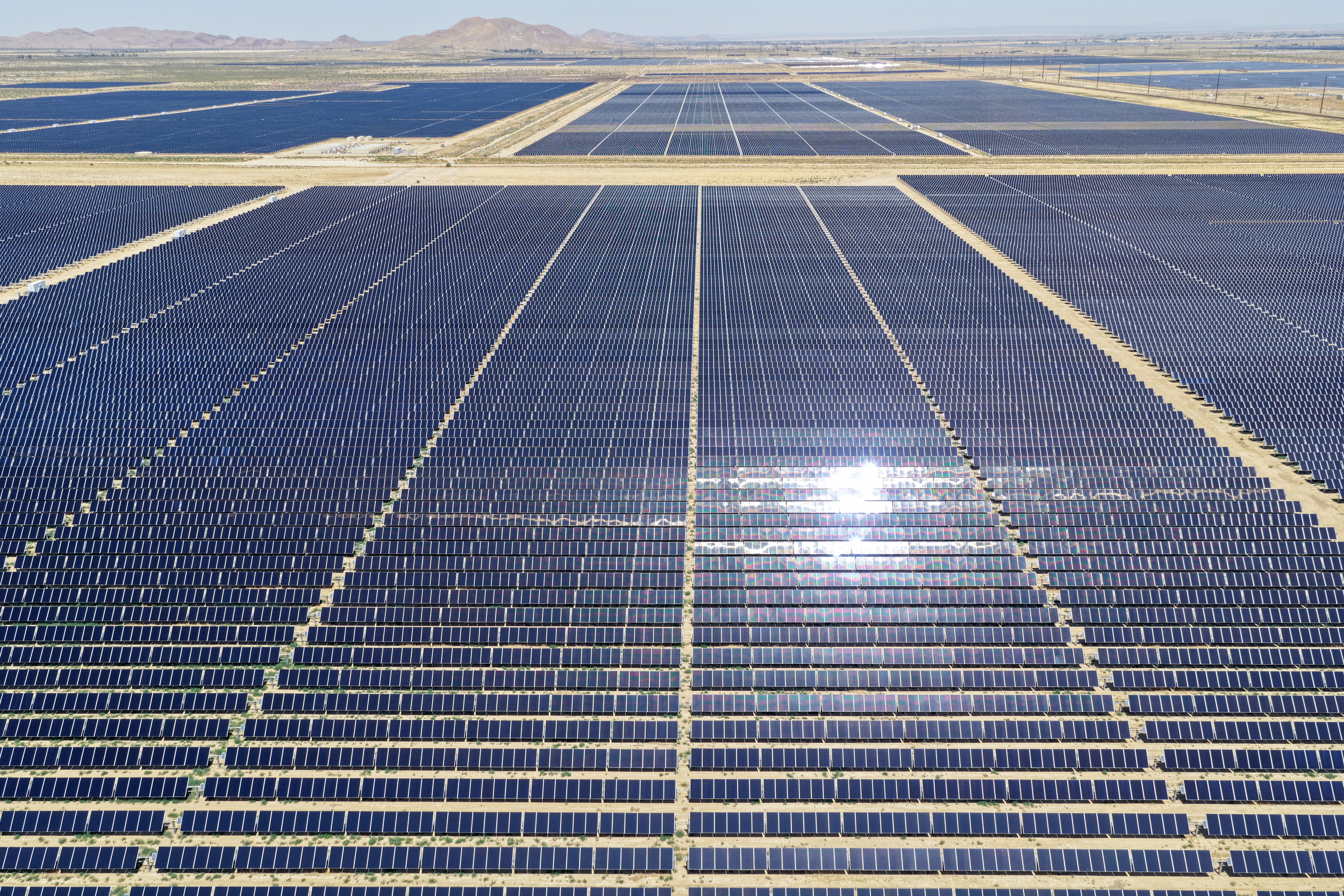
First, California built an immense amount of utility-scale solar. Then, the state built a whole lot of battery energy storage to soak up that solar. At the same time, grid operators in California and neighboring regions found ways to share electricity more efficiently.
Consumers did their part by installing rooftop solar and batteries, reducing demand on the grid.
None of this was by accident. California officials adopted laws and rules aimed at reducing carbon emissions. The state still shoots itself in the foot sometimes—such as with rooftop solar net metering rules that hurt the industry—but the overall direction is clear.
I spoke with Ed Smeloff, a longtime energy analyst and consultant, to understand California’s shift away from gas power and whether it’s replicable in other states.
“The key story here is batteries,” he said.
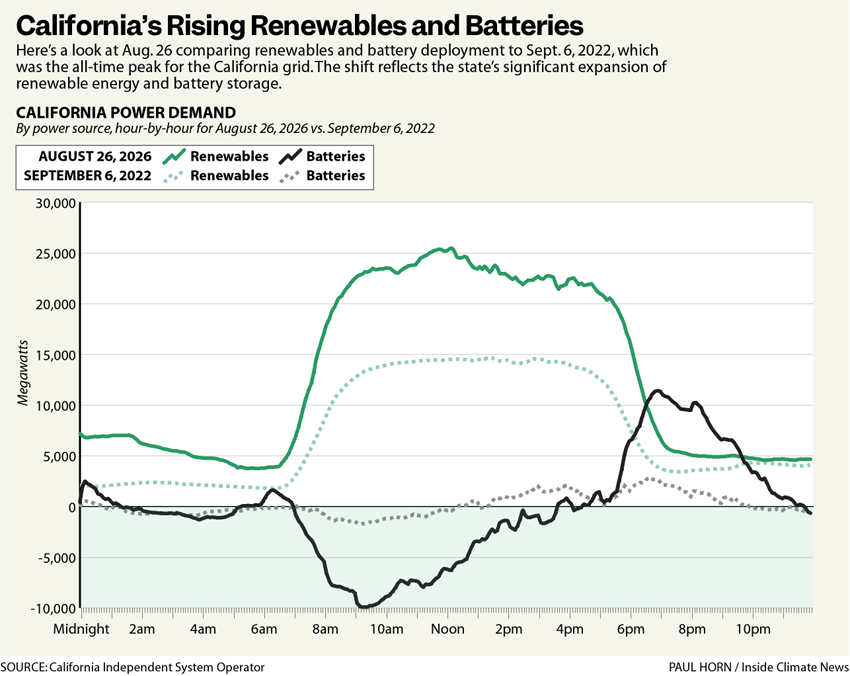
To show this, he used a chart of electricity supply on the California Independent System Operator grid on August 26, a day when demand hit a yearly peak at 5:55 p.m. with 46,015 megawatts.
He compared those results to a chart from Sept. 6, 2022, the all-time peak, with 52,061 megawatts.
The differences show a state that has made a leap in the transition away from fossil fuels.
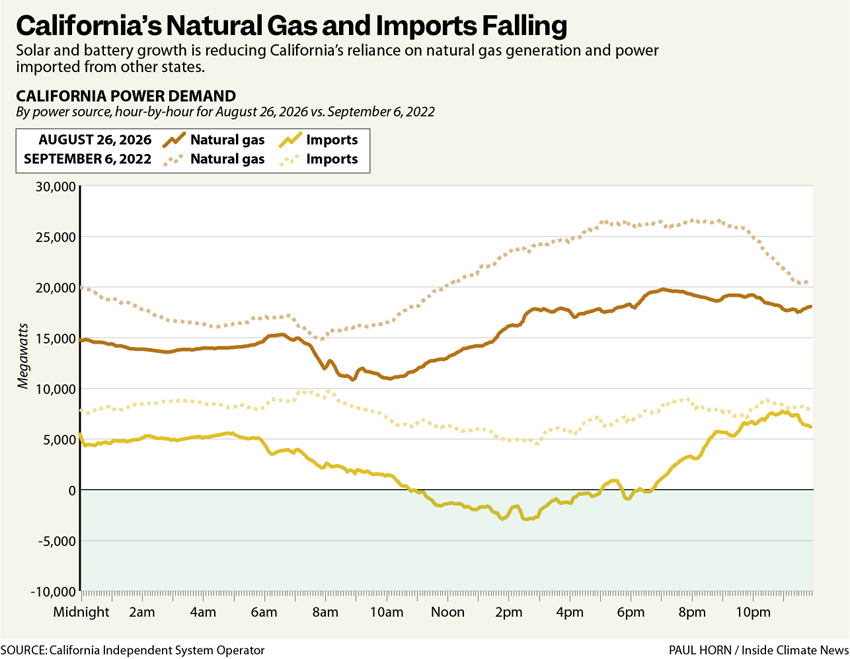
Let’s focus first on Aug. 26, where the green line for renewable energy towers above the brown line for natural gas for much of the day, with both resources outpacing everything else. (California lists “large hydropower” as its own category, which is the blue line, as opposed to counting it with the other renewables.)
Now, look at the black line for batteries. It’s below zero most of the time as the batteries charge using power from the grid, then rises sharply to its peak just after sunset.
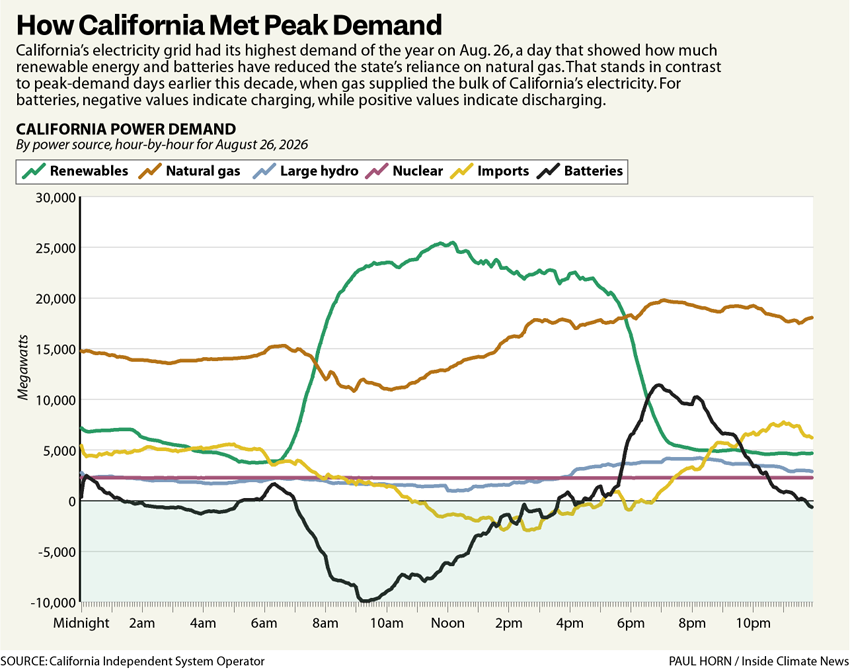
The batteries use plentiful solar power to charge when demand is low and then discharge when demand is highest.
On Sept. 6, 2022, utility-scale solar and batteries were significant resources, but much less than they were last month.
The increase in solar and batteries meant the state needed less natural gas and imported much less power from other states.
When imports dip below zero that means the state is a net exporter of power at that moment.
Those two days are a small sample, but similar trends become clear when looking at California’s electricity mix over longer timeframes.
The decrease in gas power mostly came from reducing the need for peaker plants, which are built to run for a few hours to cover peak demand. Peakers are some of the least efficient and most expensive power plants.
Over time, a shift to solar and batteries instead of peakers should reduce costs for consumers, but Smeloff’s research doesn’t address prices.
The drop in gas-fired power in California is notable just about every way you want to look at it. For example, California’s gas consumption for producing electricity has fallen from 10 percent of the country’s total in 2014 to 4 percent in 2025, the result of California’s reduction and an increase for the country as a whole, according to EIA data.
Notice I haven’t yet mentioned coal. It’s a tiny part of California’s electricity mix, having faded to almost zero.
I got in touch with Smeloff after reading a blog post he wrote in July for GridLab, the nonprofit research firm, about the many factors behind the decline in gas power usage in California.
There, he explained additional factors:
- Regional grids are getting better at communicating and sharing resources. One result is that hydropower in Oregon and Washington is more likely to be exported to California than before.
- The newly deployed SunZia wind project is located in New Mexico, but the California grid counts SunZia as a local resource because most of its power flows to California over a dedicated line as part of a firm contract. The wind farm is the largest in the country.
California also leads the nation in customer-owned solar and battery systems, which reduce demand on the grid. It’s difficult to quantify the precise effect on the grid, but it’s safe to say that the growth in these resources is part of the reason gas demand is shrinking.
Smeloff has done recent work for Vote Solar, an advocacy group, and has decades of experience in energy business and policy, including time with Sacramento Municipal Utility District and the Pace Energy and Climate Center in New York.
He said California’s decreasing use of gas is a sign that a cleaner grid is within reach.
Texas is the best example of another state where solar and batteries are helping to reduce the need for dirtier power sources, he said. But a similar formula can work almost anywhere.
Jayme Ackemann, a spokeswoman for California ISO, said there is a clear decrease in natural gas on the grid, but she is wary of focusing too much on the recent peak day. There is “a more nuanced conclusion” when looking more broadly at the system and seeing that gas provides benefits for reliability by being available, even if it’s used less, Ackemann said.
I also spoke with Jonathan Koomey, the California-based energy researcher and author, to see if he agreed with the idea that solar and batteries are largely responsible for pushing down demand for gas.
Koomey said this phenomenon is clear enough that it’s become “pretty obvious.”
While it’s obvious to energy researchers, I don’t think the public grasps the scale of the change in California. This is especially relevant as the Trump administration takes action to increase natural gas production and sales, and many new gas peaker plants are in some phase of planning or construction across the country.
We’re watching multiple visions of the grid of the future playing out in real time, and we all will see which one ends up being cleaner and cheaper.
Other stories about the energy transition to take note of this week:
Oil Prices Spike Again: Oil prices rose in recent days as hostilities flared in the Iran war. The Trump administration’s rollback of climate policies, combined with the rising fuel costs, is leaving customers more vulnerable to price shocks, as my colleague Marianne Lavelle reports. Consumers could protect themselves from volatile fuel prices by switching to an EV, but U.S. sales are down this year as the market adjusts to the loss of tax credits for buying new or used plug-in models, as I reported in July.
Onshore Wind Projects Continue to Be Stymied by Federal Government: Federal government policies have created long-term obstacles for onshore wind development, according to the American Clean Power Association. John Hensely, senior vice president of markets and policy analysis for the trade group, said 44 gigawatts of projects are stuck in federal review processes, as Diana DiGangi reports for Utility Dive. The Trump administration has made clear it opposes wind energy and has used a variety of approaches to slow development, such as turning formerly routine permit applications into long-term delays.
Georgia Stood to Benefit From EV Boom, and Now Suffers: Georgia attracted EV and battery manufacturers to the state only to see federal policies hurt the markets for the factories’ products. Now, the state and automakers such as Hyundai and Kia are struggling to adjust to the new economic reality, as Emily Jones reports for Grist.
New Design Increases Battery Density By Up to 15 Percent: Fraunhofer ISE in Germany has said it developed a lithium-ion battery that can increase energy density by 10 percent to 15 percent with no additional weight, as Lior Kahana reports for PV Magazine. The product, overseen by a consortium led by Fraunhofer, could lead to batteries that can last longer before needing to be recharged and would cost less.
Inside Clean Energy is ICN’s weekly bulletin of news and analysis about the energy transition. Send news tips and questions to [email protected].
About This Story
Perhaps you noticed: This story, like all the news we publish, is free to read. That’s because Inside Climate News is a 501c3 nonprofit organization. We do not charge a subscription fee, lock our news behind a paywall, or clutter our website with ads. We make our news on climate and the environment freely available to you and anyone who wants it.
That’s not all. We also share our news for free with scores of other media organizations around the country. Many of them can’t afford to do environmental journalism of their own. We’ve built bureaus from coast to coast to report local stories, collaborate with local newsrooms and co-publish articles so that this vital work is shared as widely as possible.
Two of us launched ICN in 2007. Six years later we earned a Pulitzer Prize for National Reporting, and now we run the oldest and largest dedicated climate newsroom in the nation. We tell the story in all its complexity. We hold polluters accountable. We expose environmental injustice. We debunk misinformation. We scrutinize solutions and inspire action.
Donations from readers like you fund every aspect of what we do. If you don’t already, will you support our ongoing work, our reporting on the biggest crisis facing our planet, and help us reach even more readers in more places?
Please take a moment to make a tax-deductible donation. Every one of them makes a difference.
Thank you,

Dan Gearino
Reporter, Clean Energy
Dan Gearino covers the business and policy of renewable energy and utilities, often with an emphasis on the midwestern United States. He is the main author of ICN’s Inside Clean Energy newsletter. He came to ICN in 2018 after a nine-year tenure at The Columbus Dispatch, where he covered the business of energy. Before that, he covered politics and business in Iowa and in New Hampshire. He grew up in Warren County, Iowa, just south of Des Moines, and lives in Columbus, Ohio.