

Plenty of storms have hit Pensacola, Florida’s westernmost city, in the 450 years since its founding, but among the worst has been the storm over the toxic waste site nicknamed “Mount Dioxin.”
Bureaucratic mismanagement led to the U.S. Environmental Protection Agency relocating about 400 households from the neighborhoods around the site beginning in the mid-1990s. To date, it’s the third-largest permanent Superfund relocation in U.S. history, after Love Canal and Times Beach.
Thirty years after efforts to relocate residents away from legacy pollution began, the story still isn’t over. Cleanup of contaminated soil was completed in 2010, according to the EPA, but the land remains vacant. Work to clean up groundwater contamination is finally expected to begin this fall.
To understand the scope of the pollution and why the cleanup efforts have been so involved, one first needs to understand the history of the site. From the 1940s to the 1970s, redlining kept Black homebuyers from purchasing houses anywhere in Pensacola except three neighborhoods: Rosewood Terrace, Oak Park and Goulding. Those three neighborhoods were bordered by the CSX railroad and property belonging to the Escambia Wood Treating Company and the Agrico Chemical Company. All of them posed serious, albeit underrecognized, hazards.
Agrico was a fertilizer manufacturer, which left high levels of arsenic, lead, chromium, radium, fluorides and sulfates in the soil and water. The railroad mostly hauled freight, including tank cars carrying hazardous chemicals that sometimes spilled.
And from 1942 to 1982, Escambia Wood Treating produced power poles, railroad ties, pilings and other wood products coated with such health-harming, cancer-causing chemicals as creosote and PCBs to make them last. It was no fly-by-night outfit, either. One of the owners was Charles Soule, Sr., who served as Pensacola’s mayor from 1967 through 1971.
All the managers were white. Nearly all the workers were Black, and many lived near the plant. When they went home after work, they couldn’t get away from the pollution. One later told a reporter: “It was horrible for us all, but we all had to try to make a living.”
After Congress passed the Clean Water Act and other environmental regulations in the 1970s, Escambia Wood’s owners filed for bankruptcy and eventually abandoned the plant. Evidence of their presence remained in the soil and the aquifer.
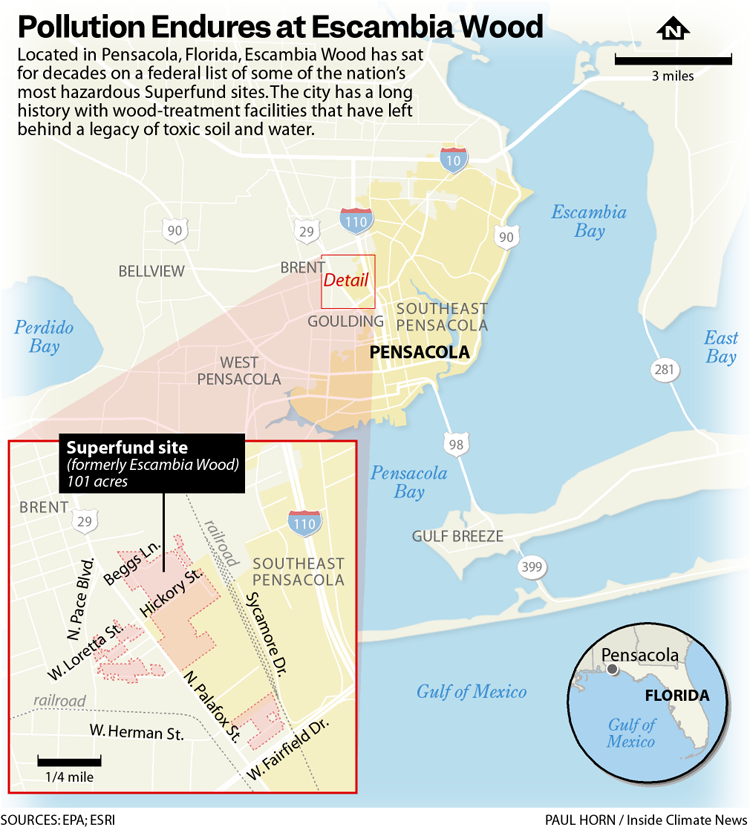
Escambia Wood had stored the site’s toxic waste—not just creosote and PCBs, but also polycyclic aromatic hydrocarbons and dioxins—in unlined pits. And in Florida’s porous ground, the waste that workers were essentially ordered to pour into the pits didn’t stay there.
In 1989, Agrico was declared a Superfund site. While EPA personnel were investigating the contamination there, they discovered the situation at Escambia Wood was even worse. Instead of declaring it a Superfund site right away—they were hesitant to establish two next-door sites where the federal government was agreeing to pay for cleanup of toxic material—the EPA ordered an emergency cleanup that required less rigorous procedures.
Because they were in such a rush, the EPA personnel skipped what would normally be procedural steps for such a cleanup. That meant the agency didn’t meet with the Black residents or former employees who offered to show the agency personnel where to find the worst contamination.
Paul Peronard, the assigned EPA coordinator, ultimately worked for the agency for 40 years and now freely admits he handled the Escambia Wood site poorly.
“This was my first [Superfund] site,” he said recently. “I viewed it as an engineering problem, but this site was a social problem … We didn’t explain ourselves well.”
Instead, the EPA sent cleanup crews to excavate the waste as children played just outside the chain-link fence around the property. Before long, the EPA had piled up 250,000 cubic yards of toxic soil, a 60-foot mound locals dubbed “Mount Dioxin.” Sometimes, when the site was unguarded, neighborhood children climbed the fence and slid down the hill.
More than 900 people, many of them Black, lived within one-quarter mile of the site, and within a mile there were five daycare centers, one hospital and three public schools. When clouds of dust blew off Mount Dioxin, it drifted over the neighborhood.
Residents who were already complaining about the high incidence of cancer among their families began complaining of more immediate problems: acute respiratory distress, nosebleeds, headaches, nausea and skin rashes. When they confronted EPA workers with their worries about the dust affecting their health, they were told it was only an odor problem, and thus not a health risk.
One resident, a retired teacher named Margaret Williams, became so frustrated by the perceived inaction in the early 1990s that she helped form and became president of a group called Citizens Against Toxic Exposure (CATE) to advocate for the residents.
“She really had a voice that could make you listen to her,” said her daughter Francine Ishmael, who eventually took over leadership of CATE when her mother’s energy began to flag prior to her death in 2011. “She told me if you speak, speak clearly and speak your truth, and people will listen.”
In 1994, the Escambia Wood site was at last added to the Superfund list. Williams’ group then began pushing for the EPA to buy up the houses around the poisoned site and move everyone someplace safer. At first the agency was reluctant to take such a drastic step, especially to help lower-income Black neighborhoods.
But Williams had cultivated allies, among them Lois Gibbs, the woman who organized the Love Canal homeowners. Gibbs bought a full-page ad in the Florida edition of USA Today the month before the 1996 presidential election. It featured photos of children from around the Escambia Wood site, along with a quote President Bill Clinton used regularly on the campaign trail: “No child should ever have to live near a hazardous waste site.”
This story is funded by readers like you.
Our nonprofit newsroom provides award-winning climate coverage free of charge and advertising. We rely on donations from readers like you to keep going. Please donate now to support our work.
Donate NowSuddenly the EPA was in favor of moving the residents. The only question was how many. After lots of negotiation, the EPA agreed in 1997 to spend $25 million to relocate nearly 400 households from around the site. The last residents were moved in 2008.
In the meantime, though, cleanup of the site stalled. The EPA did treat and then rebury the dirt in a containment facility on-site, but the groundwater still needed treatment and the money was lacking.
The law creating the Superfund tax expired in 1995, and the Republicans then controlling Congress refused to reinstate it. Clinton’s successor, George W. Bush, declined to even try. With no more funding going into the Superfund, the pace of all cleanups slowed to a crawl. During Barack Obama’s two terms he tried, unsuccessfully, to convince Congress to reinstate the Superfund tax. But he did provide an additional $639 million for the cleanup part of the program in the 2009 stimulus package.
A Superfund tax eventually returned as part of the Bipartisan Infrastructure Law, going into effect in 2022. The act allocated $1 billion to complete the cleanups at Escambia Wood and four dozen other sites. Despite efforts to rescind funding for environmental programs during the second Trump administration, the Superfund money remains available.
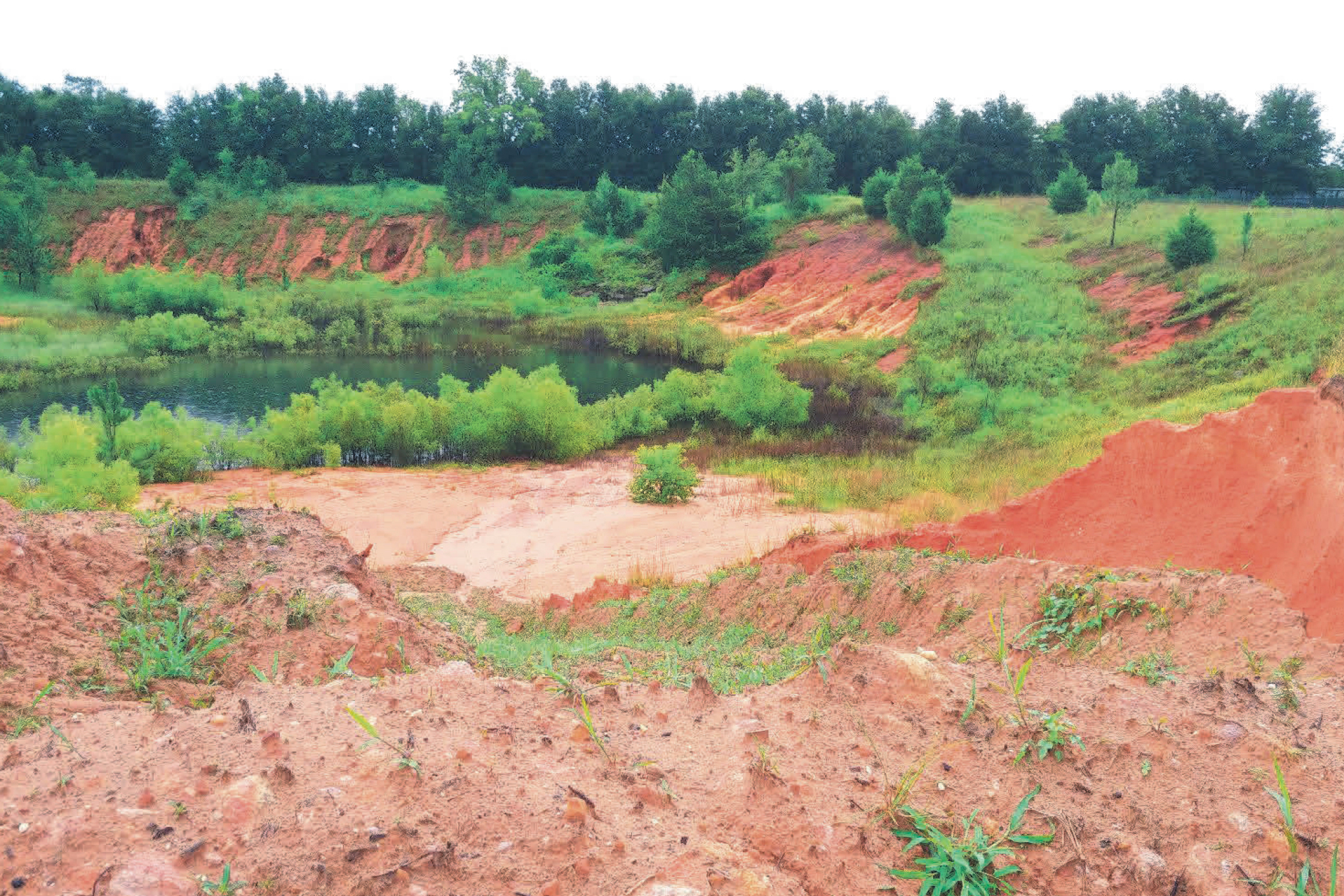
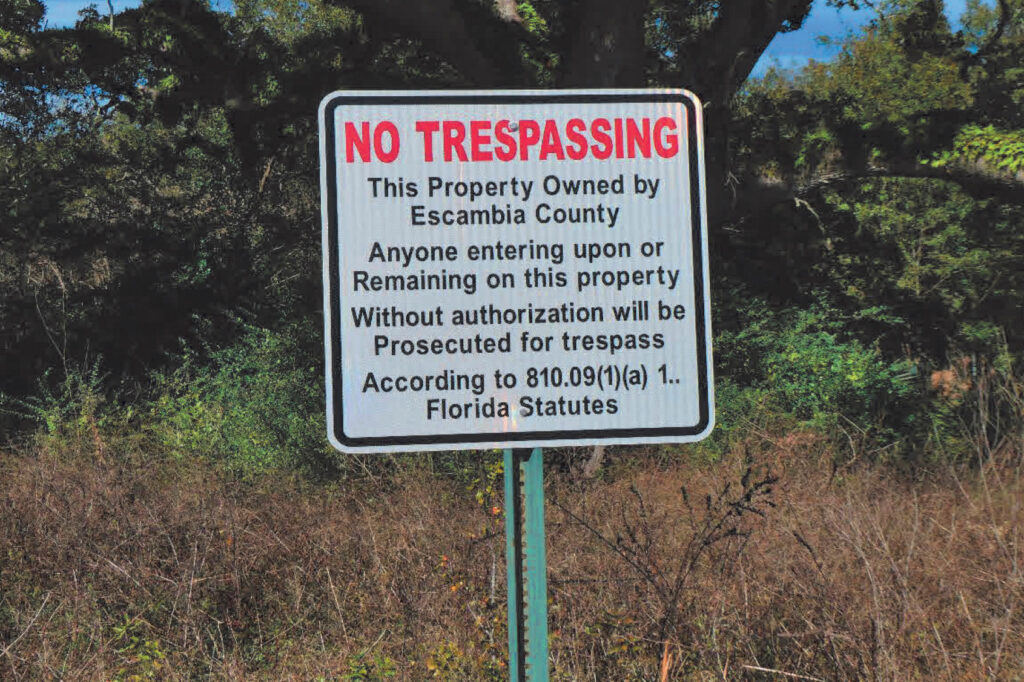
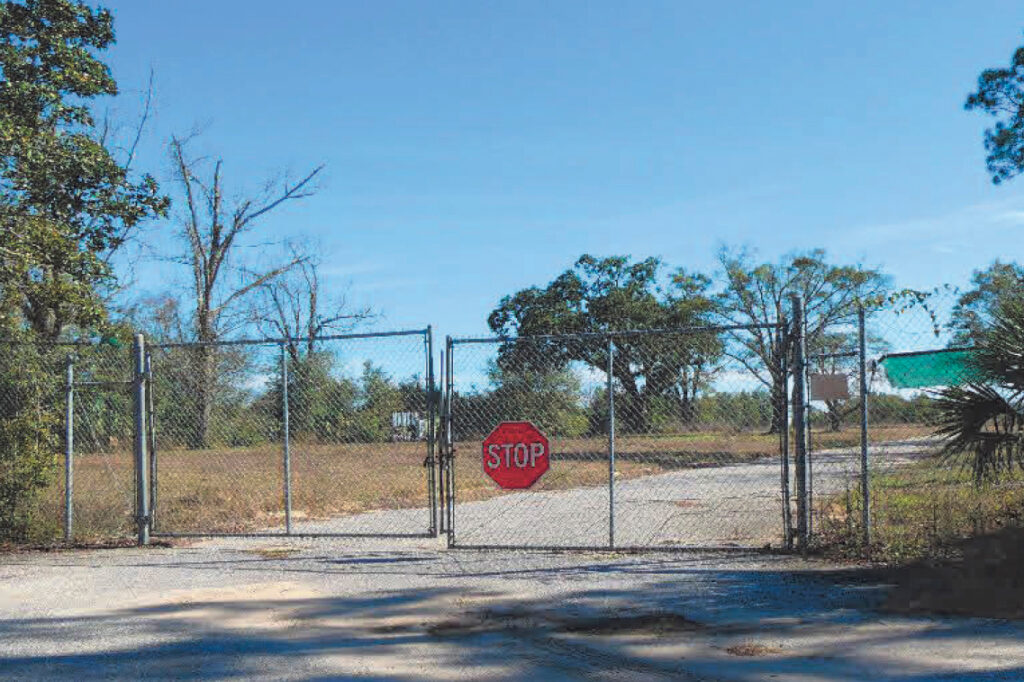
The empty Escambia Wood property now belongs to the government of Escambia County. It’s fenced off and consists of little but a vast expanse of dirt, all that remains of the onetime “mount.”
Chips Kirschenfeld, the county’s natural resources director, said federal officials have hired a contractor to clean up the groundwater and that work will start work this fall. The company estimates it will take about three to five years before the job is completed. The EPA’s next five-year review is expected in the fall of 2027.
It will be up to Escambia County to find a paying tenant to take over the space. The only thing that’s off the table is housing—none is allowed there anymore.
Ten years ago there was talk of relocating the county jail to the site. Eventually someone figured out that would be as risky as putting residential homes there. The county also negotiated with a company that planned to put in a soccer field for traveling teams that needed a place to train. But when company officials found out the cleanup wouldn’t be complete for several more years, they balked, Kirschenfeld said.
More recently, Pensacola’s mayor has suggested turning the site into an inland port, but so far has not revealed how he would do that.
For now, the property remains vacant and desolate, awaiting water cleanup but with few prospects for the future. Nothing commemorates its historic significance.
About This Story
Perhaps you noticed: This story, like all the news we publish, is free to read. That’s because Inside Climate News is a 501c3 nonprofit organization. We do not charge a subscription fee, lock our news behind a paywall, or clutter our website with ads. We make our news on climate and the environment freely available to you and anyone who wants it.
That’s not all. We also share our news for free with scores of other media organizations around the country. Many of them can’t afford to do environmental journalism of their own. We’ve built bureaus from coast to coast to report local stories, collaborate with local newsrooms and co-publish articles so that this vital work is shared as widely as possible.
Two of us launched ICN in 2007. Six years later we earned a Pulitzer Prize for National Reporting, and now we run the oldest and largest dedicated climate newsroom in the nation. We tell the story in all its complexity. We hold polluters accountable. We expose environmental injustice. We debunk misinformation. We scrutinize solutions and inspire action.
Donations from readers like you fund every aspect of what we do. If you don’t already, will you support our ongoing work, our reporting on the biggest crisis facing our planet, and help us reach even more readers in more places?
Please take a moment to make a tax-deductible donation. Every one of them makes a difference.
Thank you,