

When asked to choose, Florida’s likely voters have picked protecting the environment over economic growth by more than 2 to 1, a margin that surprised even the pollster who asked the question.
In a University of North Florida poll released last week, 61 percent of respondents said state and local officials should prioritize the environment “even at the risk of curbing economic growth.” Twenty-six percent chose growth. Registered Republicans sided with the environment 48 percent to 35 percent, and so did a plurality of 2024 voters who backed Donald Trump.
“I expected probably [the] environment to win narrowly, but this was a blowout,” said Sean Freeder, who directs UNF’s Public Opinion Research Lab.
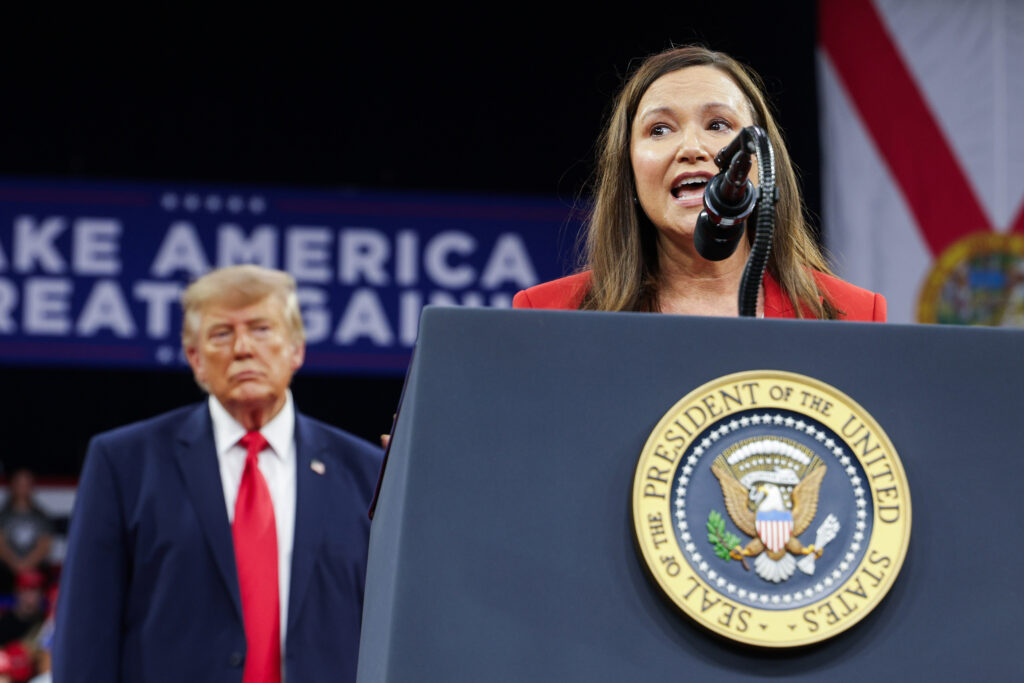
Less than two weeks before Election Day, that sentiment has echoed through Florida’s U.S. Senate race between Republican Ashley Moody, the incumbent, and Democrat Angie Nixon, a state representative. Instead of a broad climate debate, it shows up in specific fights over data centers, power bills, hurricane recovery and the fixes either candidate can offer.
The race is closer than many expected in a state Trump won by 13 points in 2024. The UNF poll showed Moody, whom Gov. Ron DeSantis appointed in 2025 to serve the rest of Marco Rubio’s term, ahead 49 percent to 45 percent, down 8 points from July. Nixon outraised Moody by nearly $2 million in the third quarter, but Moody and her affiliated committees had about $7.1 million on hand on Oct.1, compared with about $4.5 million for Nixon. The two will not debate.
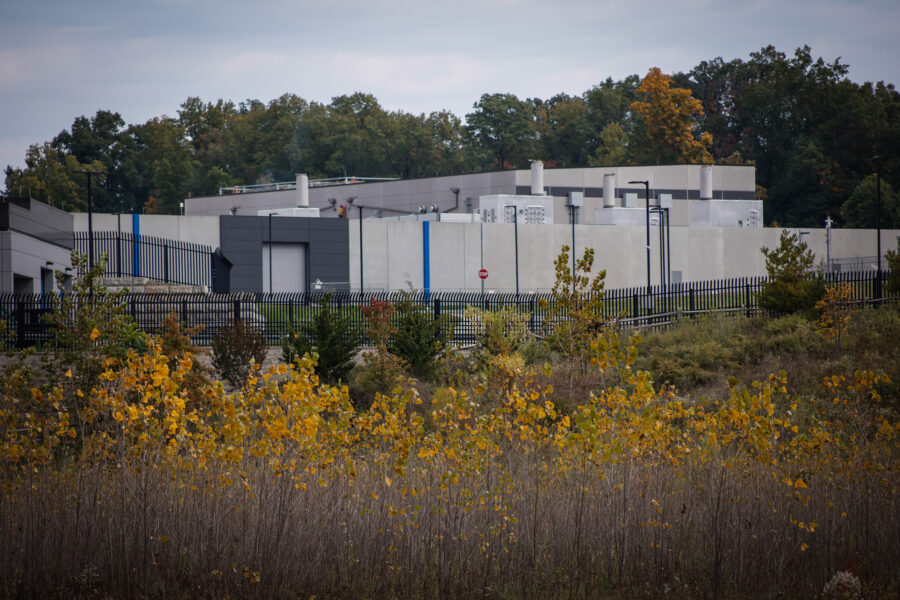
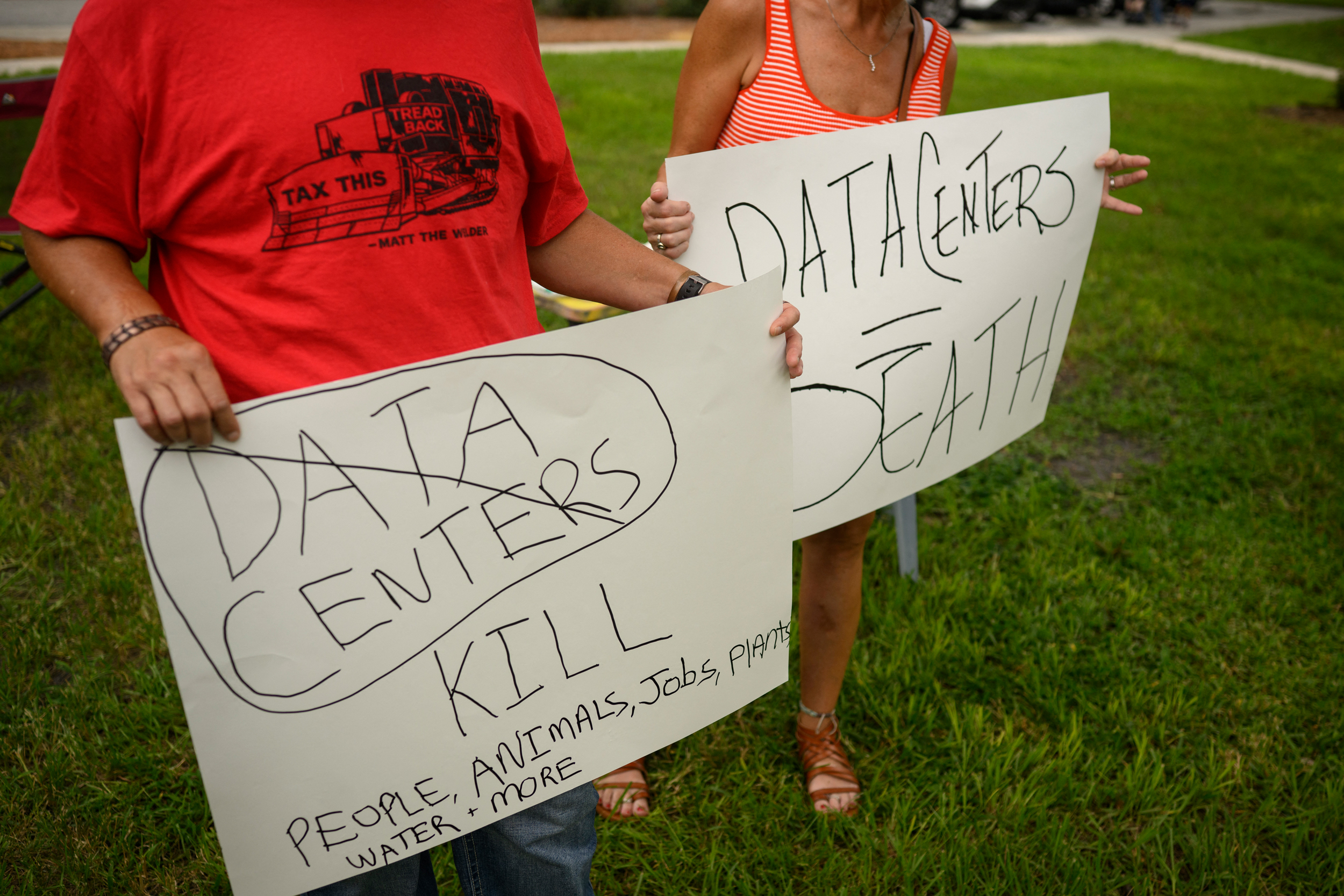
Nixon’s sharpest environmental position is on data centers. “There needs to be a moratorium,” she told Inside Climate News. “You cannot build any more data centers.” Her campaign platform calls for no new construction “before there are real federal guardrails.”
The Sierra Club, whose political arm has endorsed Nixon, also wants federal rules. “Absent those, yes, we support a statewide moratorium,” said Susannah Randolph, director of Sierra Club Florida.
In June, Walton County commissioners voted unanimously to prohibit large data centers. In Polk County, residents are fighting a proposed $2.6 billion project on a former phosphate mine in Fort Meade, where Nixon held a town hall last month.

Moody, whose campaign did not respond to requests for comment, has said data center decisions belong to communities and states. “It needs to be up to the people of a community or a state to decide what works best for them,” she said in a Fox News interview last month. In September, she cosponsored the Ratepayer Protection Act, which would push utility regulators to make large data centers cover the grid costs of serving them.
“If billion-dollar tech companies want to build a massive data center, Floridians should not be left to foot the bill,” she said at the time.
The Ratepayer Protection Act, which passed the House 417-3 but has not cleared the Senate, would direct state utility regulators to consider standards requiring large data centers that draw more than 100 megawatts—roughly the electricity used by 65,000 Florida homes—to pay the full cost of new power plants, transmission lines and grid upgrades built to serve them. It would also have regulators consider requiring those customers to post financial guarantees before construction begins and to cover costs if they walk away from a contract early.
Florida’s new data center law, Senate Bill 484, signed in May, goes further. It already requires utilities to make large data center customers pay their full cost of service so those expenses don’t shift to other ratepayers, and it applies to more facilities than the federal bill.
“Anybody that would be covered by the Ratepayer Protection Act is already covered by Senate Bill 484,” said Ted Kury, director of energy studies at the University of Florida’s Public Utility Research Center. “When it comes to electricity, essentially all they’re saying is, ‘Hey, the state PSC has to do their job.’”
A national moratorium, he added, would likely be challenged by states that want data centers, “and the federal government would probably lose.” (The research center’s sponsors include Florida Power & Light and the Florida Public Service Commission.)
This story is funded by readers like you.
Our nonprofit newsroom provides award-winning climate coverage free of charge and advertising. We rely on donations from readers like you to keep going. Please donate now to support our work.
Donate NowRandolph was blunter about Moody’s sponsorship weeks before the election: “The timing is really suspicious and doesn’t smell good.”
Both candidates also pitch themselves as capable of offering relief from rising power bills. Nixon said she would “call for investigations” when rate increases follow large utility campaign contributions. Moody has built her affordability message around the federal tax cuts she voted for.
Florida Power & Light customers are absorbing the biggest rate hike in the utility’s history, approved last November: $945 million in 2026 and $705 million in 2027, with more on the horizon. Retail rates are set by the Florida PSC, not Congress. “As far as electricity prices at the state level, there’s not a lot that a U.S. senator could do,” Kury said.
What a senator can affect is federal tax policy. Moody voted for Trump’s One Big Beautiful Bill Act, which ended a 30 percent tax credit for homeowners who install rooftop solar and set earlier deadlines for utility-scale solar and wind projects to qualify for federal credits. Kury said the law’s effect on bills varies by utility, because taxpayers fund the credits, too. “The people always pay,” he said. “All the policymakers decide is how and when.”
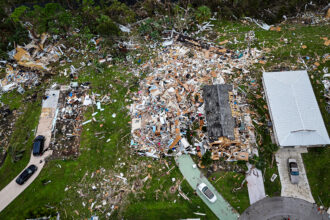
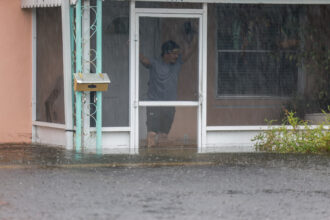
Disaster recovery is the other pressure point in the race. Hurricane Isaias made landfall near Destin as a Category 2 storm on Oct. 9, and Moody is leading a congressional push for a major disaster declaration. She has also said she helped bring Florida $1.7 billion in Federal Emergency Management Agency reimbursements for past disaster recovery projects. Meanwhile, a Trump-appointed council has recommended further shrinking FEMA’s workforce and shifting disaster response to the states.
Nixon said she would restore FEMA jobs and keep the agency on the ground for months after storms. She also said a Democrat-led Congress should “hold on to the purse strings and not allow the states that are doing wrong environmentally” to receive certain federal funding. She did not say whether that would apply to Florida.
Moody is the lead sponsor of the American Shores Protection Act, which would bar oil and gas drilling off the coasts of Florida, Georgia and South Carolina, but has stalled in committee. She introduced it last October, and in December, Republican Sen. Mike Lee blocked her attempt to pass it by unanimous consent. Randolph gave Moody credit for introducing the bill but called it “a gimme,” since Florida’s economy depends on its beaches. Moody scored 0 percent on the League of Conservation Voters’ 2025 scorecard, with 35 votes the group counted as “anti-environment.”
Nixon traces her environmental politics to Brown’s Dump, a Jacksonville Superfund site where the city dumped incinerator ash and where homes and an elementary school were later built. Her grandmother bought one of those homes and Nixon was subsequently raised there. “That shaped me,” she said.
Each of the issues driving the race runs up against the same limit. Data center rules and power rates are largely set in Tallahassee, and Washington is pushing more disaster response onto the states, too. Kury said campaigns on both sides tend to blur those lines.
“In campaign season, you got a lot of folks on all sides making statements that, ‘I can do this, I can do that,’ when maybe they really can’t,” he said.
But he said that comes with the territory. “Nobody elects a politician who says, ‘Yeah, I realize you have all these problems, but there isn’t anything I can do about it.’”
About This Story
Perhaps you noticed: This story, like all the news we publish, is free to read. That’s because Inside Climate News is a 501c3 nonprofit organization. We do not charge a subscription fee, lock our news behind a paywall, or clutter our website with ads. We make our news on climate and the environment freely available to you and anyone who wants it.
That’s not all. We also share our news for free with scores of other media organizations around the country. Many of them can’t afford to do environmental journalism of their own. We’ve built bureaus from coast to coast to report local stories, collaborate with local newsrooms and co-publish articles so that this vital work is shared as widely as possible.
Two of us launched ICN in 2007. Six years later we earned a Pulitzer Prize for National Reporting, and now we run the oldest and largest dedicated climate newsroom in the nation. We tell the story in all its complexity. We hold polluters accountable. We expose environmental injustice. We debunk misinformation. We scrutinize solutions and inspire action.
Donations from readers like you fund every aspect of what we do. If you don’t already, will you support our ongoing work, our reporting on the biggest crisis facing our planet, and help us reach even more readers in more places?
Please take a moment to make a tax-deductible donation. Every one of them makes a difference.
Thank you,

Kate Waxman
Fellow
Kate Waxman is a Florida-based Outrider fellow at Inside Climate News, where she covers climate injustice across the state. She earned her M.S. in journalism from Columbia Journalism School and her B.A. in environmental science from Barnard, with reporting focused on coral reefs, climate science, and the communities closest to the water.