

In 1935, a group of Hawaiian school boys embarked on a secret military operation to colonize remote Pacific islands for the United States.
Inhabiting one of America’s most distant outposts in the middle of the Pacific Ocean, they built the runway Amelia Earhart never arrived at, endured fatal Japanese bombing and forged a Native Hawaiian cultural presence more than 6,600 miles from Washington. Decades later, and with bipartisan support, the legacy of the Hui Panalā‘au was enshrined with one of the largest marine protected areas in the world to safeguard the vibrant waters surrounding several of the islands.
This week, the Trump administration proposed reintroducing commercial fishing to parts of the Pacific Islands Heritage Marine National Monument.
Following the public comment period, if the National Marine Fisheries Service enacts the proposal, longline fishing boats and purse seiners that encircle dense schools of fish with vertical walls of netting would be allowed to return to more than 400,000 square miles of pristine, ecologically rich and culturally-valued waters.
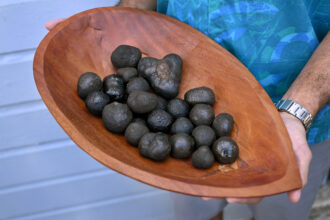
“You take people and their lives, and now you want to come back and take the resources,” said Sol Kahoʻohalahala, a Native Hawaiian elder and knowledge holder, questioning the administration’s move. “We need to stop this idea of extraction and taking for profit and not being concerned with the children yet unborn,” said Kahoʻohalahala, whose uncle from the island of Lānaʻi died during Japanese raids on one of the island settlements.
“This is one of the last wild, healthy ocean ecosystems on the planet. It’s truly a gem,” said Sheila Sarhangi, founder and executive director of the Pacific Islands Heritage and Papahānaumokuākea Coalitions. “It’s completely reckless and shortsighted to allow industrial fishing, with its heavy amount of bycatch, to come back into the area.”
It’s not the administration’s first time pushing to fish these waters.
In April 2025, President Donald Trump signed an executive order dismantling Obama-era protections around Johnston Atoll, Jarvis Island and Wake Island, temporarily allowing commercial fishing to return between 50 and 200 miles offshore. Three days later, the National Marine Fisheries Service notified permit holders that they could fish the waters.
Following a lawsuit filed by Earthjustice, the federal district court in Honolulu halted commercial fishing operations in the area in August 2025, citing the fisheries service’s failure to adhere to due process and incorrect invoking of the Antiquities Act, a legal precedent which allows the president to establish marine protected areas but not shrink boundaries or strip protections.
A historically bipartisan conservation issue—President George W. Bush originally established the monument in 2009—the latest proposal reverses course.
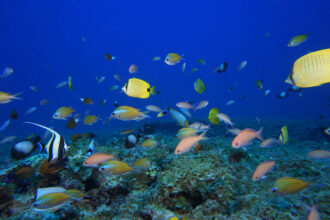
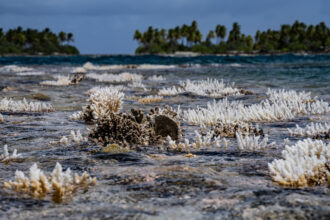
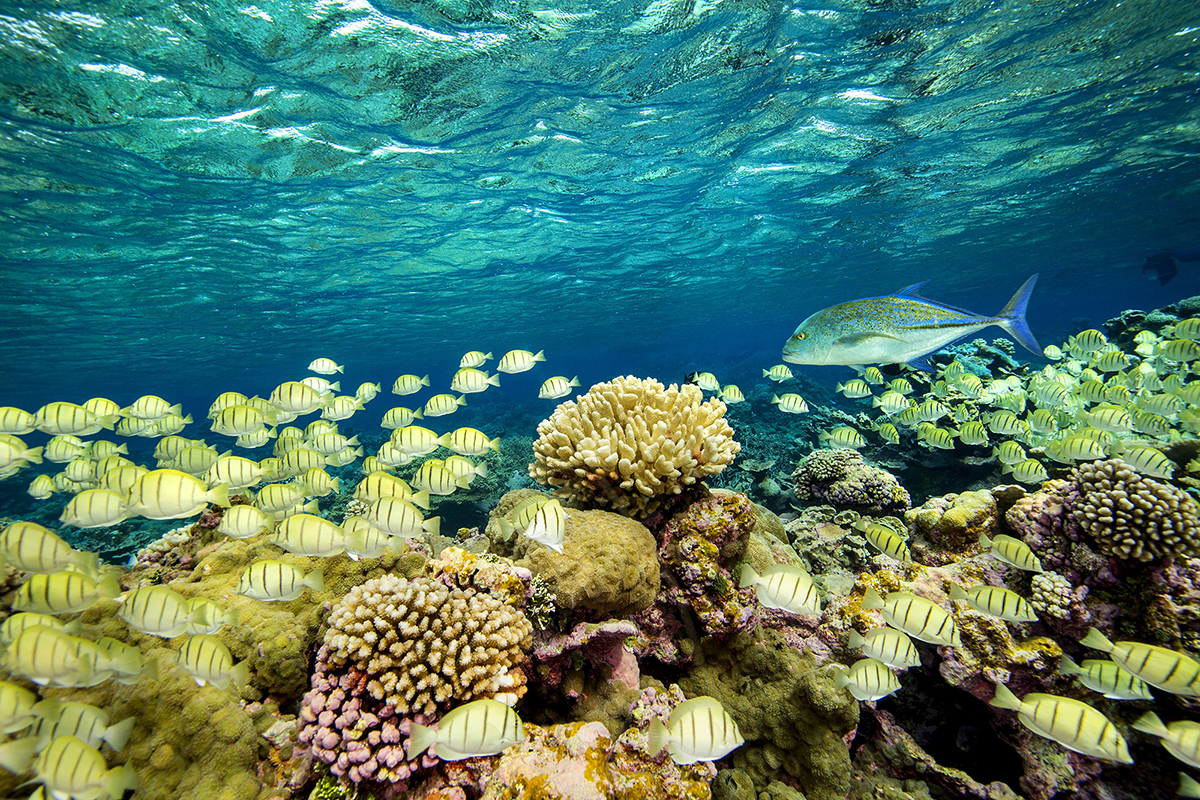
With a 5,000-year-old coral system and at least 165 seamounts, the monument functions as a biodiversity hotspot for blue whales, leatherback sea turtles and seabirds. Conservationists consider it to be one of the most important habitats for threatened and endangered wildlife in the world.
The administration has suggested the potential ecological harm would be “negligible” because the proposed fishing gear would “not come into contact with the ocean floor.” Yet the harmful impact of industrial fishing in the area, whose ecological health has beneficial spill-over effects for the wider Pacific Ocean, is evident from historic data.
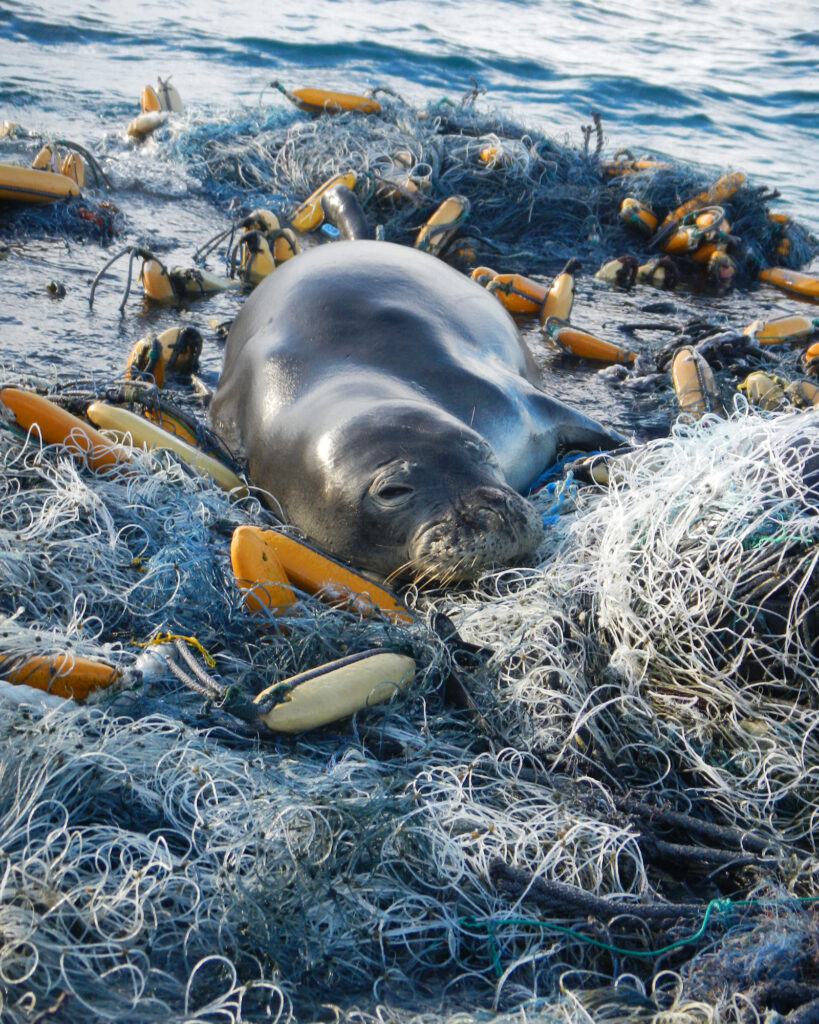
In 2013, the last year industrial fishing was allowed within the expanded range, the Hawaiian longline fleet ensnared over 2,300 sharks. Keeping just 10, the vast majority were discarded dead or injured, including the threatened silky shark and the globally critically endangered oceanic whitetip shark.
“The proposed rule threatens to reverse decades of progress in protecting one of the planet’s last wild, healthy ocean ecosystems,” said the Pacific Islands Heritage Coalition in a press release. “[It’s] a place of profound cultural significance for Indigenous Pacific Islanders.”
Framed as part of President Trump’s efforts to “unleash American commercial fishing” in the region, the National Oceanic and Atmospheric Administration contends re-opening the area would mean American boats “do not have to compete with foreign fleets” nor pay other nations to fish in their waters.
This story is funded by readers like you.
Our nonprofit newsroom provides award-winning climate coverage free of charge and advertising. We rely on donations from readers like you to keep going. Please donate now to support our work.
Donate NowHowever, the economic benefit would likely be limited. The fisheries service concedes the change would only offer a “minor, beneficial impact” by “reducing transit times” and fuel use.
This June, Trump signed a proclamation seeking to undo protections in three other Pacific areas: the Islands Unit of the Mariana Trench Marine National Monument in the Northern Mariana Islands, the Papahānaumokuākea Marine National Monument in Hawaiʻi and the Rose Atoll Marine National Monument in American Samoa.
“This is driven by politics. It’s more show than go,” said David Henkin, an Earthjustice attorney who helped defeat the administration the first time around. “Sending the bull into the china shop messes up important scientific research, affects pristine ecosystems and for what?”
Indeed, even when fleets were briefly granted access to the area in 2025, activity was limited. Just over 1,700 fish were caught—a testament to the geographic impracticality of fishing in the monument’s remote protected waters.
“They know that ‘unleashing American fishing’ in the monument will not result in any more fish being caught because these fisheries operate under international quotas. They can’t catch any more fish,” Henkin added. “The whole thing is a charade.”
The fisheries service has now opened a 30-day comment period, open until Dec. 9, 2026. “I think this is one of those moments where people need to realize that their voice carries power, and they need to speak up for one of the last wild, healthy, remote ocean ecosystems in the world,” said Sarhangi.
A spokesperson for NOAA told Inside Climate News that the agency “remains dedicated to providing factual, timely information, research and resources that serve the American public and ensure our nation’s economic and environmental resilience.” They did not respond to questions about ecological harms, cultural critiques or the motivations behind the move.
For Kahoʻohalahala, retaining marine protections is about more than just conservation and cultural preservation, it’s also about setting a precedent for America’s relationship with nature.
“We have a thinking in our Hawaiian culture that if we create the resources on the earth to be fattened or abundant, then we can ensure this abundance is going to be carried on into generations yet unborn,” said Kahoʻohalahala, who felt the administration’s announcement was a betrayal of both history and the ocean itself.
“If we look at fishing as an extractive industry just for profit, and pay no attention to how we reciprocate that, it would be our demise,” added Kahoʻohalahala.
About This Story
Perhaps you noticed: This story, like all the news we publish, is free to read. That’s because Inside Climate News is a 501c3 nonprofit organization. We do not charge a subscription fee, lock our news behind a paywall, or clutter our website with ads. We make our news on climate and the environment freely available to you and anyone who wants it.
That’s not all. We also share our news for free with scores of other media organizations around the country. Many of them can’t afford to do environmental journalism of their own. We’ve built bureaus from coast to coast to report local stories, collaborate with local newsrooms and co-publish articles so that this vital work is shared as widely as possible.
Two of us launched ICN in 2007. Six years later we earned a Pulitzer Prize for National Reporting, and now we run the oldest and largest dedicated climate newsroom in the nation. We tell the story in all its complexity. We hold polluters accountable. We expose environmental injustice. We debunk misinformation. We scrutinize solutions and inspire action.
Donations from readers like you fund every aspect of what we do. If you don’t already, will you support our ongoing work, our reporting on the biggest crisis facing our planet, and help us reach even more readers in more places?
Please take a moment to make a tax-deductible donation. Every one of them makes a difference.
Thank you,

Johnny Sturgeon
Fisheries Reporter
Johnny Sturgeon is a London-based reporter covering fisheries and aquaculture. Joining us from the Outlaw Ocean Project, he has experience producing in-depth maritime investigations for nonprofit newsrooms. A former boatbuilder, he holds a B.A. in History & Politics from the University of Oxford, and an M.S. from Columbia Journalism School.