

A federal judge has struck down New York’s Climate Change Superfund Act, ruling that it “conflicts with” federal authority.
The legislation would have required fossil fuel companies to help cover the costs of adapting to climate change, but it operates in an area of the law “in which the federal interest is so dominant that it cannot be enforced,” according to the judge’s ruling.
Issued Monday, the ruling stems from a lawsuit filed in February 2025 by attorneys general from 22 Republican-led states. Fossil fuel companies and trade groups such as the American Petroleum Institute and the U.S. Chamber of Commerce also backed the suit.
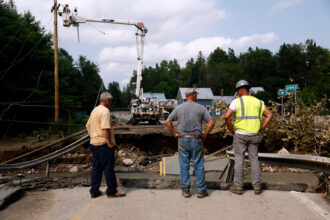
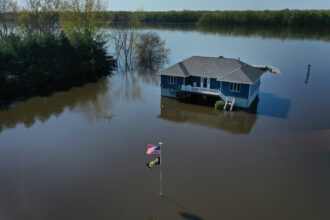
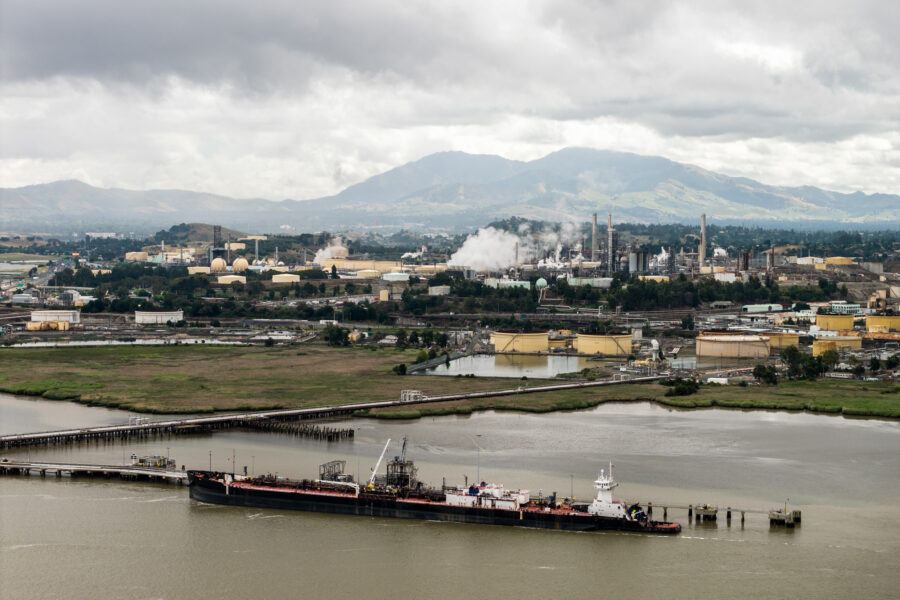
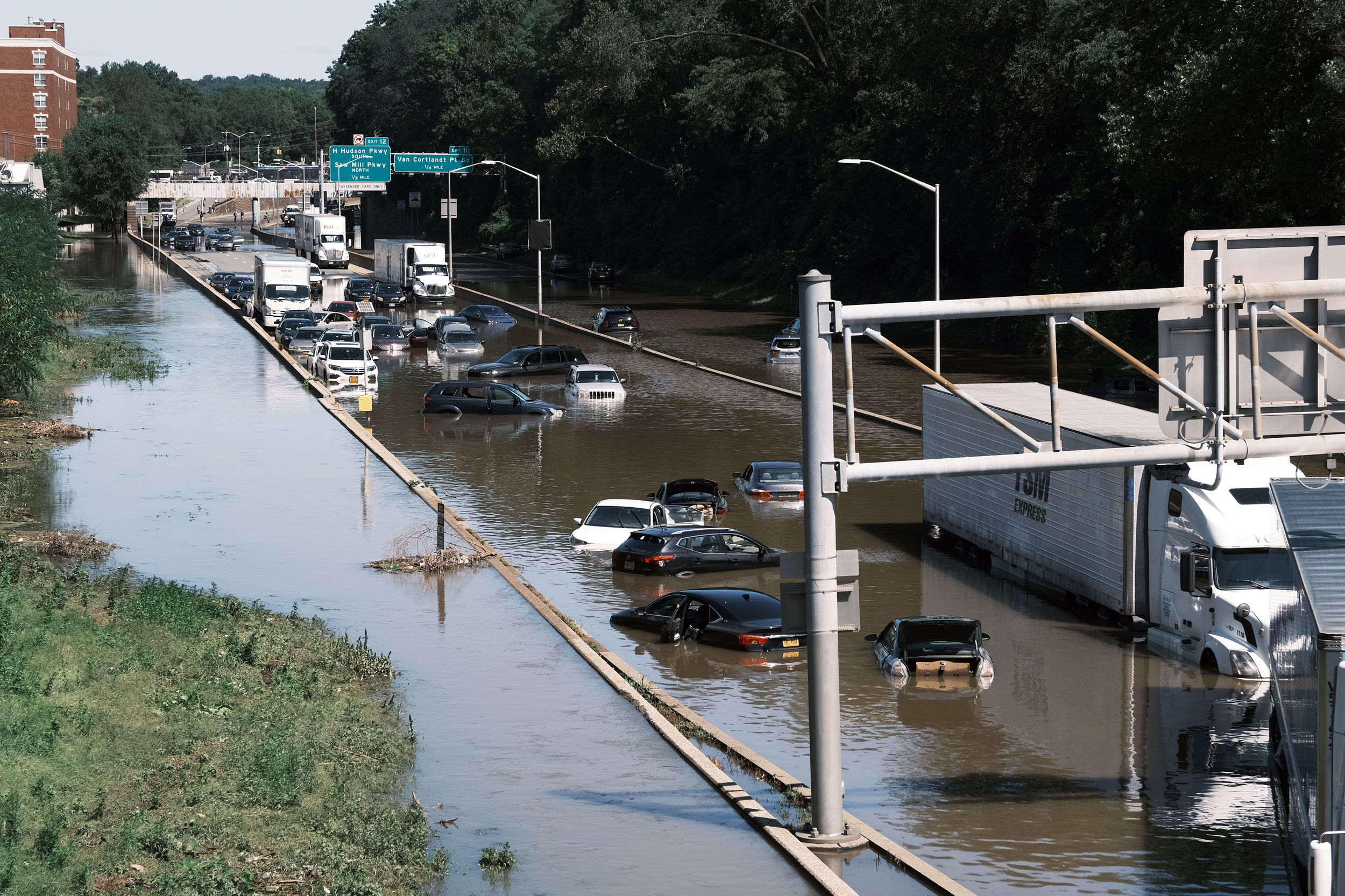
The law aimed to force fossil fuel companies to pay $75 billion over 25 years. That sum is only a fraction of the more than $500 billion that the state projects it will need to prepare for climate-related risks, including hurricanes, storms and extreme heat—all of which have been intensified by climate change.
Fossil fuel companies “knew the damage they were causing; they continued to do it,” said state Assemblyman Jeffrey Dinowitz, who co-sponsored the initial legislation. “They didn’t do anything about it, and so when we passed the law, the purpose was to ensure that these corporations pay for some of the costs of the damage that they caused.”
Ken Lovett, the senior communications advisor on energy and environment for New York Gov. Kathy Hochul, said in an email that “taxpayers shouldn’t have to foot the bill for damages caused by polluters” and that they are reviewing the decision.
Brenda Sannes, chief district court judge for the Northern District of New York, wrote in her ruling that the superfund act went “beyond the limits of state law.” She relied on the decision in a 2021 case that New York City brought against oil companies, alleging that they misled consumers about their products and that the city should be compensated for the costs of climate-proofing its infrastructure.
A 2nd Circuit Court of Appeals judge ruled that federal law limited the city’s authority to regulate greenhouse gas emissions. New York’s superfund law was designed to get over that hurdle, but Sannes said in her new ruling that its compensation scheme is “not distinguishable” from the city’s claims.
“State climate lawsuits and these so-called superfund laws are part of a coordinated campaign against an industry that is vital to everyday life and serves as the engine of America’s economy,” Ryan Meyers with the American Petroleum Institute said in a statement. “We have consistently argued that climate policy is a federal, not state, issue, and we are pleased that the court agreed.”
The oil industry has also fought off more stringent federal action. State and local efforts across the country reflect officials’ attempts to get around that.
Now, the Trump administration has retreated from any federal climate action and is systematically undermining the ability of state and local governments to step in. The administration filed a separate lawsuit challenging New York’s climate superfund law, as well as a similar law in neighboring Vermont. It has also sued to block Minnesota, Michigan and Hawaii from seeking damages from the oil industry, and has challenged local climate ordinances in California.
If New York appeals Sannes’ decision, the case will go to the 2nd Circuit. A three-judge panel will determine whether the state superfund lawsuit is distinct enough from the city’s case to warrant a fresh analysis of how federal and state law apply, said Pat Parenteau, emeritus law professor and climate law expert at Vermont Law and Graduate School.
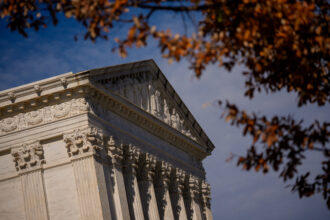
A similar question may end up before the U.S. Supreme Court. In October, the court is scheduled to hear oral arguments in Suncor v. Boulder County, in which a local government is suing fossil fuel companies to recover the costs of adapting to climate change.
The justices could still rule that it is outside of their jurisdiction, Parenteau said.
But if they do take it on, they would be answering the essential question of “whether federal law precludes state-law claims seeking relief for injuries allegedly caused” by global greenhouse gas emissions.
If they decide that federal law removes that authority, that could be “bad news” for the New York superfund law, said Michael Gerrard, the founder and faculty director of the Sabin Center for Climate Change Law at Columbia University.
Blair Horner, the policy director at New York Public Interest Research Group, an organization that helped shepherd the state’s Superfund Act through the state legislature, said he expected lawsuits to target the policy.
“This is a binary issue. … The costs have to be paid,” Horner said. “Either they will be paid fully by taxpayers or shared with the oil companies. There’s no third way.”
Inside Climate News’ Marianne Lavelle contributed to this article.
About This Story
Perhaps you noticed: This story, like all the news we publish, is free to read. That’s because Inside Climate News is a 501c3 nonprofit organization. We do not charge a subscription fee, lock our news behind a paywall, or clutter our website with ads. We make our news on climate and the environment freely available to you and anyone who wants it.
That’s not all. We also share our news for free with scores of other media organizations around the country. Many of them can’t afford to do environmental journalism of their own. We’ve built bureaus from coast to coast to report local stories, collaborate with local newsrooms and co-publish articles so that this vital work is shared as widely as possible.
Two of us launched ICN in 2007. Six years later we earned a Pulitzer Prize for National Reporting, and now we run the oldest and largest dedicated climate newsroom in the nation. We tell the story in all its complexity. We hold polluters accountable. We expose environmental injustice. We debunk misinformation. We scrutinize solutions and inspire action.
Donations from readers like you fund every aspect of what we do. If you don’t already, will you support our ongoing work, our reporting on the biggest crisis facing our planet, and help us reach even more readers in more places?
Please take a moment to make a tax-deductible donation. Every one of them makes a difference.
Thank you,

Lauren Dalban
Reporter, New York City
Lauren Dalban is a New York City-based reporter with a background in local journalism. A former ICN fellow, she now covers environmental issues in all five boroughs. Originally from London, she earned a B.A. in History and English from the University of Virginia, and an M.S. from Columbia Graduate School of Journalism.