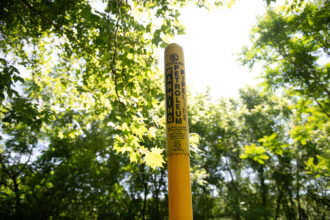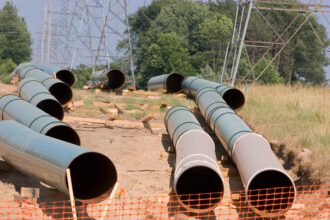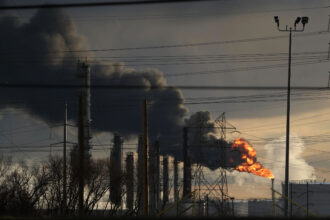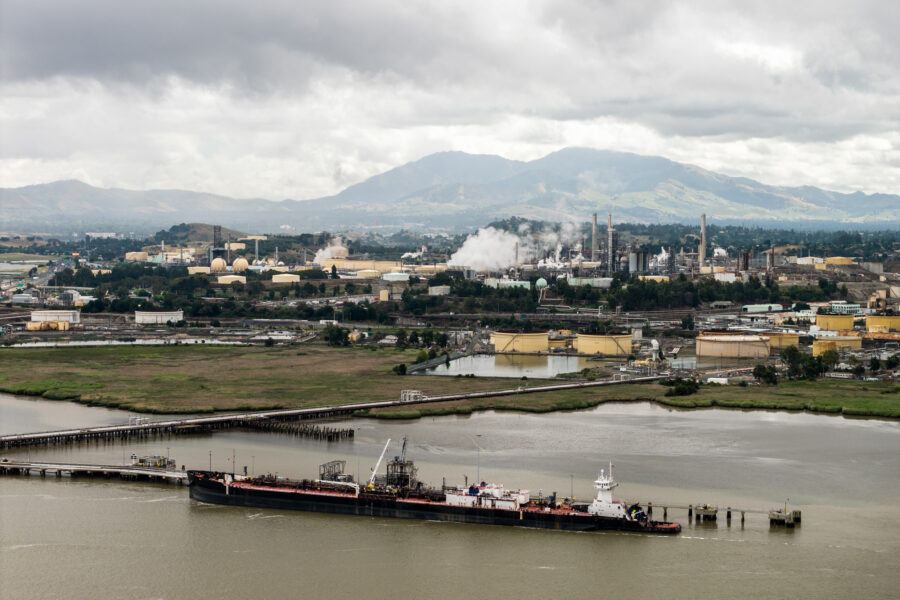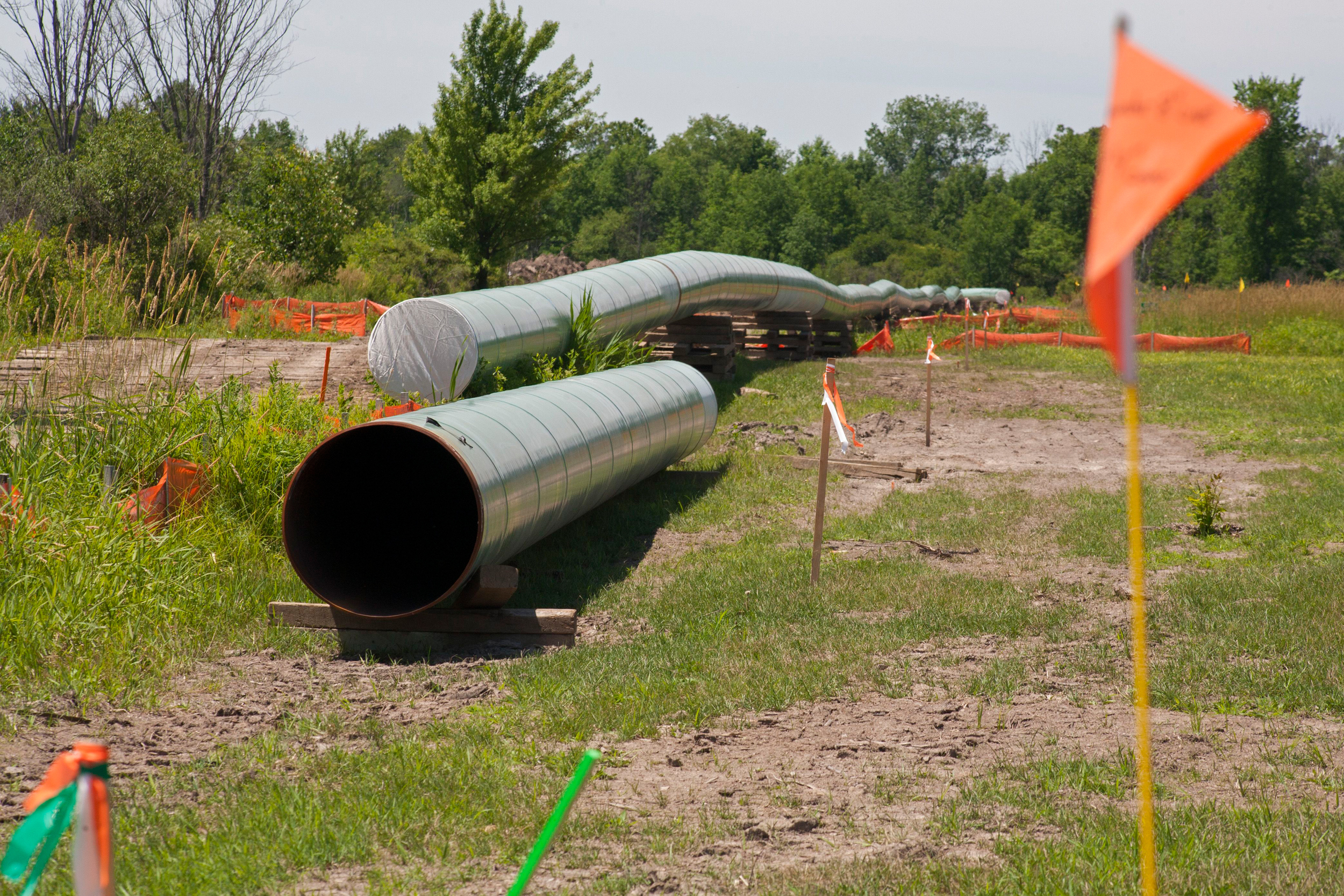


A crude oil pipeline spill last month in the Detroit suburbs has prompted federal authorities to open an investigation into the safety of all 20,000 miles of hazardous liquids pipelines operated by Energy Transfer.
The 600-gallon spill at a commercial intersection in Sterling Heights, Michigan, has received little media coverage. Local news reports at the time, based on a statement from the city, described a much smaller spill and stressed that no residents or homes were in danger. Neither the city nor news reports mentioned the name of the Dallas-based pipeline operator, one of the nation’s largest and most politically connected oil and gas companies.
But in a corrective-action order issued Sept. 21 without a press release, the Pipeline and Hazardous Materials Safety Administration revealed the failure on Energy Transfer’s 59-year-old, 130-mile crude oil pipeline between Marysville, Michigan, and Toledo, Ohio. The federal agency, part of the U.S. Department of Transportation, initially directed the company to shut down a 16-mile segment at the site of the spill. An agency spokesperson said the pipeline was restarted the following day at reduced pressure, slowing the flow of oil.
In an extraordinary move, due to “a system-wide risk of additional similar failures,” PHMSA gave Energy Transfer 90 days to submit a detailed inventory of past repairs made throughout its hazardous liquid pipeline network nationwide, as well as a plan to remediate vulnerabilities.
It was the only one of 23 corrective-action orders PHMSA has issued this year that seek to address safety issues on a company’s entire pipeline network. According to Energy Transfer’s website, that network includes about 20,000 miles of crude oil, refined product and natural gas liquids pipelines.
PHMSA said Energy Transfer’s initial investigation confirmed the spill occurred at the site of a past repair—a steel encasement sleeve that had been welded onto the Michigan pipeline in 2010 to fix a defect. The same kind of encasement sleeve failure caused a jet fuel leak discovered last year on another Energy Transfer pipeline that contaminated the drinking water source of a residential neighborhood north of Philadelphia, the PHMSA order said.
“Considering the characteristics of Energy Transfer’s larger pipeline network, the failures underneath at least two repair sleeves, each with indications of improper installation, point to a likelihood of future failures,” said the order, signed by the agency’s top official, Administrator Paul Roberti.
Last year, after Energy Transfer made a large political donation to a PAC supporting President Donald Trump, PHMSA backed off a proposal that would have forced the company to scrutinize all past repairs on its Twin Oaks pipeline in Pennsylvania and remediate any vulnerabilities. Now, the agency essentially is ordering Energy Transfer to develop such a remedial action plan for all of its hazardous liquids pipelines, including both the Twin Oaks and the Marysville-to-Toledo lines.
The agency issued the order three days after the Michigan spill was discovered, saying it was acting without giving Energy Transfer notice or an opportunity for a prior hearing because of the risk of “serious harm.” The company has since requested a hearing, which has not been scheduled yet, according to a PHMSA spokesperson.
Energy Transfer in an email declined to answer questions about the incident. “Please refer to PHMSA documents, which have all the available information,” said an unsigned email from the company’s media relations team.
A factor that figured into PHMSA’s decision on the nationwide order: Energy Transfer could not locate the original records for the steel repair sleeve at Sterling Heights, nor could it find records that would enable the agency to verify the integrity of 11 other such sleeves along the length of the Marysville-to-Toledo pipeline, the agency said.
In the Michigan order, PHMSA revealed for the first time that Energy Transfer also was not able to find records for four of the 45 repair sleeves along the length of its Twin Oaks pipeline that failed last year in Pennsylvania.
PHMSA had ordered Energy Transfer to submit records on the Twin Oaks repair sleeves to the agency last year, but the submission was not made public despite at least 11 Freedom of Information Act requests, including from Inside Climate News. PHMSA said it could not make the Twin Oaks documents public due to an ongoing enforcement investigation.
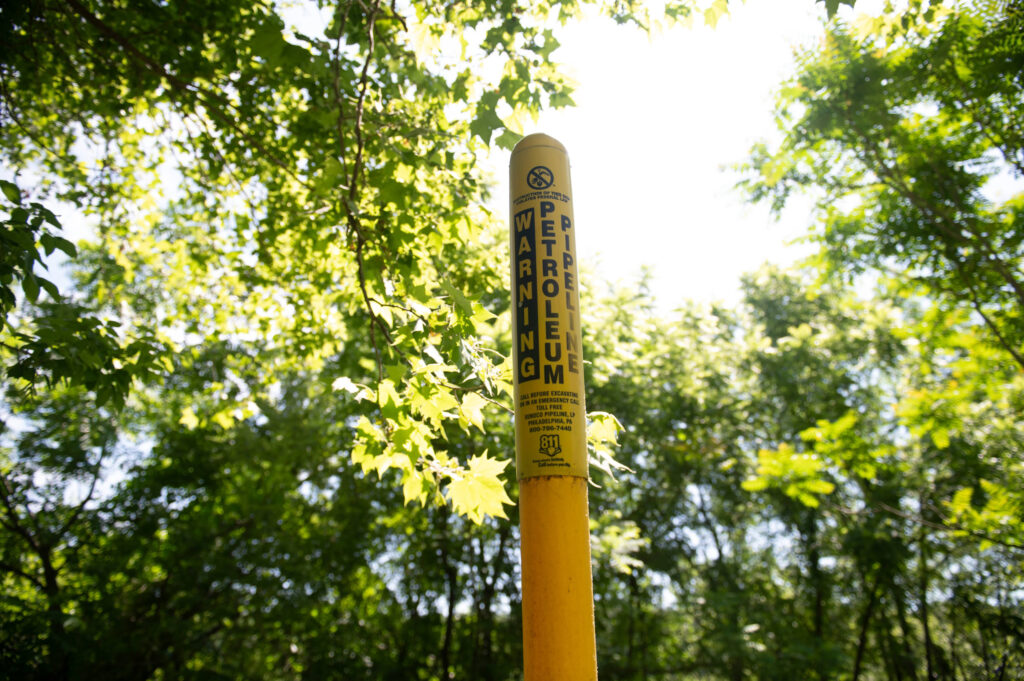
An agency spokesperson declined to answer further questions on the Michigan incident, saying by email that the investigation remains ongoing.
Energy Transfer inherited both the Michigan and Pennsylvania pipelines in 2012 when the company purchased Philadelphia-based Sunoco for $5.3 billion. The acquisition transformed Energy Transfer from mainly a natural gas pipeline firm into a diversified giant with crude oil and refined product pipelines in 10 states. Both spill sites, like much of the Sunoco network, are located in PHMSA-designated “high consequence areas,” locations where a pipeline rupture could have significant adverse impact on human health, safety, property or the environment.
Pipeline Politics
Energy Transfer has become a major player on the political scene, due largely to its founder and executive chairman Kelcy Warren’s support for President Donald Trump.
Last year, one week after PHMSA sent the company notice of a proposed safety order over the Pennsylvania spill, Warren and Energy Transfer donated a total $25 million to MAGA Inc., the political action committee established after Trump’s election. The president directly controls its $400 million war chest. It was the largest political donation Warren had ever given, and it made Energy Transfer the biggest oil and gas industry donor so far in the 2026 election cycle, according to data compiled by the nonprofit OpenSecrets for Inside Climate News. Nearly all of Energy Transfer’s donations, like those of its industry peers, went to Republican candidates and conservative PACs.
But any political clout that Energy Transfer has garnered may be outweighed by the political peril that Republicans face in Michigan, a pivotal state where the Trump administration is taking heat over environmental and energy policy on multiple fronts, including its rollback of regulation regarding so-called “forever” chemicals, and its costly order to keep an aging coal plant open past its retirement date.
Michigan has closely contested races for governor, Senate and several House seats, including the one representing the state’s 10th Congressional District, site of Energy Transfer’s pipeline failure.
This story is funded by readers like you.
Our nonprofit newsroom provides award-winning climate coverage free of charge and advertising. We rely on donations from readers like you to keep going. Please donate now to support our work.
Donate NowThe pipeline spill has remained under the radar and has not thus far figured into the political debate in Michigan. Despite the nationwide scope of its action against Energy Transfer and the risks PHMSA identified, the agency did not issue a press release about the matter (it only did so for two of the 23 corrective action orders it has issued this year).
PHMSA enforcement actions fell to an all-time low last year, and with the agency’s reauthorization on the line, Roberti pledged at a congressional hearing earlier this year to return enforcement to more typical levels. The agency has leaned more heavily on corrective-action orders this year than it has in past years; these can be issued without prior hearings and do not involve monetary penalties.
U.S. Rep. Brian Fitzpatrick, a Republican who represents the district where Energy Transfer’s Pennsylvania jet fuel spill occurred, has said he will oppose PHMSA reauthorization unless the legislation contains reforms, including greater scrutiny of aging oil and gas pipelines.
A Problem With Sleeves
As with the Pennsylvania spill, which went undetected at least 16 months while residents sought help for the smell and taste of gasoline in their drinking water, the Michigan spill last month evaded any of Energy Transfer’s leak detection systems. A member of the public notified the local fire department after seeing oil seeping through the ground and into a storm drain at a commercial intersection near a residential area, according to the PHMSA order. The local fire department notified Energy Transfer and the National Response Center, the federal hub for reporting any pollution discharges to the environment.
Scott Dean, a spokesman for the Michigan Department of Environment, Great Lakes, and Energy, said state officials were informed of the event through local responders and the National Response Center. The department mobilized to the site and worked with the company and first responders on containment and cleanup, Dean said via email.
“The material was located in the storm sewer,” he said of the crude oil. Dean said standing oil was removed from the road and catch basins with a vactor truck, which is typically used to clean sewer lines and storm drains. “Impacted soils around the damaged section of pipe have been excavated and transported to a landfill for disposal,” Dean wrote.
“EGLE follows up with all reports we receive and [works] to ensure that we are protecting the environment and residents of Michigan,” he wrote.
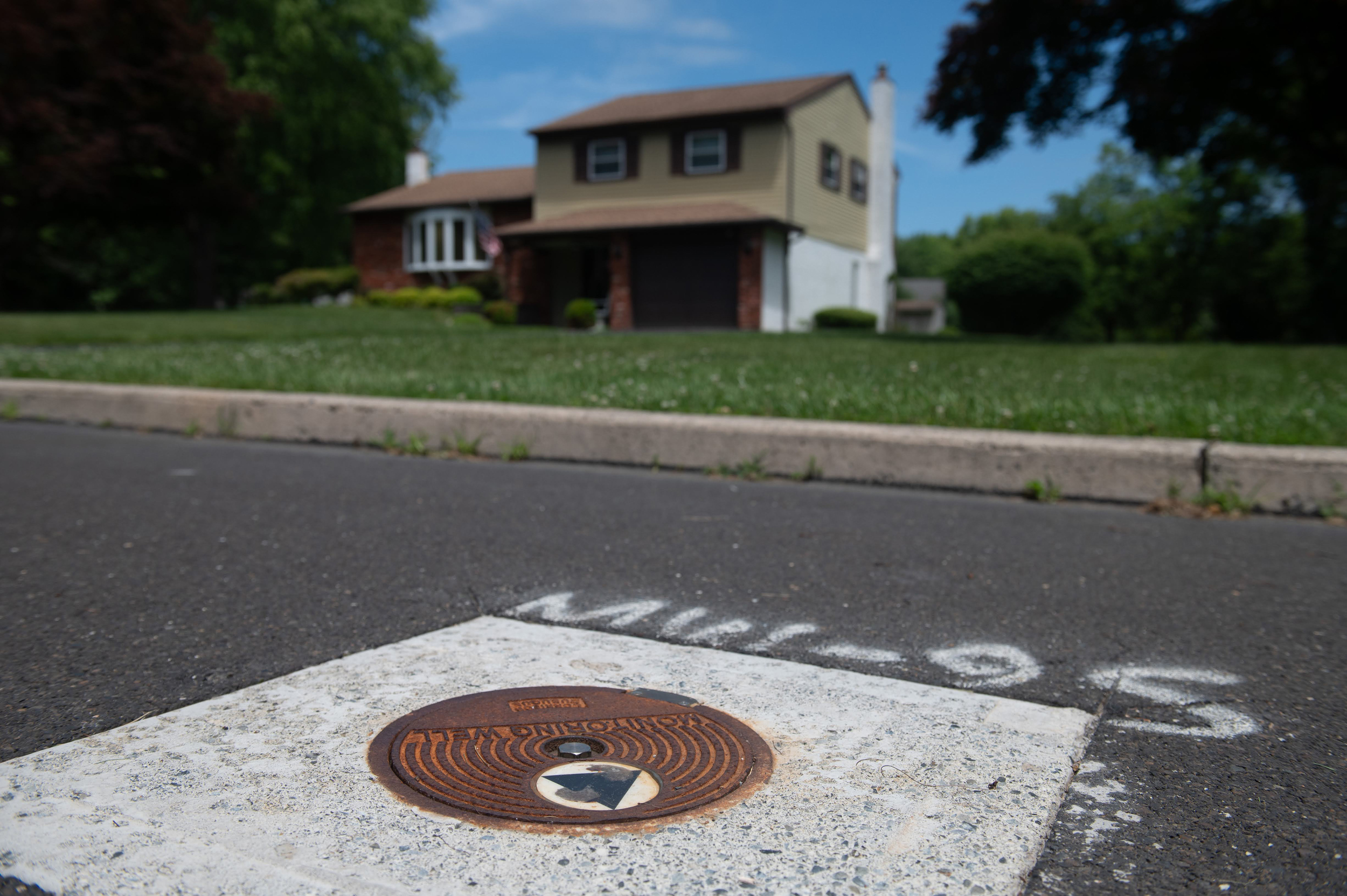
The PHMSA order raised concern over the safety of the entire Marysville-to-Toledo pipeline, constructed in 1967 with so-called “low-frequency electric resistance welded seams.” Such seams of this vintage “are susceptible to known integrity risks,” the PHMSA order said.
The Michigan spill also raises larger questions about a common oil pipeline repair practice: the use of steel encirclement sleeves to fortify areas that are found to have dents or other defects. The PHMSA order said such sleeves can interfere with one of the main methods that the pipeline industry uses to guard against leaks and spills: use of “in-line inspection” tools, often called “smart pigs,” which are sent inside pipelines to gauge integrity.
One type of smart pig, a magnetic flux leakage tool, is “generally unable to assess defects located beneath repair sleeves,” the agency said.
Until now, PHMSA has been focused on the risks of so-called “Type A” sleeves, which are not welded onto the original pipeline. It was a Type A sleeve failure that caused the leak of Energy Transfer’s Twin Oaks pipeline in Pennsylvania, as well as what is believed to be the largest onshore gasoline spill in the nation’s history—a 2 million gallon leak in a Colonial Pipeline conduit in Huntersville, North Carolina, in 2020.
Colonial Pipeline spent $50 million converting all Type A steel sleeves on its system to “Type B” sleeves, which have been considered more robust because they are welded to the original pipeline and are meant to contain pressure. PHMSA issued a nationwide advisory on the risks of Type A sleeves earlier this year.
But Energy Transfer’s leak in Sterling Heights occurred on a Type B sleeve, PHMSA said.
The most expansive part of the PHMSA order was a directive that the company submit a detailed inventory of every steel encirclement repair sleeve installed on all hazardous liquid pipelines operated by Energy Transfer or its subsidiaries. Within six months, the company must provide to PHMSA a plan to evaluate the integrity of each steel encirclement repair sleeve and remediate any vulnerabilities.
“The plan must provide for the removal of each steel encirclement sleeve on the Affected Pipelines whose integrity cannot be reasonably assured,” the PHMSA order said. “Affected Pipelines” means “any hazardous liquid pipeline facility owned or operated by Energy Transfer, its subsidiaries, and related entities.”
Including its natural gas pipelines, Energy Transfer operates a total of 140,000 miles of pipeline in the country, among the largest networks in North America. The company has extensive dealings with the Trump administration, not only due to enforcement actions like the PHMSA order, but also because it needs federal approval for expansion of its network.
For example, Energy Transfer currently is seeking approval from the Federal Energy Regulatory Commission for a $60 million, 17-mile natural gas pipeline to power the controversial Project Jupiter data center OpenAI and Oracle have proposed in southern New Mexico.
About This Story
Perhaps you noticed: This story, like all the news we publish, is free to read. That’s because Inside Climate News is a 501c3 nonprofit organization. We do not charge a subscription fee, lock our news behind a paywall, or clutter our website with ads. We make our news on climate and the environment freely available to you and anyone who wants it.
That’s not all. We also share our news for free with scores of other media organizations around the country. Many of them can’t afford to do environmental journalism of their own. We’ve built bureaus from coast to coast to report local stories, collaborate with local newsrooms and co-publish articles so that this vital work is shared as widely as possible.
Two of us launched ICN in 2007. Six years later we earned a Pulitzer Prize for National Reporting, and now we run the oldest and largest dedicated climate newsroom in the nation. We tell the story in all its complexity. We hold polluters accountable. We expose environmental injustice. We debunk misinformation. We scrutinize solutions and inspire action.
Donations from readers like you fund every aspect of what we do. If you don’t already, will you support our ongoing work, our reporting on the biggest crisis facing our planet, and help us reach even more readers in more places?
Please take a moment to make a tax-deductible donation. Every one of them makes a difference.
Thank you,

Marianne Lavelle
Bureau Chief, Washington, D.C.
Marianne Lavelle is the Washington, D.C. bureau chief for Inside Climate News. She has covered environment, science, law, and business in Washington, D.C. for more than two decades. She has won the Polk Award, the Investigative Editors and Reporters Award, and numerous other honors. Lavelle spent four years as online energy news editor and writer at National Geographic. She spearheaded a project on climate lobbying for the nonprofit journalism organization, the Center for Public Integrity. She also has worked at U.S. News and World Report magazine and The National Law Journal. While there, she led the award-winning 1992 investigation, “Unequal Protection,” on the disparity in environmental law enforcement against polluters in minority and white communities. Lavelle received her master’s degree from Columbia University Graduate School of Journalism, and is a graduate of Villanova University.