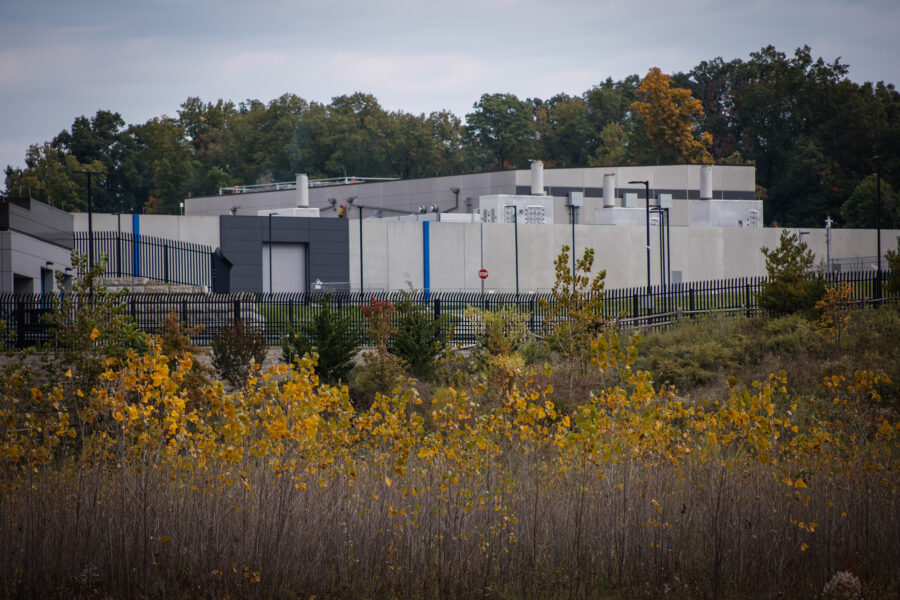


MONTGOMERY, Ala.—The Alabama Public Service Commission approved a new set of rules for future data center projects Tuesday that require more transparency and disclosure from data center companies and public votes by the PSC for data center approval. But they leave in place what critics call a “disappointing” provision allowing for approval by default of large data center projects if the commission does not schedule a vote on them.
Under the new rules, Alabama Power will have to release public summaries of data center contracts that include the name of the company the utility is contracting with, along with parent entities, where the project is located and the maximum amount of electricity the project could use.
Unredacted versions of those contracts would be reviewed by the commission and the Alabama Attorney General’s Office to ensure the projects are “consistent with the public interest.”
PSC President Cynthia Lee Almond said the new procedures will help keep the public better informed about data centers that may be developed.
“Currently, the redacted [public] filings of Alabama Power pretty much blacks out most everything that you might find important,” Almond said. “And so we required certain information in the filing that is not currently required.”
Currently, data centers undergo the same approval process as any other large industrial site, which does not require a separate vote by the commission. The new rules would change that for the massive server farms,, many of which sprawl across dozens, even hundreds, of acres and use as much electricity as cities.
“To me, it was important, because of the size of the data centers and the amount of energy they’re using and all the public concern about data centers, that we take a public vote on data center contracts,” Almond said.
Despite Almond’s support for public votes on data centers, the final version of the new rules includes a provision that could allow projects to be approved by default without a vote by the commission.
The rules say that the commission “shall” vote on each new data center project larger than 150 megawatts, but a late amendment stated that if the commission failed to vote on the contracts within 90 days, those projects would be approved by default.
Data center contracts will also have to include more financial details showing that the facilities are paying all the costs they incur, including whatever new infrastructure may be required.
The new rules were drafted in response to an Alabama law passed this year requiring stronger data-center disclosures.
The commission order instructs Alabama Power to create a new rate schedule for data centers complying with the terms of the order within 10 days, with the changes to take effect not less than 30 days after that.
Alabama Power, through a spokesman, said it was committed to following all regulatory requirements, including the new data center rules.
“Alabama Power will continue to require large load data center customers to pay the full cost to serve their energy needs, so costs are not shifted to existing customers,” the company said in a statement after the PSC adopted its new rules. “Alabama state law affirms that same standard and the Alabama Public Service Commission approves contracts that meet that standard while promoting positive benefits for other customers.”
Critics Point to Potential Loophole
The default approval provision was first introduced by Commissioner Chris Beeker III, who said it would spur the commission to take timely action on submitted contracts.
“We don’t have anything specific in this verbiage that says when we will take it to a vote,” Beeker said. “That’s what I’m trying to kind of right. So it’s deemed approved unless you want to disapprove it.”
Almond responded that she understood Beeker’s position but said it was important for the PSC to vote publicly on each proposal.
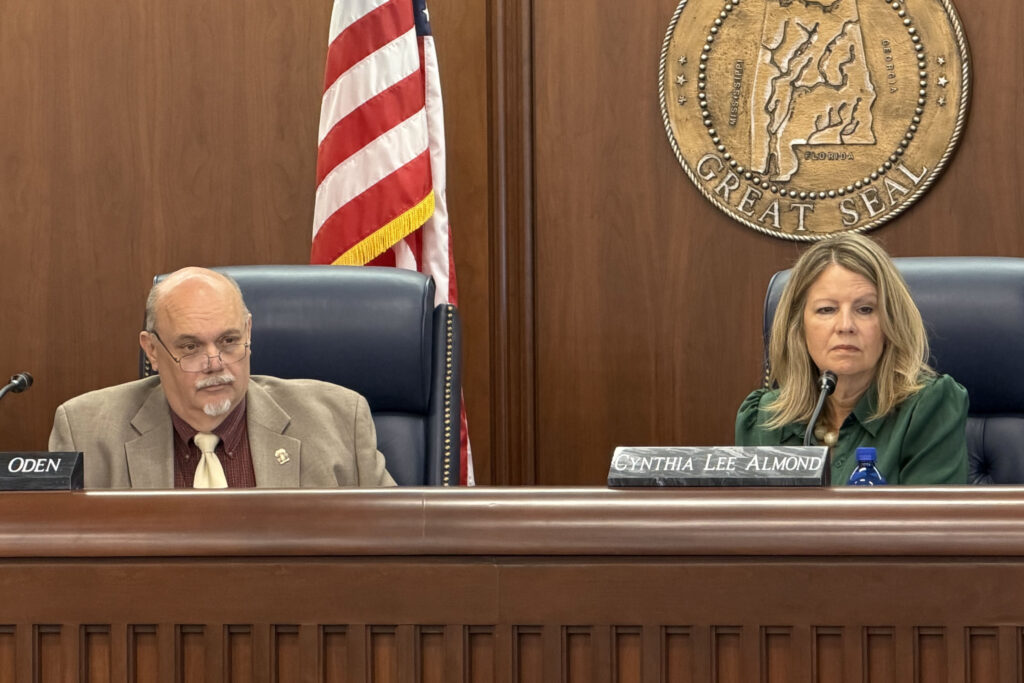
“I feel strongly that we should take a public vote as a commission on data centers, and we should not follow the deemed approved process that we’ve been following for a number of years,” Almond said during the meeting.
Commissioner Jeremy Oden said he understood both points of view.
After about 20 minutes of discussion among the commissioners and Luke Bentley, the PSC’s administrative law judge, the commissioners agreed to an amendment that included the 90-day deemed approval provision.
Currently, data center contracts submitted to the PSC for approval are deemed approved unless the commission takes action within 10 days of receiving them. The new rules essentially extend the deemed-approved period to 90 days.
The Southern Environmental Law Center said in a statement that the default approval provision was “a blow for data center accountability.”
This story is funded by readers like you.
Our nonprofit newsroom provides award-winning climate coverage free of charge and advertising. We rely on donations from readers like you to keep going. Please donate now to support our work.
Donate NowThe SELC also notes that the new rules do not call for public hearings or other opportunities for the public to comment on data center proposals.
“I am hopeful this is only the beginning of a deeper conversation about how to protect Alabama Power customers from the costs and risks of the data center boom,” Jaclyn Brass, an attorney in SELC’s Birmingham office, said in a news release.
“It’s disappointing the commission would not commit to taking public votes on all contracts,” Brass said. “However, requiring Alabama Power to disclose basic information about these contracts, including the name of the data center and the maximum contracted electric capacity, are all important steps toward greater transparency.”
Daniel Tait, executive director of clean energy advocacy group Energy Alabama, said data center contracts are unique in their requirements and the commission should vote publicly on them.
“Ninety days is better than ten, but silence still counts as yes,” Tait said in a news release. “A contract this big should never take effect because nobody voted. Alabamians deserve to see their regulators decide, in public.”
The Reshuffling of the PSC
The new rules approved Tuesday will be enforced by a very different commission in 2027 than the current version, as Alabama undergoes a major transformation in the way it regulates utilities.
Instead of a three-member commission that is elected statewide, Alabama will expand its commission to seven members beginning next year, elected by congressional district.
Those commissioners will be overseen by Alabama’s first energy secretary, a new position created by state law passed in April. The secretary, to be appointed by Alabama’s next governor in January, will set the commission’s agenda and make staffing decisions. Commissioners can only overturn the secretary’s decision by a vote from five of the seven commissioners.
Almond is the only member of the PSC who will keep her seat next year. Oden and Beeker both lost in GOP primaries earlier this year after widespread outcry about Alabama’s high electric bills. Almond’s seat was not on the ballot this year.
About This Story
Perhaps you noticed: This story, like all the news we publish, is free to read. That’s because Inside Climate News is a 501c3 nonprofit organization. We do not charge a subscription fee, lock our news behind a paywall, or clutter our website with ads. We make our news on climate and the environment freely available to you and anyone who wants it.
That’s not all. We also share our news for free with scores of other media organizations around the country. Many of them can’t afford to do environmental journalism of their own. We’ve built bureaus from coast to coast to report local stories, collaborate with local newsrooms and co-publish articles so that this vital work is shared as widely as possible.
Two of us launched ICN in 2007. Six years later we earned a Pulitzer Prize for National Reporting, and now we run the oldest and largest dedicated climate newsroom in the nation. We tell the story in all its complexity. We hold polluters accountable. We expose environmental injustice. We debunk misinformation. We scrutinize solutions and inspire action.
Donations from readers like you fund every aspect of what we do. If you don’t already, will you support our ongoing work, our reporting on the biggest crisis facing our planet, and help us reach even more readers in more places?
Please take a moment to make a tax-deductible donation. Every one of them makes a difference.
Thank you,

Dennis Pillion
Reporter, Alabama
Dennis Pillion is a reporter for Inside Climate News based in Alabama. He joined ICN in 2024 after 17 years working for Alabama Media Group, including nine as the statewide natural resources reporter. His work for AL.com and The Birmingham News, won numerous Green Eyeshade and Alabama Press Association awards for his coverage of environmental issues in Alabama. He was born and lives in Birmingham, Ala.