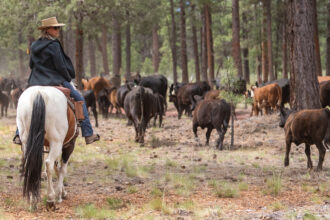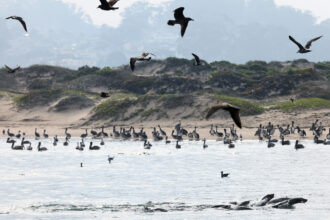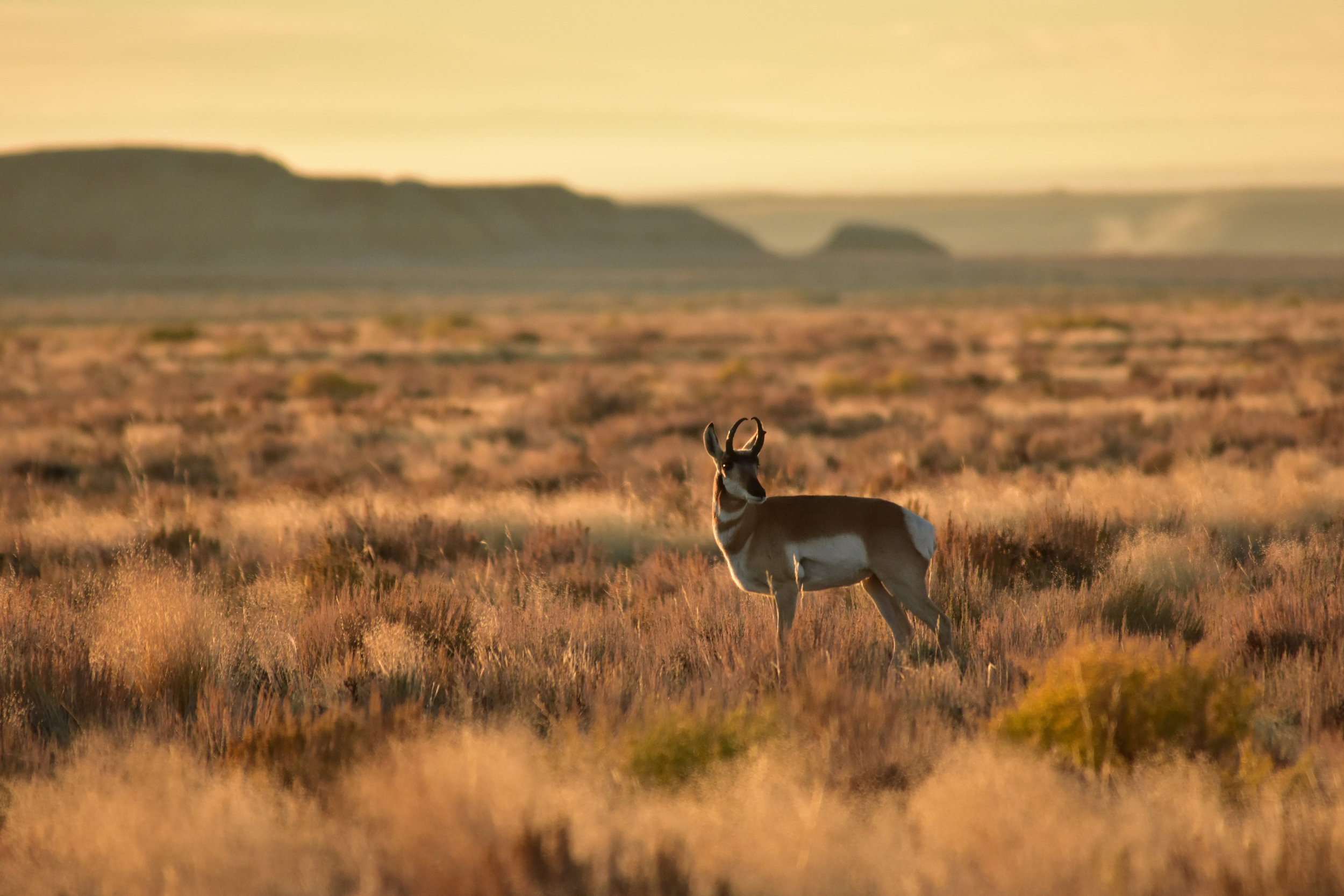


Over 95 percent of land within national wildlife refuges across the country will soon be open to hunting and fishing.
The announcement Thursday from the U.S. Department of the Interior represents the largest such expansion in the nation’s history, allowing access to more than 92 million acres across 32 states. Sportsmen’s groups welcomed the move, while environmental groups expressed concern the rule would rollback recent strides made that allowed expanded hunting and fishing at refuges without as much environmental harm.
The announcement is similar to one implemented in 2020 by the first Trump administration, which was sued by the Center for Biological Diversity for its impacts on endangered species. Under the Biden administration, Interior’s Fish and Wildlife Service settled the lawsuit with a plan to address risks to those species and to phase out the use of toxic lead ammunition and fish tackle at several refuges.
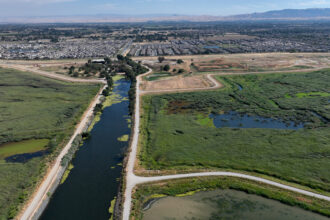
The U.S. Fish and Wildlife Service (FWS) oversees 573 national wildlife refuges designed to protect native species. Over 100 million acres of public lands and waters are found within the refuge system, protecting habitat for over 380 plant and animal species listed under the Endangered Species Act.
That species conservation is the main goal of refuges. Recreational uses such as hunting are permitted only when compatible with that goal, and under law cannot become the primary use for a refuge.
Despite the Trump administration’s announcement of sweeping changes to the refuge system through more than 1,000 management modifications, the final rule detailing what will change has not been published. The Interior Department’s press release offered only the broad strokes of how access will increase, and noted that hunting and fishing will be allowed at 14 refuges and three hatcheries for the first time.
“America’s hunters and anglers now have something significant to look forward to in the fall as we plan to open and expand hunting and fishing opportunities nationwide,” Interior Secretary Doug Burgum said in the press release. “We are also promoting good government by reducing the regulatory burden and working with states to facilitate these outdoor activities.”
Collette Adkins, carnivore conservation program director at the Center for Biological Diversity and an attorney who led the group’s lawsuit against the last major expansion of hunting and fishing access at refuges, said the center is waiting for the final rule to review.
But in announcing the proposed rule, FWS said it planned to reverse the previously won phase outs on lead ammunition and tackle.
In a letter submitted during the rule’s public comment period, the Center for Biological Diversity called the proposed rule “incompatible with the mission of the Refuge system,” arguing that it would allow continued use of lead ammunition and fish tackle despite scientific evidence documenting their impact on wildlife.
The letter acknowledges that hunting is a suitable use for refuges but says it must be consistent with the mission of the refuge and the purpose of the National Wildlife Refuge System Administration Act of 1966. The center argues that by allowing the continued use of lead ammunition and tackle, the proposed rule fails to account for the harm those materials can cause.
That’s concerning, Adkins said, because it’s the very issue at the center of the previous lawsuit over expanding hunting and fishing at the refuges. Following a court order, the FWS agreed the phaseout of lead was necessary to protect the sites.
“I just don’t get it,” Adkins said. “We got lead out of paint, out of gas. I don’t understand why we continue to use lead ammunition. We’ve got really good alternatives.”
There’s also concern about how FWS will ensure that the expanded access and the changes in management at the refuges remain consistent with their missions, given staffing and budget constraints. Since the start of the second Trump administration, staffing at the agency has declined by 18 percent.
Without the proper staffing and resources, Adkins said, the agency may not be able to monitor how the expanded access is affecting habitat management and endangered species at the refuges, risking unintended harm to the sites and putting the agency at risk of violating the law.
Steve Kandell, director of Trout Unlimited’s protection campaign center, said the announcement is a positive development.
“Healthy habitat and access, those are kind of the two essential ingredients to good sporting opportunity and to good fishing and hunting,” he said.
Once the final rule is made public, Trout Unlimited will assess exactly what is changing and identify any potential concerns. But Kandell is optimistic that providing more access for hunting and fishing at the refuges will create more advocates for protecting these spaces, opening the door for resources to be dedicated to them.
The Department of the Interior and FWS did not announce when the final rule will be made public, but said it will be finalized “in time for hunting season.”
About This Story
Perhaps you noticed: This story, like all the news we publish, is free to read. That’s because Inside Climate News is a 501c3 nonprofit organization. We do not charge a subscription fee, lock our news behind a paywall, or clutter our website with ads. We make our news on climate and the environment freely available to you and anyone who wants it.
That’s not all. We also share our news for free with scores of other media organizations around the country. Many of them can’t afford to do environmental journalism of their own. We’ve built bureaus from coast to coast to report local stories, collaborate with local newsrooms and co-publish articles so that this vital work is shared as widely as possible.
Two of us launched ICN in 2007. Six years later we earned a Pulitzer Prize for National Reporting, and now we run the oldest and largest dedicated climate newsroom in the nation. We tell the story in all its complexity. We hold polluters accountable. We expose environmental injustice. We debunk misinformation. We scrutinize solutions and inspire action.
Donations from readers like you fund every aspect of what we do. If you don’t already, will you support our ongoing work, our reporting on the biggest crisis facing our planet, and help us reach even more readers in more places?
Please take a moment to make a tax-deductible donation. Every one of them makes a difference.
Thank you,

Wyatt Myskow
Reporter, Phoenix
Wyatt Myskow covers drought, biodiversity and the renewable energy transition throughout the Western U.S. Based in Phoenix, he previously reported for The Arizona Republic and The Chronicle of Higher Education. Wyatt has lived in the Southwest since birth and graduated from Arizona State University with his bachelor’s degree in journalism.