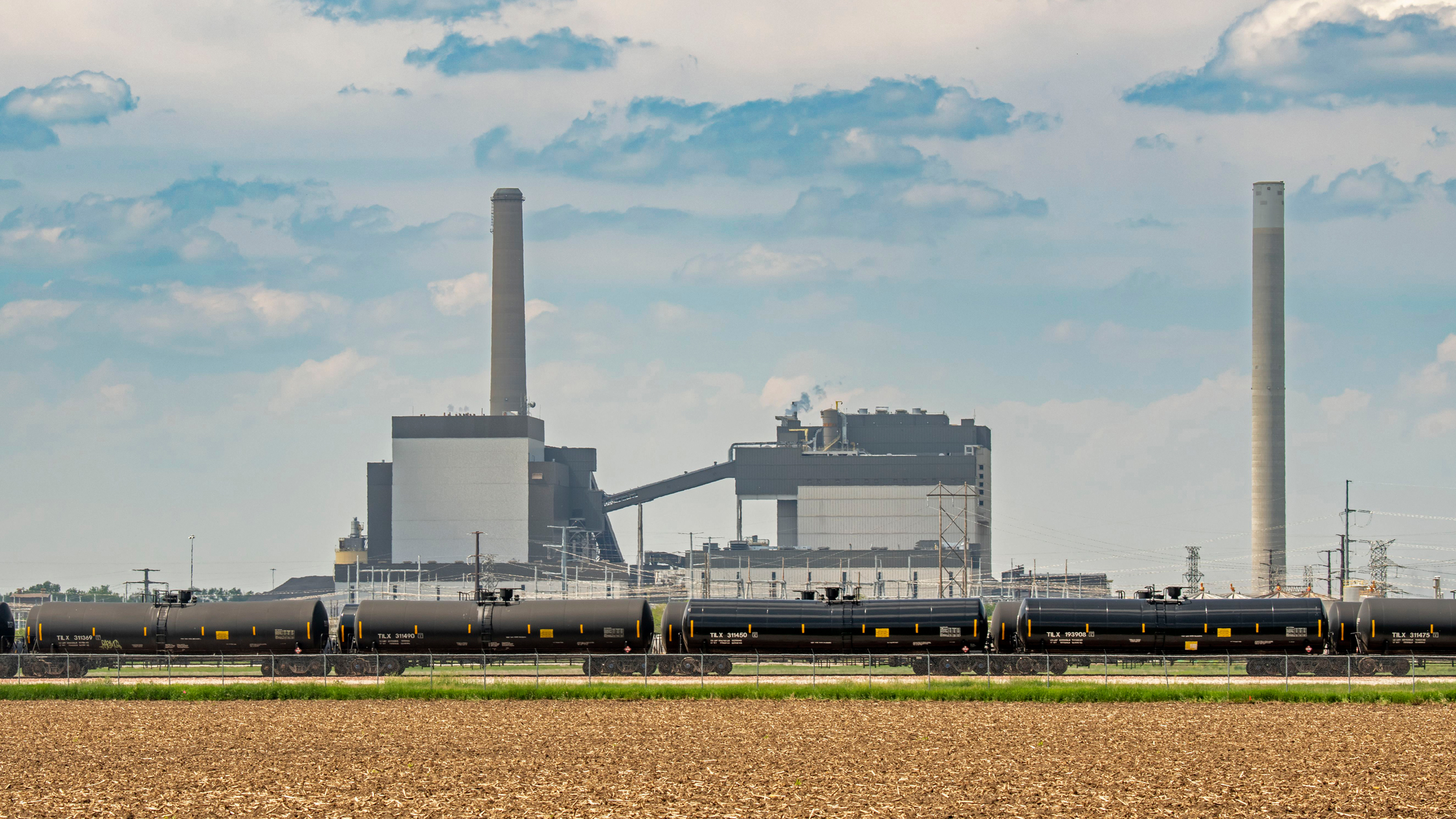


Before Iowa was the nation’s most wind-powered state, it generated nearly all of its electricity with coal. Since 2000, the fossil fuel’s role in the state’s power mix has diminished as utilities built a massive fleet of wind turbines that now provides nearly two-thirds of the state’s power.
But as the artificial intelligence boom drives up electricity demand and utility-scale wind and solar development slows, coal has helped make up lost ground.
From 2024 to 2025, Iowa’s two largest electric utilities both increased their generation of coal power for the first time in years, according to the Iowa Environmental Council’s annual report on statewide electricity generation, which draws on data reported to the Federal Energy Regulatory Commission.
In 2024, coal made up 21 percent of the resource mix of MidAmerican Energy Co., the largest investor-owned electric utility in Iowa. In 2025, it supplied 27 percent of the company’s total power. Interstate Power and Light, a subsidiary of Alliant Energy Corp., reported coal jumping from 12 to 20 percent of its mix in the same timeline.
“It’s confusing, frankly,” Steve Guyer, senior energy policy counsel for the Iowa Environmental Council, said of the uptick. Emissions monitoring data submitted to the Environmental Protection Agency by Iowa’s six coal plants suggest that the trend has continued in 2026, he said.
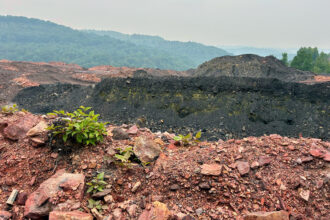
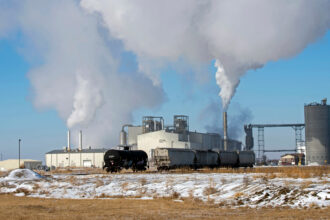
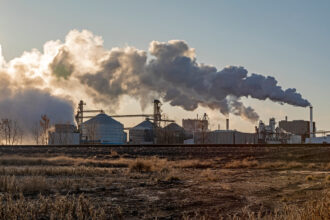
Iowa is home to a small, aging coal fleet made up of just nine utility-scale generating plants. The dated facilities are significant sources of nitrogen and sulfur oxide gases, toxic heavy metals—like mercury and carcinogenic arsenic and cadmium—and fine particulate matter that exacerbates asthma and underlying lung and heart disease, said Peter Thorne, a professor of occupational and environmental health at the University of Iowa. “They really reflect a turn-of-the-19th-century technology,” he said.
With the long-term decline in coal generation, several remaining plants, like the George Neal stations near Sioux City, Iowa, have operated at “incredibly low capacity,” around 20 percent, for many years, said Josh Mandelbaum, an Iowa-based senior attorney with the Environmental Law and Policy Center who was not involved with the report. “In a period of rising demand, where the lower-cost clean resources aren’t getting built out as much as they should be, or as quickly as they should be, that’s when you’ll see something like coal fill the gap,” Mandelbaum said.
Iowa’s electricity generation increased from 70.5 million megawatt-hours in 2024 to just over 74 million in 2025. The Iowa Nuclear Energy Task Force, convened this year by Gov. Kim Reynolds, has attributed the growth in electricity demand to data center development and the expansion of manufacturing facilities.
The rising demand coincides with an already fraught period for utility-scale renewables. Large-scale wind and solar projects must contend with the loss of federal tax credits, growing opposition from residents and rising materials costs due to tariffs, Mandelbaum said.
The Iowa Environmental Council’s report documented noticeable impacts to air quality from just one year of increased coal combustion. From 2024 to 2025, Alliant and MidAmerican reported a more than 50 percent increase in their emissions of sulfur dioxide and nitrogen oxide, according to data filed with the EPA.
In the atmosphere, those gases can react to form additional fine particulate matter, particles half the size of a red blood cell that play havoc in the body. As coal emissions rose, the council found, government-run air quality monitoring locations in the state saw a corresponding increase in particulate matter concentrations.
Air pollution is increasingly recognized as a significant contributor to cancer risk, Guyer noted. Cancer is top of mind in Iowa, the state with the second-highest rate of new cancer cases, a share that continues to grow.
In response to a request for comment, Alliant Energy wrote that the utility “remains focused on our commitment to balancing reliability, affordability and sustainability for customers, while making progress toward our goal of net-zero greenhouse gas emissions by 2050.”
MidAmerican also advertises a net-zero goal by 2050.
“One important point is sometimes lost in discussions about Iowa’s energy future: how much progress has already occurred,” wrote Geoff Greenwood, MidAmerican’s media relations manager, in an email to Inside Climate News. Since 2005, the utility has nearly doubled its total electricity generation but has reduced carbon dioxide emissions by approximately 30 percent, and both nitrogen oxide and sulfur oxide emissions by over 70 percent, Greenwood wrote.
Greenwood also pointed to the importance of coal generation in ensuring reliable service to MidAmerican’s 1.3 million electric customers in Iowa. “In years when wind output is lower, other generating resources must provide the electricity customers depend on,” he wrote.
Reliability is often cited as a shortcoming of renewable energy sources that depend on naturally variable wind and sunlight. However, advanced energy-storage infrastructure could help affordably meet demand without turning to coal, Thorne said. During periods of high wind and solar production, Iowa could use excess electricity to produce hydrogen for later use, or pump water to reservoirs upstream, creating stored energy that could be harnessed as hydroelectric power when demand spikes.
The uptick in coal generation over the past two years reflects rising energy demand and delays in implementing cleaner technologies, said Mandelbaum. “I don’t think it signifies a trend for coal. I think it signifies that cheaper alternatives are not being built quickly enough,” he said. “It will continue to be a problem until we get the fleet retired.”
Clarification: This story was updated September 14, 2026 to specify that the George Neal power stations near Sioux City, Iowa, have operated at particularly low capacity.
About This Story
Perhaps you noticed: This story, like all the news we publish, is free to read. That’s because Inside Climate News is a 501c3 nonprofit organization. We do not charge a subscription fee, lock our news behind a paywall, or clutter our website with ads. We make our news on climate and the environment freely available to you and anyone who wants it.
That’s not all. We also share our news for free with scores of other media organizations around the country. Many of them can’t afford to do environmental journalism of their own. We’ve built bureaus from coast to coast to report local stories, collaborate with local newsrooms and co-publish articles so that this vital work is shared as widely as possible.
Two of us launched ICN in 2007. Six years later we earned a Pulitzer Prize for National Reporting, and now we run the oldest and largest dedicated climate newsroom in the nation. We tell the story in all its complexity. We hold polluters accountable. We expose environmental injustice. We debunk misinformation. We scrutinize solutions and inspire action.
Donations from readers like you fund every aspect of what we do. If you don’t already, will you support our ongoing work, our reporting on the biggest crisis facing our planet, and help us reach even more readers in more places?
Please take a moment to make a tax-deductible donation. Every one of them makes a difference.
Thank you,

Anika Jane Beamer
Reporter, Iowa
Anika Jane Beamer covers the environment and climate change in Iowa, with a particular focus on water, soil and CAFOs. A lifelong Midwesterner, she writes about changing ecosystems from one of the most transformed landscapes on the continent. She holds a master’s degree in science writing from the Massachusetts Institute of Technology as well as a bachelor’s degree in biology and Spanish from Grinnell College. She is a former Outrider Fellow at Inside Climate News and was named a Taylor-Blakeslee Graduate Fellow by the Council for the Advancement of Science Writing.