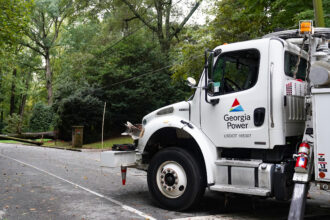
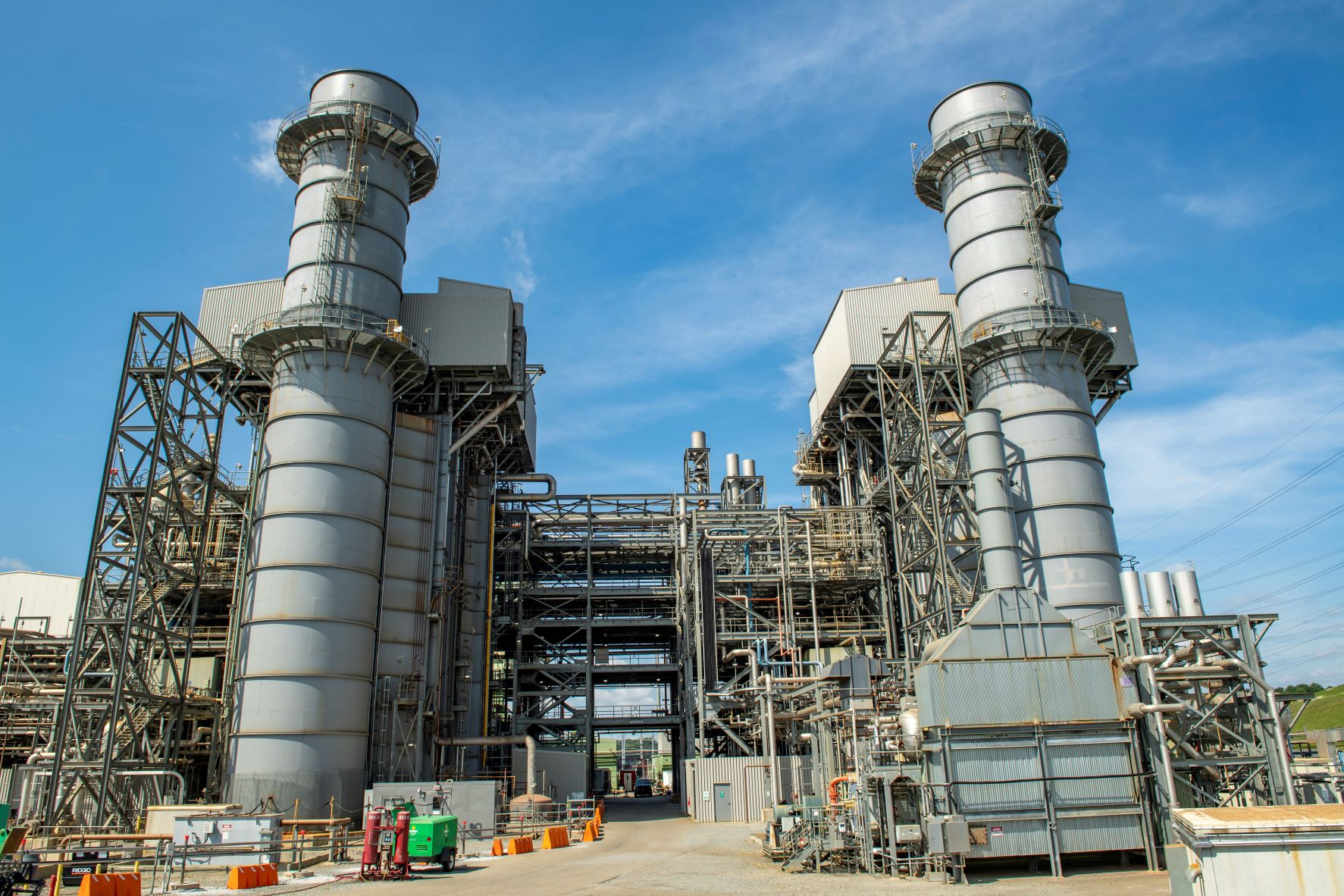


The growth of data centers and rapid electrification is driving Georgia Power toward another major expansion of its electric grid. The state’s largest utility is preparing to add between 2,000 and 6,000 megawatts of new capacity to its grid for 2032 and 2033. The utility is considering a mix of resources, including natural gas and battery storage, to meet its future electricity needs.
But how much each resource counts toward that expansion depends on a calculation called Effective Load Carrying Capability, or ELCC. It is the “critical renewable energy concept you’ve never heard of,” according to the Union of Concerned Scientists. And the way Georgia Power is using that calculation in its latest effort to secure new power generation is drawing scrutiny from renewable energy advocates across the state.
Prior to the rise of renewable energy, determining how much capacity a new power project added to the grid was relatively simple. Utilities projected peak electricity demand and ensured they had enough power plants available to meet it.
But because renewable resources like solar and wind are variable, planning grid expansions has become more complex. The sun is not always shining and the wind is not always blowing, making it more difficult to determine how much reliable capacity renewable projects actually add to the grid.
ELCC is a way of measuring how much capacity a power resource can reliably contribute to the grid. A resource with a 100 percent ELCC can be counted on for its full capacity when determining how much electricity the grid can reliably support. Natural gas typically has an ELCC near 60 to 80 percent, while solar and wind projects without battery storage can have ELCCs between 4 to 40 percent. With batteries, renewables can have ELCCs around 95 percent, but that value can fall as more batteries are added to the grid.
In its previous planning, Georgia Power assigned battery storage an ELCC of 95 percent for its first 3,000 megawatts of capacity, 75 percent for the next 3,000 megawatts and 50 percent for the next 3,000 megawatts. As more batteries are added, they become less valuable during peak demand because they increasingly compete to provide power at the same time.
Based on the amount of battery storage on the grid and planned for the future, the utility’s previous calculations suggest the current ELCC should be set at around 75 percent. The latest procurement, however, uses a much lower figure.
According to Bob Sherrier, an attorney with the Southern Environmental Law Center and the Advanced Power Alliance, which both testified about the issue to Georgia regulators, Georgia Power is now using an ELCC of just 20 percent for battery storage in its upcoming procurement. That means a 1,000-megawatt battery project would count for just 200 megawatts toward the utility’s capacity needs. A 1,000-megawatt natural gas plant with an 80 percent ELCC, by comparison, would count for 800 megawatts.
ELCC calculations are based on modeling under different conditions and assumptions. Georgia Power did not provide details on the calculations but did tell Inside Climate News they have been consistent and are committed to accurate evaluations of all resources. In response to additional questions about the request for proposal, a company representative said “the company is in the middle of several ongoing resource procurements and cannot comment on specifics of requests for proposals.”
The steep drop in ELCC from Georgia Power’s previous calculations could put battery storage at a disadvantage as the utility evaluates projects for its planned 2,000 to 6,000-megawatt expansion, Sherrier said. With a lower ELCC, developers would need to build more battery capacity to earn the same capacity credit as a natural gas project.
He called the change a “thumb on the scale for gas,” arguing that it makes battery storage artificially less valuable in the procurement.
“Batteries are going to look significantly more expensive than gas,” Sherrier said. “We know that is not the case anymore.”
Recent cost estimates show that utility-scale solar can be cheaper than new natural gas generation. Pairing solar with battery storage raises the cost, but can still make it competitive with gas while allowing electricity to be stored for use when it is needed.
If the ELCC for batteries remains unchanged, Sherrier fears the new expansion could once again be dominated by natural gas.
For its 2029-2031 expansion, Georgia Power planned nearly 10,000 megawatts of new capacity, including roughly 6,000 megawatts from natural gas, with the remainder coming from solar and battery projects. At the time of planning in 2024, the utility’s planning assigned battery storage an ELCC of 95 percent for its first 3,000 megawatts of capacity.
More than 6,000 megawatts of natural gas capacity, if operated at full output year-round, could produce an estimated 20 million metric tons of carbon dioxide equivalent annually, roughly the same emissions as 4 million cars.
If the 2032-2033 procurement goes the way Sherrier expects, Georgia Power could lock in millions more tons of annual emissions.
Georgia Power is reviewing proposals for its 2032-2033 expansion, with battery storage still assigned an ELCC of 20 percent. But the issue is not settled. The utility and regulators are expected to discuss which projects to move forward with early next year.
According to Sherrier, however, some of the damage may already be done. By assigning batteries a lower capacity value, Georgia Power may have discouraged battery developers from submitting proposals in the first place. The impact of the ELCC calculation will become clearer when the utility’s selected projects are submitted for regulatory approval in mid-2027.
If the issue is not resolved in this procurement, SELC and the Advanced Power Alliance plans to push for a higher ELCC in the next round of expansion planning, which is expected to begin in 2028.
About This Story
Perhaps you noticed: This story, like all the news we publish, is free to read. That’s because Inside Climate News is a 501c3 nonprofit organization. We do not charge a subscription fee, lock our news behind a paywall, or clutter our website with ads. We make our news on climate and the environment freely available to you and anyone who wants it.
That’s not all. We also share our news for free with scores of other media organizations around the country. Many of them can’t afford to do environmental journalism of their own. We’ve built bureaus from coast to coast to report local stories, collaborate with local newsrooms and co-publish articles so that this vital work is shared as widely as possible.
Two of us launched ICN in 2007. Six years later we earned a Pulitzer Prize for National Reporting, and now we run the oldest and largest dedicated climate newsroom in the nation. We tell the story in all its complexity. We hold polluters accountable. We expose environmental injustice. We debunk misinformation. We scrutinize solutions and inspire action.
Donations from readers like you fund every aspect of what we do. If you don’t already, will you support our ongoing work, our reporting on the biggest crisis facing our planet, and help us reach even more readers in more places?
Please take a moment to make a tax-deductible donation. Every one of them makes a difference.
Thank you,