

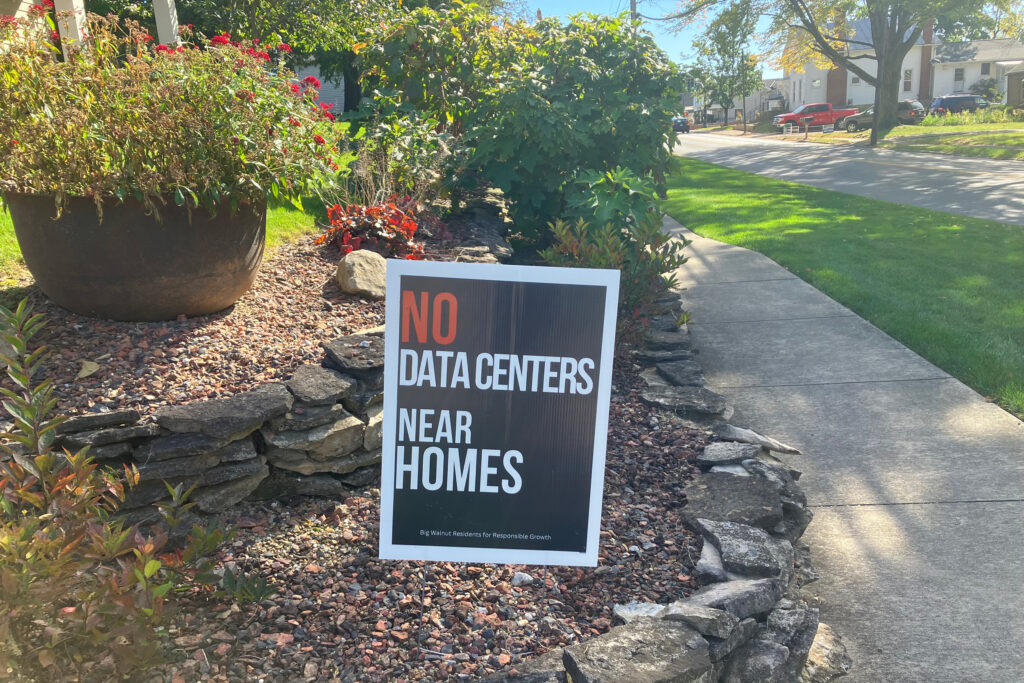
Some of the arguments against data centers sound familiar.
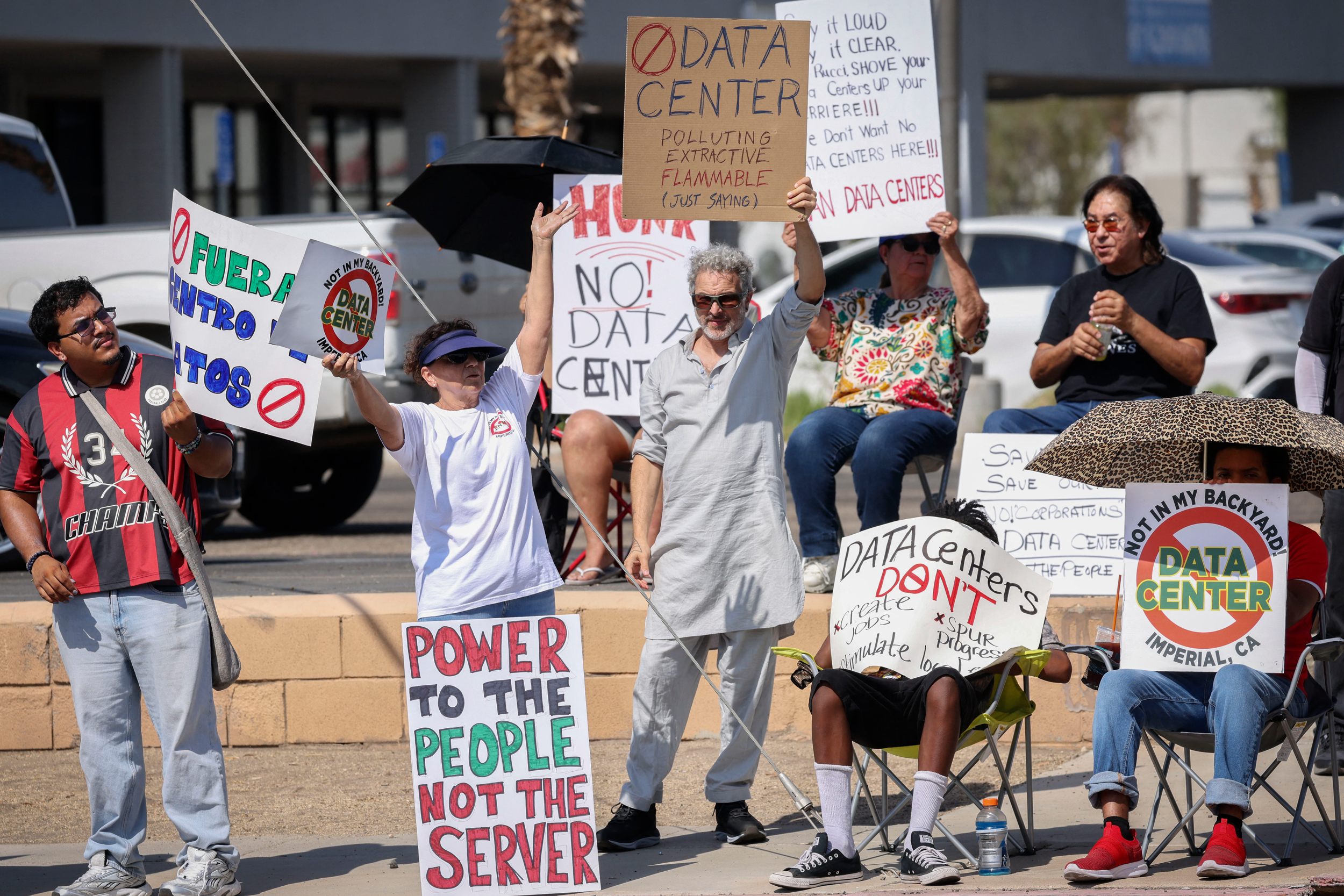
Opponents say the projects will change the look and feel of a place, harm the air and water and reduce property values.
This rationale is familiar because residents have raised the same concerns in campaigns against wind and solar. Whether these objections to very different types of development are accurate or not, they seem to stem from the same feelings of lack of control and fear of change, especially in rural places.
Jeffrey Jacquet, a rural sociology professor at Ohio State University, agrees that the pushback against data centers and renewables shares some common traits, but he is cautious about drawing broader conclusions. His research focuses on the social effects of developing renewables and fossil fuels.
“People have their reasons for opposing stuff, and it’s sort of hard to second-guess those or to play like some sort of logical consistency game,” Jacquet said in an interview.
I wrote this month about some of the people behind Ohio’s resistance to data centers, and, in a separate story, how the issue is playing out in the state’s U.S. Senate race.
Resistance to data centers reminds me of campaigns I covered in many Ohio communities to limit or ban wind and solar, such as in Pickaway County, just south of Columbus. Sure enough, Pickaway County is now a hot spot for data center opposition, but not in the same villages or townships that were against a big solar project in 2022.
And yet, almost every time I ask a data center critic whether they see a similarity between their arguments and those against wind and solar, they disagree with the premise. They are bemused by my grand theory of resisting everything.

Jacquet finds it helpful to think about opposition to data centers and renewables in terms of “construal-level theory,” which is a social science concept that says a person’s views on a topic become more precise with first-hand experience and more abstract without it.
If someone hasn’t lived next to a data center, wind farm or solar farm, they are likely to form opinions about what it’s like based on social media, friends or other sources.
“The best they can do is just try to make decisions on the information they have, which comes from all sorts of different places and it gets mediated through different factors like the political party they belong to,” Jacquet said.
Later on, as people get actual experience with these projects, their attitudes tend to soften, he said. The opponents become less hostile.
So let’s step back and ask why a rural resident may recoil at the idea of a data center (or a wind or solar farm) even if they don’t yet know what the project will be like as a neighbor.
In my view, a big factor is suspicion of large companies, especially tech companies. A resident may have no experience living near a data center, but they are predisposed to question the intentions of Amazon, Meta, xAI and others.
Energy companies also face challenges with trust, but no wind or solar developer is as well known as major data center developers.
To accept a project, a community will want benefits significant enough to make the disruption worthwhile. That’s a challenge for data centers, wind and solar because they don’t offer many long-term jobs.
The final factor I’ll list is the public’s tendency to generalize from extreme examples. This means an especially contentious project becomes the lens through which people view a similar development proposed in their own neighborhood. In the case of data centers, the xAI projects in the Memphis area are notorious for noise and emissions, and they sometimes serve as a stand-in for the broader industry.
This story is funded by readers like you.
Our nonprofit newsroom provides award-winning climate coverage free of charge and advertising. We rely on donations from readers like you to keep going. Please donate now to support our work.
Donate NowIt’s difficult to find wind and solar projects that can compete with the worst data centers in terms of disregard for the aesthetics of a place. But if you’re curious, look at Facebook groups opposing renewables to see photos of extreme examples of barren landscapes, poor drainage and general blight.
There is a lesson here for wind and solar developers: Don’t behave like data center developers. Realize it’s normal for residents to feel distrust and try to counter it by prioritizing trust and transparency. Avoid non-disclosure agreements and secrecy. Make sure a community learns about your project from you, not through rumors that send them to social media to form initial impressions.
I asked John Smillie, the Indiana renewable energy advocate I recently wrote about, about the common ground between opponents of data centers and opponents of wind and solar.
“The anti-data center bubble is very big,” he said. “So if you’re going to draw a Venn diagram, the opposition’s up to like 70 percent of the public, and you’re going to find different groups overlapping with that big bubble. And people have gotten mad at me for pointing out that, hey, a lot of the people in the anti-data center bubble are anti-renewable people.”
Polling data supports his view. In a March report, Gallup found that seven in 10 Americans oppose data centers. In a different poll about energy sources published in April, Gallup found declining support for wind and solar over the last decade, but approval remains high: 66 percent said solar should be emphasized more than it is now, and 55 percent said the same about wind. The share saying those resources should be emphasized less was 16 percent for solar and 24 percent for wind, both increases from prior years.
If polling focused on the rural Midwest, I suspect opposition to wind and solar would be higher, though still lower than for data centers, with many people who dislike “all of the above.”
But this overlap doesn’t imply that the groups’ arguments have equal merit.
For example, Smillie said, there are health concerns about data centers that rely heavily on natural gas or diesel generators, which leads to air pollution for nearby communities. Opponents of wind and solar sometimes talk about health issues related to those technologies, such as runoff from solar panels affecting groundwater, but I have yet to see evidence of harm from any reliable source.
Data center critics “have more facts on their side” than people warning of health issues with wind and solar, Smillie said.
That may be beside the point when it comes to persuading the local leaders who decide if a project happens.
If enough local governments resist development, companies often try to change the law to shift control to state and federal officials.
Illinois and Michigan are among the states that passed laws reducing local governments’ power to stop wind and solar projects. If enough Ohio communities pass bans on data centers, it’s not much of a stretch to envision a state law that would weaken or invalidate those actions.
Jacquet doesn’t like it when states snatch power from local governments.
“The ability for communities to say ‘no’ is important because it ultimately leads to better projects over time,” he said. And the threat of “no” will push developers to remove the most onerous parts of plans and add community benefits.
Other stories about the energy transition to take note of this week:
Permitting Bill Debate Intensifies: Supporters and opponents of the proposed permitting reform bill in Congress are making their cases, as Ben Geman reports for Axios. The bill, dubbed by its authors the Bipartisan American Affordability and Jobs Act of 2026, would ease the construction of transmission lines and help renewable energy projects, but it would also weaken environmental protections and limit the ability to challenge fossil fuel projects. The Columbia University Center on Global Energy Policy published an analysis estimating how much the bill would shorten permit timelines for energy projects. The Natural Resources Defense Council released an in-depth look at the bill, including praiseworthy elements and some that the environmental organization thinks should change to avoid stacking the deck in favor of fossil fuel projects.
Looking at What’s Ahead for Floating Offshore Wind: Researchers have long seen an opportunity to use floating offshore wind turbines in places where water is too deep to mount turbines on the sea floor. But progress in developing the technology has encountered the Trump administration’s opposition to offshore wind. Despite the challenges, the work continues and floating offshore wind could still be part of the energy mix in the near future, as my colleague Nathaniel Eisen reports.
The Best Affordable EVs on the Market Today: The Nissan Leaf, with a starting price of $31,565, tops a buyer’s guide for EVs at the low end of the price scale, as Iulian Dnistran reports for InsideEVs. Also listed is the Chevrolet Bolt, the best affordable small electric hatchback, with a starting price of $28,995.
Inside Clean Energy is ICN’s weekly bulletin of news and analysis about the energy transition. Send news tips and questions to [email protected].
About This Story
Perhaps you noticed: This story, like all the news we publish, is free to read. That’s because Inside Climate News is a 501c3 nonprofit organization. We do not charge a subscription fee, lock our news behind a paywall, or clutter our website with ads. We make our news on climate and the environment freely available to you and anyone who wants it.
That’s not all. We also share our news for free with scores of other media organizations around the country. Many of them can’t afford to do environmental journalism of their own. We’ve built bureaus from coast to coast to report local stories, collaborate with local newsrooms and co-publish articles so that this vital work is shared as widely as possible.
Two of us launched ICN in 2007. Six years later we earned a Pulitzer Prize for National Reporting, and now we run the oldest and largest dedicated climate newsroom in the nation. We tell the story in all its complexity. We hold polluters accountable. We expose environmental injustice. We debunk misinformation. We scrutinize solutions and inspire action.
Donations from readers like you fund every aspect of what we do. If you don’t already, will you support our ongoing work, our reporting on the biggest crisis facing our planet, and help us reach even more readers in more places?
Please take a moment to make a tax-deductible donation. Every one of them makes a difference.
Thank you,

Dan Gearino
Reporter, Clean Energy
Dan Gearino covers the business and policy of renewable energy and utilities, often with an emphasis on the midwestern United States. He is the main author of ICN’s Inside Clean Energy newsletter. He came to ICN in 2018 after a nine-year tenure at The Columbus Dispatch, where he covered the business of energy. Before that, he covered politics and business in Iowa and in New Hampshire. He grew up in Warren County, Iowa, just south of Des Moines, and lives in Columbus, Ohio.