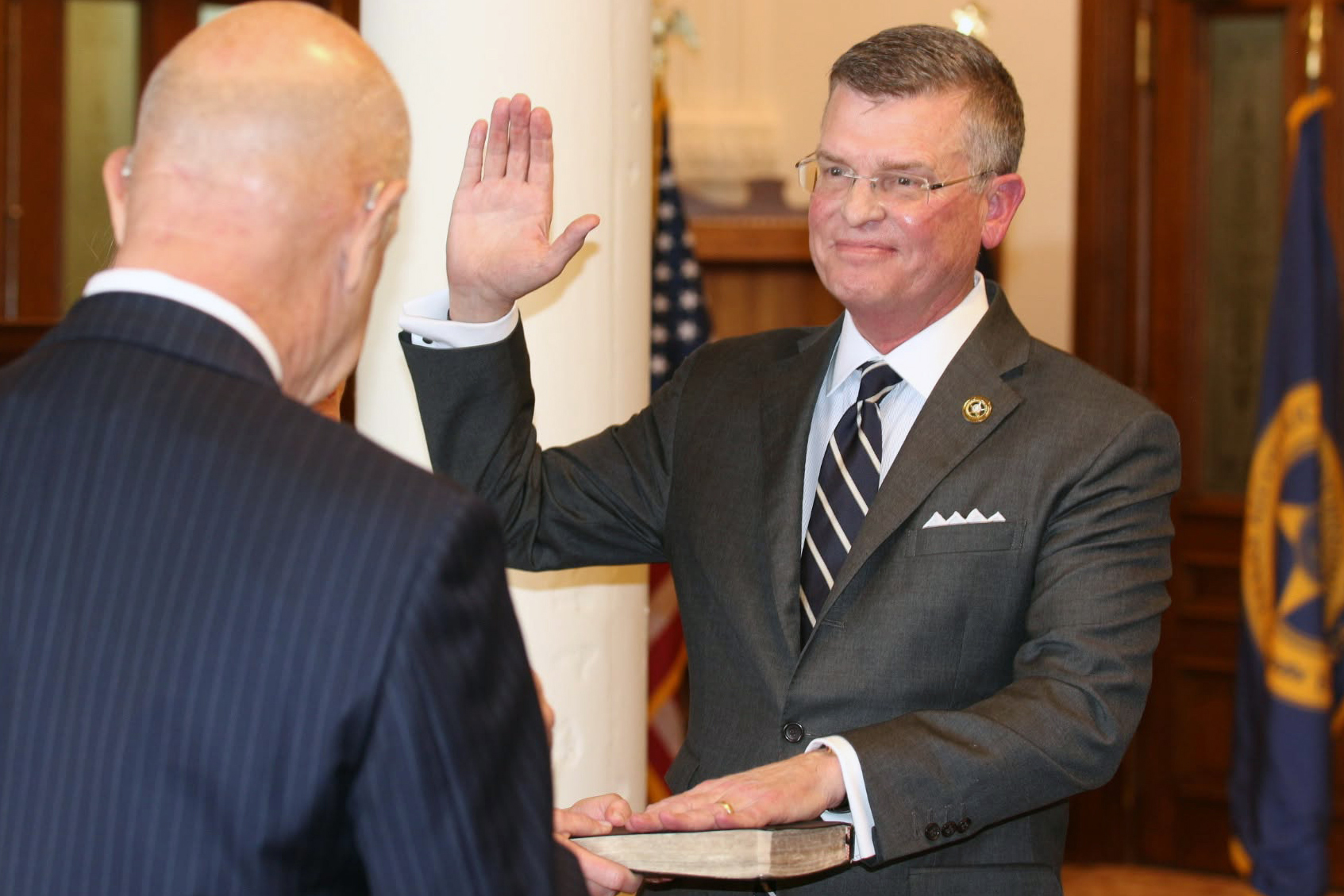


When President Donald Trump nominated Kevin Lilly last year to oversee management of the nation’s wildlife refuges and national parks, conservation advocacy organizations raised concerns over how his lack of public lands experience would impact the Department of the Interior’s conservation commitments.
Prior to assuming the role of assistant secretary for fish, wildlife and parks on an acting basis, Lilly served as the chairman of the Texas Alcoholic Beverage Commission and founded Avalon Advisors, the largest privately owned wealth management firm in the state. At a confirmation hearing this week, Sen. Ted Cruz, R-Texas, described Lilly as someone who fostered a strong appreciation for public lands through his “deep love of the outdoors, including fishing and hunting.”
Lilly told members of the Senate Committee on Environment and Public Works that experiencing the nation’s public lands deepened his desire to expand access to them.
“My faith has always guided my respect for creation, grounding my belief that natural resources are gifts to be cared for with humility and gratitude,” he said in his opening statement.
Given the expansive responsibilities of his job, Lilly appeared before both the environment and public works and the energy and natural resources committees. While Republican senators focused on asking Lilly for commitments to fewer regulations for access and commercial activities on public lands, Democratic members questioned whether his handling of the job so far has upheld the department’s mission to protect wildlife and parks.
Conservation groups sued the U.S. Fish and Wildlife Service, which Lilly oversees, earlier this month over a proposed land swap deal with SpaceX in South Texas.
At the Energy and Natural Resources hearing, Sen. Alex Padilla, D-Calif., expressed concerns about management of popular federal sites in his state, in particular Yosemite National Park.
The park had implemented a seasonal reservation system during the past five summers to address overcrowding, worsened by the explosive growth in lodging developments surrounding it. In February, the National Park Service eliminated the reservation system, an action Lilly said he was involved with and the National Parks Conservation Association said reverted “decades of Park Service efforts to defend Yosemite from exploitation.”
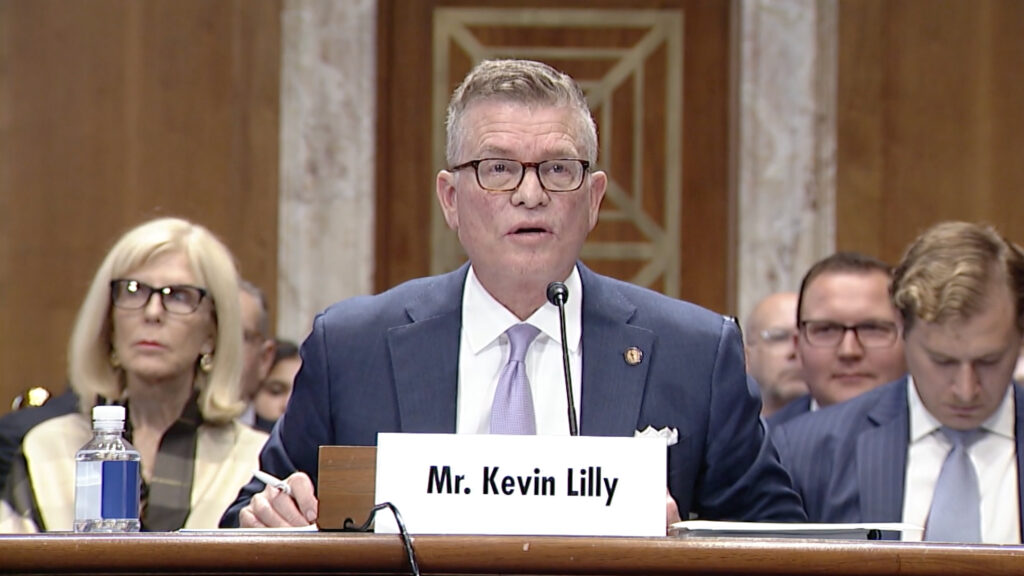
Padilla asked Lilly which scientific evaluations or stakeholder engagements were conducted to conclude that the reservation system was not necessary this year. Lilly said limiting access to parks seemed “unsettling” to him and that the park would implement new strategies such as one-way roads and “fast passes,” instead of a timed entry system, to ease crowding and shorten wait times.
Padilla disagreed, presenting data from March, one month after the announcement.
“Constituents reported to me bumper-to-bumper traffic around the valley floor, hiking trails backed up with people and parking lots full in the early morning, resulting in visitors illegally parking off-roads in meadows,” he said. “To me, that doesn’t sound like metrics of huge success. This is problematic.”
But at the Environment and Public Works hearing, Sen. John Curtis, R-Utah, said the timed-entry system had created real challenges for local businesses around the Arches National Park before it was terminated. It had been an “unnecessary barrier” to access, Curtis said.
“As we enter the busiest months of the year, rather than limiting access, our focus should be on managing demand, investing in infrastructure, [and] improving the visitors’ experience,” Curtis said.
Conservation Concerns
While Democrats in both hearings highlighted Lilly’s lack of direct conservation management experience, they also used their time to emphasize ongoing issues at the Fish and Wildlife Service.
In March, agency Director Brian Nesvik exempted oil and gas drillers in the Gulf of Mexico from the Endangered Species Act. Sen. Sheldon Whitehouse, D-R.I., highlighted what he saw as the administration’s prioritization of one species over another to better serve the interests of oil and gas companies.
This story is funded by readers like you.
Our nonprofit newsroom provides award-winning climate coverage free of charge and advertising. We rely on donations from readers like you to keep going. Please donate now to support our work.
Donate Now“Rice’s whale, right whale, what is the difference?” Whitehouse asked in his opening statement. “Rice’s whale inhabits offshore oil and gas territory, and so can die. The right whale inhabits offshore wind territory and is a useful tool to attack clean energy. You all use fake concern about one whale to suppress oil and gas’ clean energy rival, while sacrificing the other whale to fossil fuel.”
A federal agency last year found collisions with oil industry boats in the Gulf of Mexico could jeopardize the 51 remaining Rice’s whales and would likely cause them to develop “chronic stress” from oil and gas construction noise.
“That should not be the primary mission of the Department of Interior. I very much doubt you’re equipped to be successful in the position for which you’ve been nominated,” Whitehouse said.
Sen. Martin Heinrich, D-N.M., pressed Lilly for explanations on the staff reductions at national parks, the 25 percent proposed budget cut for the National Parks Service and how that supports the agency’s mission. He noted the hearing was “long overdue.”
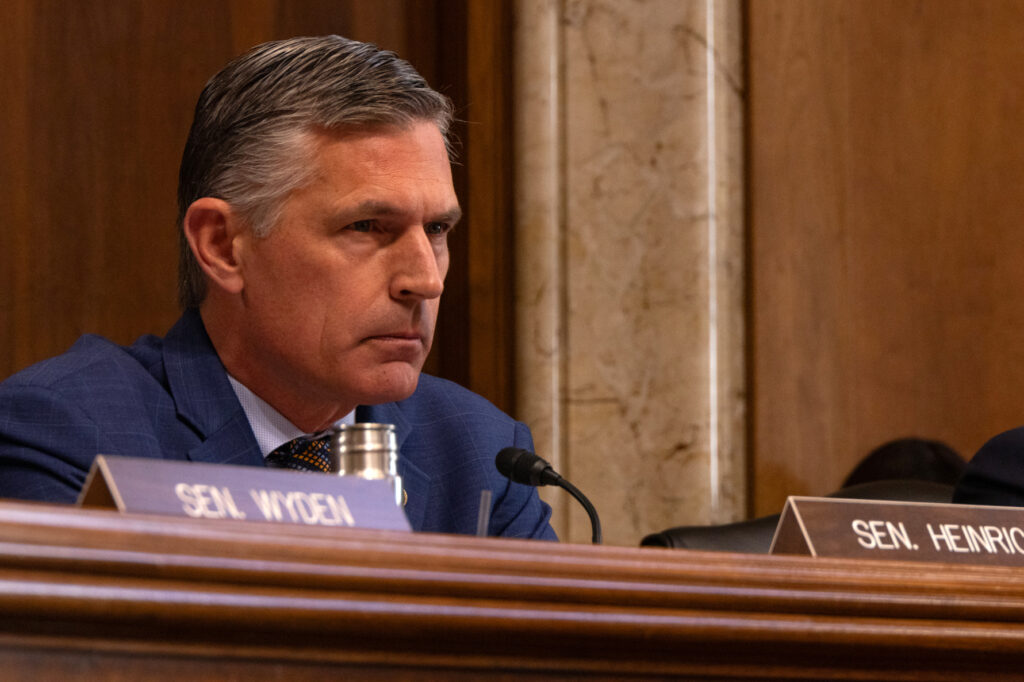
Lilly responded that he increased the number of seasonal workers from 5,000 to 6,000 and the duration of their terms from six months to nine. “Parks that have a longer seasonal cycle will not be burdened by losing these very valuable seasonal employees,” he said.
He added: “I think one of the areas that will greatly benefit the National Park Service, as well as the communities that surround them, as well as our tribal partners, is local hiring … and I am pleased to say that we are moving forward in this way.”
Some groups with interests in public lands have encouraged Lilly’s confirmation. The Coalition of Large Tribes, an intertribal organization representing the interests of the more than 50 tribes with reservations of at least 100,000 acres, issued a formal letter of support in April. They said Lilly has been open to working with tribal leaders on treaty rights, sacred sites and subsistence resources.
Sen. Kevin Cramer, R-N.D., wrote in an X post that Lilly’s “commitment to combatting the weaponization of environmental regulations against landowners and farmers is spot on.” At one of the hearings, Sen. John Hoeven, R-N.D., said landowners and farmers have been frustrated with the Fish and Wildlife Service and what they see as inconsistent enforcement of agricultural land easements, a voluntary federal effort used to protect native grasslands and croplands on working farms, ranches and forests.
Lilly said North Dakota farmers deserve a transparent interpretation of how the setback laws are applied, regulating in “a common sense, farmer-friendly way.”
“It’s not only important for our farmers and ranchers, but it actually creates more and better opportunities for hunters, because they can’t hunt on that land unless farmers allow them to do so,” he said.
To be confirmed, Lilly needs a simple majority of votes from the Senate on his nomination.
About This Story
Perhaps you noticed: This story, like all the news we publish, is free to read. That’s because Inside Climate News is a 501c3 nonprofit organization. We do not charge a subscription fee, lock our news behind a paywall, or clutter our website with ads. We make our news on climate and the environment freely available to you and anyone who wants it.
That’s not all. We also share our news for free with scores of other media organizations around the country. Many of them can’t afford to do environmental journalism of their own. We’ve built bureaus from coast to coast to report local stories, collaborate with local newsrooms and co-publish articles so that this vital work is shared as widely as possible.
Two of us launched ICN in 2007. Six years later we earned a Pulitzer Prize for National Reporting, and now we run the oldest and largest dedicated climate newsroom in the nation. We tell the story in all its complexity. We hold polluters accountable. We expose environmental injustice. We debunk misinformation. We scrutinize solutions and inspire action.
Donations from readers like you fund every aspect of what we do. If you don’t already, will you support our ongoing work, our reporting on the biggest crisis facing our planet, and help us reach even more readers in more places?
Please take a moment to make a tax-deductible donation. Every one of them makes a difference.
Thank you,

Gabriel Matias Castilho
Fellow
Gabriel Matias Castilho is an Inside Climate News fellow reporting on the Washington, D.C. area. Previously, he worked for Capitol News Illinois, covering environmental policy, energy and utilities across the state. He is currently a master’s student at Northwestern University.