For more than a decade, carbon capture and storage technology has been heralded by fossil-fuel industries and many policymakers and scientists as an effective response to the threat of climate change.
But the commercialization of CCS—which captures heat-trapping CO2 from smokestacks and pumps it into reservoirs deep underground—still faces enormous financial, technological, political and environmental hurdles.
One question that critics want answered is what happens if mass quantities of CO2 leak out and collect in communities’ air or water.
Conservationists and health organizations warn that a large release of CO2 could contaminate drinking water supplies, cause asphyxiation or alter pH levels in the blood of residents, which can lead to brain malfunction or death. The industry and other supporters say that natural sequestration events and 20 years of carbon injection by oil companies suggest that CO2 can be trapped underground safely and permanently.
A new study from scientists at the University of Edinburgh in Scotland, which was partially funded by industry, claims to clear up at least some of that uncertainty.
The researchers looked at death rates near natural CO2 seeps in Italy over a 50-year period. They found that people living near the storage sites have a one-in-a-32 million annual chance of dying from contamination. The researchers note in the paper that there is a greater chance of winning the lottery than being killed by natural CO2 releases.
“We were really quite surprised to find it had such a low risk,” said Jen Roberts, a geologist at the University of Edinburgh and lead author of the study.
The peer-reviewed research, which will be published in this week’s Proceedings of the National Academy of Sciences, was funded by the Scottish Carbon Capture & Storage consortium, a collection of researchers and companies that study the technology and implementation of CCS, and the College of Science and Engineering at the University of Edinburgh.
It is one of the first papers to quantify the health risks of CCS and concludes that “the current public concern regarding death by CO2 leakage from storage sites appears overamplified.”
Not everyone agrees.
The paper considered death as the only measure of health risk, said Michael McCally, a physician and senior scientist with the nonprofit Physicians for Social Responsibility, who has written about the health risks of CCS. “If the scientists had looked at things like brain damage from non-lethal asphyxiation [caused by overexposure to CO2], I think the risks would have been at least two to three times higher.”
Roberts counters that nearly all health issues associated with CO2 poisoning—from the headaches to brain malfunction—are completely reversible once a person starts breathing air with regular, low levels of CO2 again. While the non-lethal records were too incomplete to incorporate, she said she doesn’t think it was imperative to include them.
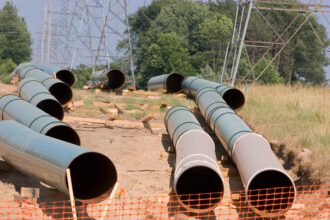
Another unaddressed concern, said McCally, is the potential for CO2 to seep out of the thousands of miles of pipeline that will have to transport the gas to injection sites. “You can’t call CCS safe without looking at all the aspects of the technology.”
The physician also questions Roberts and her colleagues’ potential conflicts of interest.
The researchers didn’t disclose any conflicts of interest in the paper, and Roberts told InsideClimate News that her and her fellow authors don’t have any. But the consortium’s list of members includes energy giants BP, Shell and BG Group—all of which are developing CCS projects—as well as carbon capture technology companies, including CO2 DeepStore, which develops CCS systems.
The companies all invest in the consortium’s research, but according to Roberts, they have no say in the results. “We realize it does look a bit odd, but I’ve never had anyone try and sway my research,” she said. “We do the work and publish the results whether they like what we’ve found or not.”
“For me, the questionable conflict of interest brings their conclusions in question,” said McCally. “It makes me think it may be a sneak policy paper.”
Assessing Risk of Buried CO2
Carbon dioxide accumulates naturally deep underground when plants and other organic matter decompose within earth’s bedrock. The gas is also created from combustion in volcanoes and from the dissolution of carbonate rocks. Impenetrable rock, like shale, creates a natural carbon seal that prevents the gas from leaking up and out.
Occasionally, though, these CO2-rich reservoirs can spring a leak and gas plumes get spewed into the atmosphere. The gas is undetectable by human senses because it is colorless, ordorless and chemically nonreactive at the earth’s surface. If people inhale too much of it, they can experience rapid breathing and headaches. At high enough levels, it can result in brain malfunctioning or death.
Industry and governments are looking to store excess CO2 just like nature does it– by trapping it within bedrock thousands of miles below the surface.
However, relatively little is known about the long-term stability of artificial CO2 storage—though in pilot sequestration projects in Norway, Algeria and Canada, underground movement of CO2 has so far met the expectations of researchers. And for two decades, the oil industry in the United Sates has been annually injecting millions of tons of CO2 into the ground to get at oil that can’t be extracted by easier methods, with little contamination.
Still, recent research has cropped up linking CO2 leaks with toxics in groundwater supplies. The ultimate fear is that there could be a repeat of the 1986 disaster in Cameroon in which 1,700 people died from asphyxiation after a natural CO2 leak from a lake—an event that most CCS proponents brush off as an extremely rare situation.
Why the Researchers Chose Italy
The researchers set out to answer one key question: How common are deaths from natural CO2 reservoir leaks?
They decided to focus strictly on Italy because the region’s thin crust and many tectonic faults create a hotspot for CO2 leaks from buried reservoirs. In addition, the 286 carbon dioxide leaks scattered throughout the western part of the country have been studied and monitored for decades by the Italian National Institute of Geophysics and Volcanology, resulting in a detailed database from which Roberts and her colleagues worked.
According to the INGV figures, each of the CO2 leaks emits an average 10 to 100 tons of carbon dioxide each day, comparable to other natural seeps and more than what regulation allows for in commercial storage projects.
Using death records, pulled from public health records and newspapers kept in the database, Roberts and her colleagues discovered that between 1990 and 2010, 11 people out of the 20 million exposed to leaking CO2 died as a result of the poisoning. Over 50 years, 19 people died.
According to the researchers, Italian residents in the area had a greater chance of being struck by lightning, killed in a car accident and even winning the lottery during those 50 years. They did note, however, that thousands of animals died from the poisonous seeps, including hundreds of toads and fields of cows in single releases.
“What makes us so confident that CCS is safe is that in Italy, we have nearly 300 sites degassing huge amounts of CO2—up to 2,000 tons each day—that are all unmarked with open access. And public awareness of these seeps is quite low,” said Roberts.
“Commercial CO2 reservoirs will be constantly monitored using lots of technology, which give project managers early warning about when a leak starts. Also, there would never be 300 commercial sites clustered together like the natural sites in Italy. There would be very few, one or two, and these would be extremely well signposted with restricted access,” she said.
“At some point, you have to weigh the risks of carbon dioxide storage against what people will face if climate change continues on unchecked, without any mitigation efforts,” Roberts continued. “A lot of people see the latter as the more dangerous path.”
The Policy Implications
The debate over the health risks of carbon storage has intensified in recent years as the United States and other governments have promoted CCS as a vital technology that will allow the world to continue using coal as fuel while reducing the impacts of climate change.
The UN Intergovernmental Panel on Climate Change has estimated that CCS technologies could be used to achieve between 15 and 55 percent of the carbon emission reductions needed to avoid dangerous levels of climate change by 2100.
Many projects have failed to advance due mainly to their massive costs. But local residents worldwide who oppose carbon dioxide burial in their communities have also held up both carbon capture and carbon storage efforts, including in Mattoon, Illinois and Barendrecht, Netherlands.
Can the new study allay local people’s fears?
George Peridas, a scientist at the Natural Resources Defense Council’s Climate Center who specializes in CCS, said the research shows that natural CO2 seeps can be a useful indicator about the health dangers of commercial CO2 storage. He said that natural reservoirs release more CO2 than man-made sites, which are carefully chosen for their leak-proof geologic properties. Meaning, the health risks from today’s carbon storage projects are lower than what Roberts and her colleagues found in Italy, he said.
“Replication of such leakage volume and rates in properly selected man-made sequestration sites is very, very difficult and highly unlikely.”
About This Story
Perhaps you noticed: This story, like all the news we publish, is free to read. That’s because Inside Climate News is a 501c3 nonprofit organization. We do not charge a subscription fee, lock our news behind a paywall, or clutter our website with ads. We make our news on climate and the environment freely available to you and anyone who wants it.
That’s not all. We also share our news for free with scores of other media organizations around the country. Many of them can’t afford to do environmental journalism of their own. We’ve built bureaus from coast to coast to report local stories, collaborate with local newsrooms and co-publish articles so that this vital work is shared as widely as possible.
Two of us launched ICN in 2007. Six years later we earned a Pulitzer Prize for National Reporting, and now we run the oldest and largest dedicated climate newsroom in the nation. We tell the story in all its complexity. We hold polluters accountable. We expose environmental injustice. We debunk misinformation. We scrutinize solutions and inspire action.
Donations from readers like you fund every aspect of what we do. If you don’t already, will you support our ongoing work, our reporting on the biggest crisis facing our planet, and help us reach even more readers in more places?
Please take a moment to make a tax-deductible donation. Every one of them makes a difference.
Thank you,