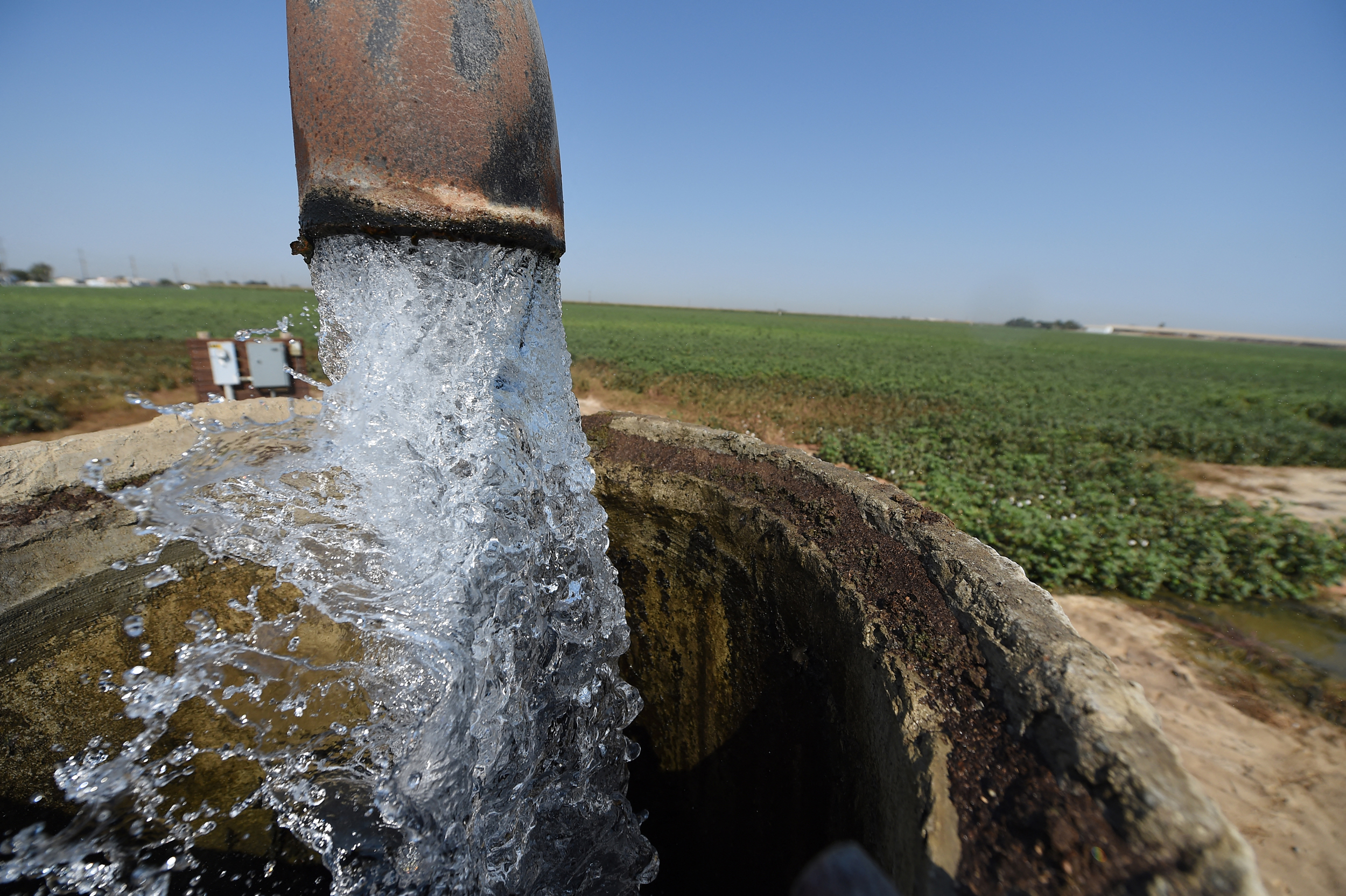


Close to 20 percent of Americans are exposed to water polluted with high levels of potentially cancer-causing nitrates, known to come mostly from agricultural runoff, according to new research published this month.
In a first-ever review of nitrate levels in public water systems across the country, the Environmental Working Group found that 6,114 of them—from heavily agricultural rural areas to major cities, including Los Angeles, Phoenix and Philadelphia—have elevated levels of nitrates, affecting 18 percent of the country’s population, or roughly one in five people, between 2021 and 2023.
“We wanted to get a full national picture,” said Anne Weir Schechinger, the report’s author. “And the sheer size of the numbers—there are over 62 million people impacted by this—I was not expecting that.”
The government set the legal limit of nitrate in water at 10 milligrams per liter in the early 1960s to help prevent cases of “blue baby” syndrome, a condition in which infants have low levels of blood oxygen. But research has since found that concentrations at 5 milligrams per liter and even lower are linked to colorectal and other cancers, thyroid disease and birth defects. Health advocates have pushed for lowering the limit, but the Environmental Protection Agency has yet to do so. The Trump administration gutted the division that would continue a review process started under the Biden administration, Schechinger noted.
Wastewater discharges are a major source of nitrate pollution, but the most widespread source is agriculture, occurring when fertilizer used to grow feed for livestock or manure from concentrated animal feed operations, or CAFOs, seeps into groundwater or leaches into waterways. These two types of agricultural production often occur in close proximity, making CAFO-intensive areas especially exposed to nitrate pollution.
A recent study from Yale University researchers found that proximity to CAFOs was linked to increased cancer rates in three of the states with the most CAFOs—California, the country’s leading dairy state, Iowa, the country’s leading hog producer and Texas, the leading producer of beef. Nitrate-contaminated water, the researchers found, was a major risk.
The states with the highest exposure to nitrate in drinking water are heavily agricultural, the EWG analysis found, and many of the highest levels of pollution were in agricultural areas in those states. Agriculture is a major industry in the states with the highest levels of nitrate-polluted water, the analysis found: California, Pennsylvania, Washington, Kansas, North Carolina, New York, Nebraska, Texas, Arizona and Wisconsin. While these states also happen to have higher numbers of public water systems, the prevalence of agriculture was clearly a factor, Schechinger said.
Some states, including Iowa, which has significant nitrate pollution linked to agriculture, did not end up in the top 10 merely because it has fewer public water systems.
Schechinger’s analysis also determined that many public water systems had nitrate levels far above the legal limit—70 systems tested at 20 milligrams and 21 systems at or above 30 milligrams.
One of these is Garden City, Kansas, in the southwestern part of the state, where nitrate levels reached 37 milligrams per liter, among the highest levels in the country and four times the legal limit.
“It’s the bullseye for cattle feedlots and corn-based agriculture,” said Zack Pistora, who heads the Kansas state chapter of the Sierra Club.
Pistora noted that while the new report found that one in five Americans is exposed to nitrate-polluted water, in Kansas, “because of the amount of agriculture, it’s more like one in three.” State regulators and research have confirmed that 80 percent to 90 percent of the state’s waterways are impaired. “By far nitrates are the leading contaminant,” Pistora said.
In the southwestern part of the state, advocates are fighting a new proposal for an 88,000-head cattle feedlot in Finney County, not far from Garden City. The area is already home to several large cattle CAFOs.
“There’s always a concern that our state agencies aren’t doing enough. They keep permitting these things,” Pistora said. “Why do we think that adding cattle out there, in an already saturated area, is a smart idea? At some point, we have to rein these things in.”
Climate change is making the situation worse. Drought conditions across agricultural areas have led to more concentrating of nitrates in soils. When it rains during a drought—whether a normal shower or an extreme deluge—the water tends to wash more of the nitrates into waterways.
“It’s a circular problem, because agriculture releases greenhouse gas emissions, which are then making climate change worse, which then makes the nitrate problem worse,” Schechinger said.
The House of Representatives will soon vote on the Farm Bill, the massive legislation that covers nutrition and agricultural policy. The current version calls for a nearly $1 billion cut to the Environmental Quality Incentives Program (EQIP), a hugely popular program designed to help farmers implement conservation measures on their farms.
“EQIP funding helps put conservation practices on the landscape that specifically reduce this problem of nitrates in drinking water,” Schechinger said.
About This Story
Perhaps you noticed: This story, like all the news we publish, is free to read. That’s because Inside Climate News is a 501c3 nonprofit organization. We do not charge a subscription fee, lock our news behind a paywall, or clutter our website with ads. We make our news on climate and the environment freely available to you and anyone who wants it.
That’s not all. We also share our news for free with scores of other media organizations around the country. Many of them can’t afford to do environmental journalism of their own. We’ve built bureaus from coast to coast to report local stories, collaborate with local newsrooms and co-publish articles so that this vital work is shared as widely as possible.
Two of us launched ICN in 2007. Six years later we earned a Pulitzer Prize for National Reporting, and now we run the oldest and largest dedicated climate newsroom in the nation. We tell the story in all its complexity. We hold polluters accountable. We expose environmental injustice. We debunk misinformation. We scrutinize solutions and inspire action.
Donations from readers like you fund every aspect of what we do. If you don’t already, will you support our ongoing work, our reporting on the biggest crisis facing our planet, and help us reach even more readers in more places?
Please take a moment to make a tax-deductible donation. Every one of them makes a difference.
Thank you,