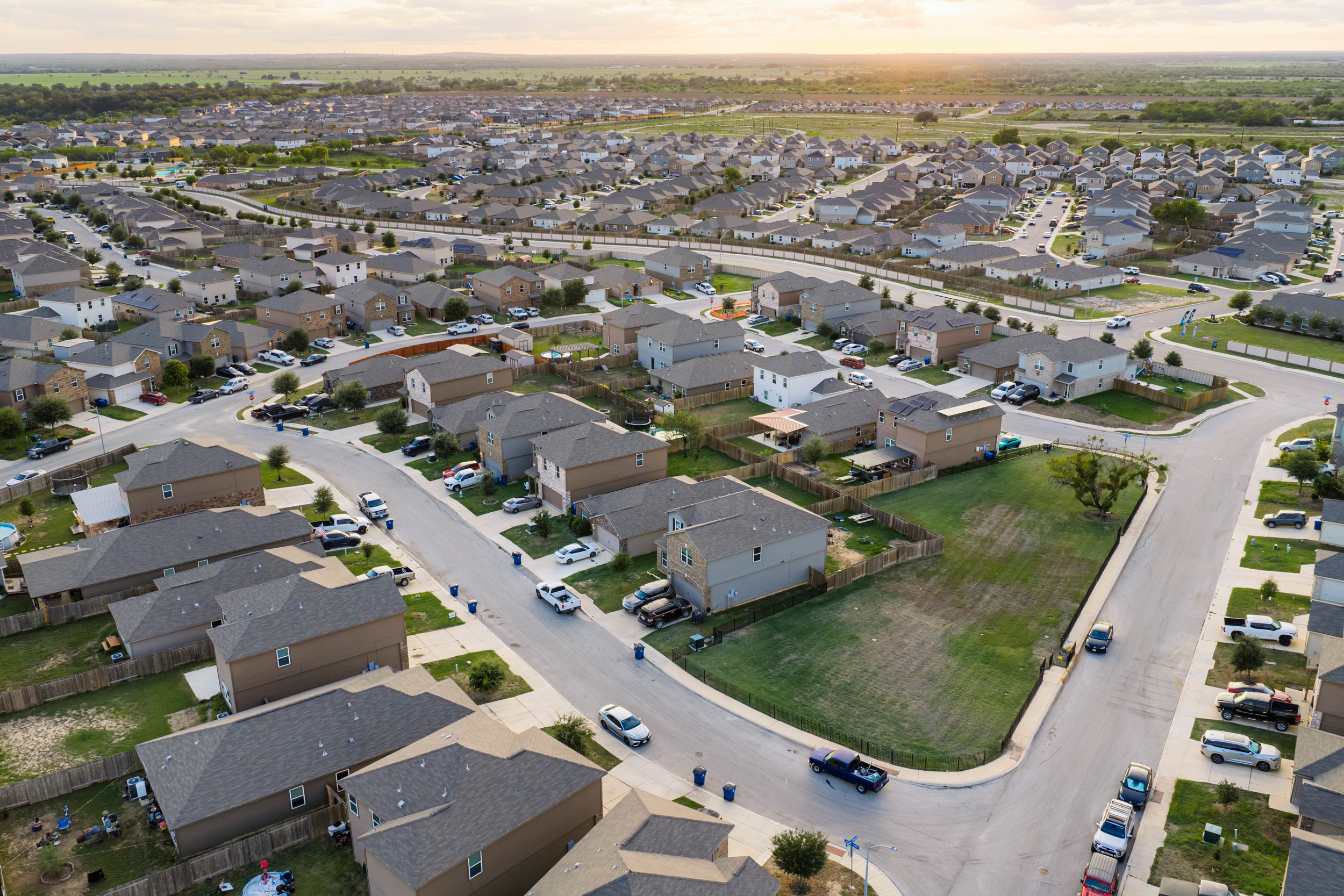


SAN ANTONIO, Texas—In Texas, suburbs have sprung up where oil pump jacks once bobbed.
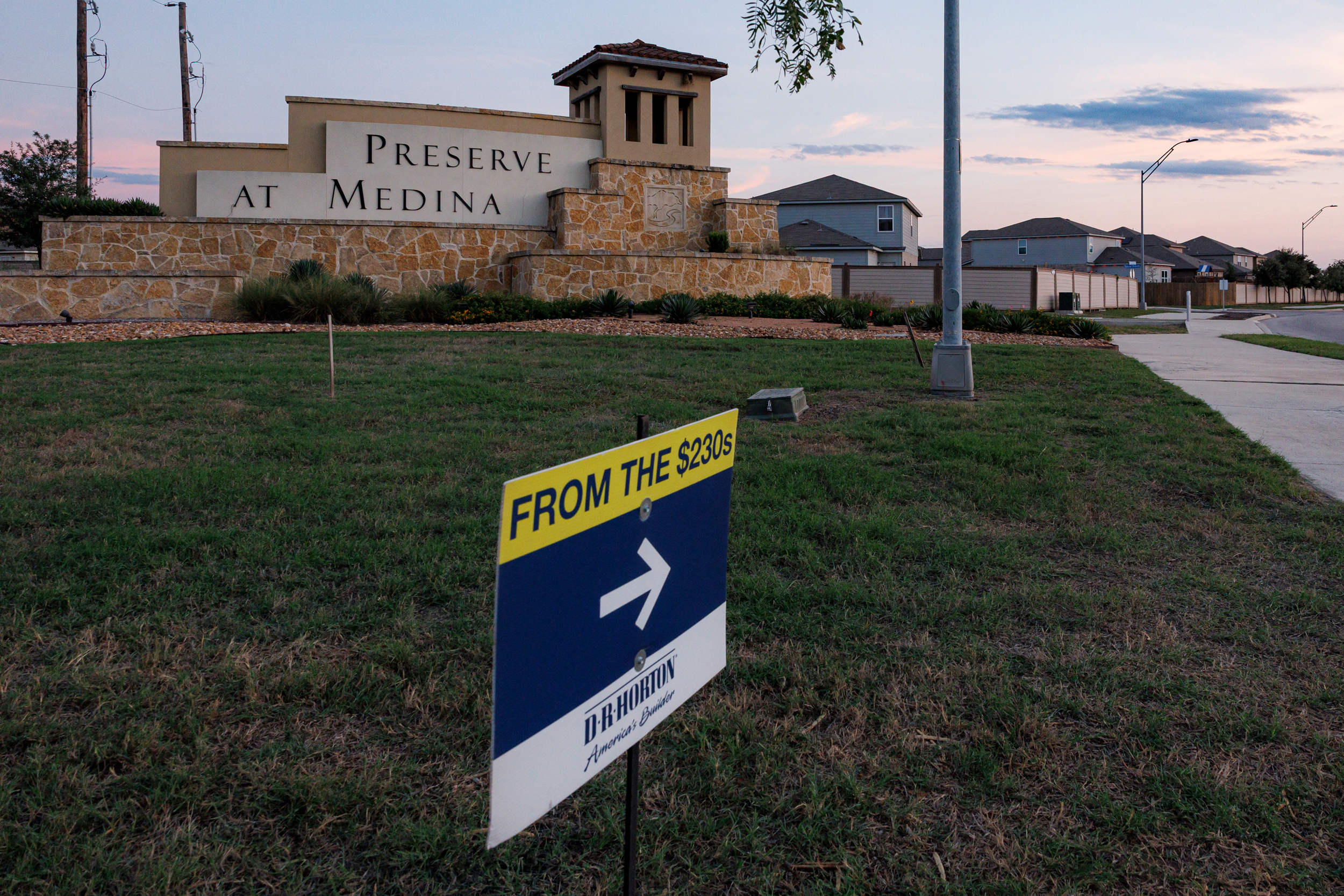
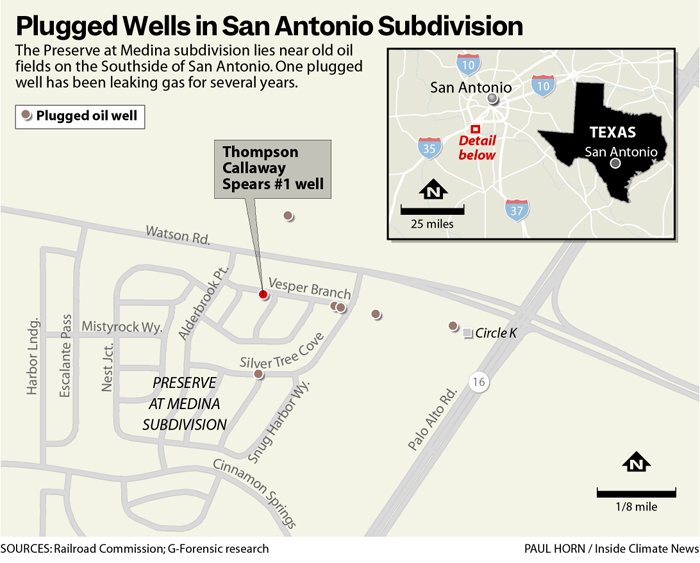
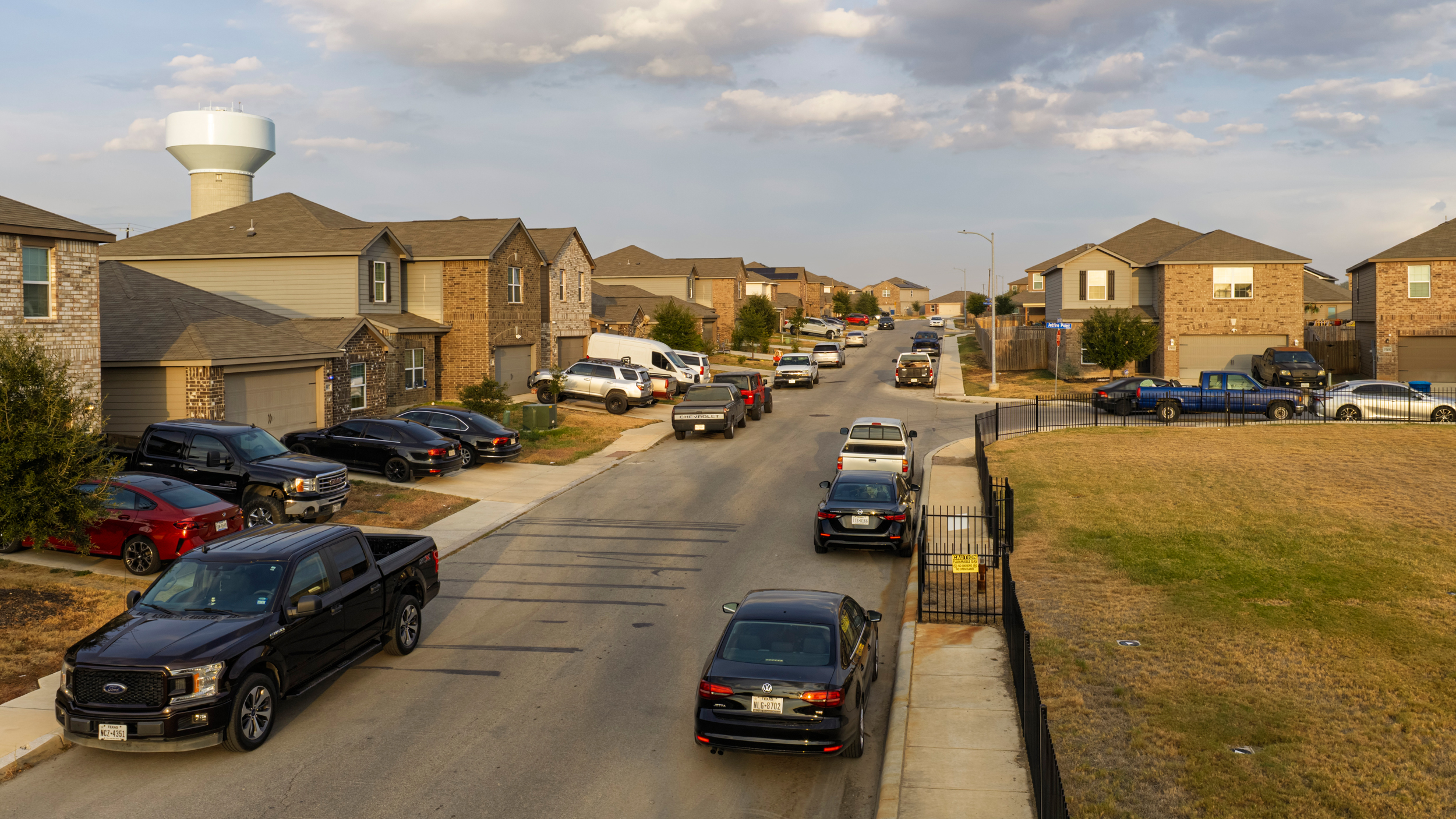
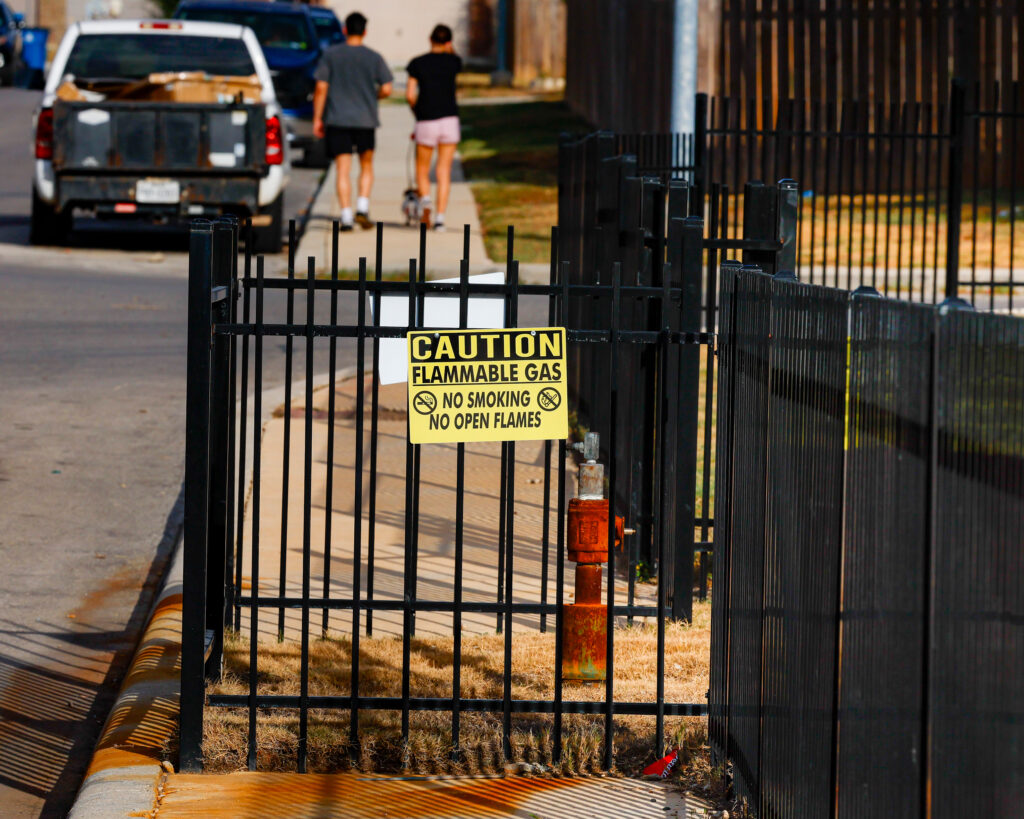
At the Preserve at Medina, a subdivision of brick-and-siding starter homes in southwest San Antonio, students filed off a school bus on a hot afternoon. One child turned down Vesper Branch, a street with a plugged oil well ringed by a heavy black metal fence:
“CAUTION flammable gas,” a sign on the fence warned.
A faint smell of rotten eggs hung in the air, from low levels of hydrogen sulfide leaking from the well. Only the fence separated the child from the leaking well.
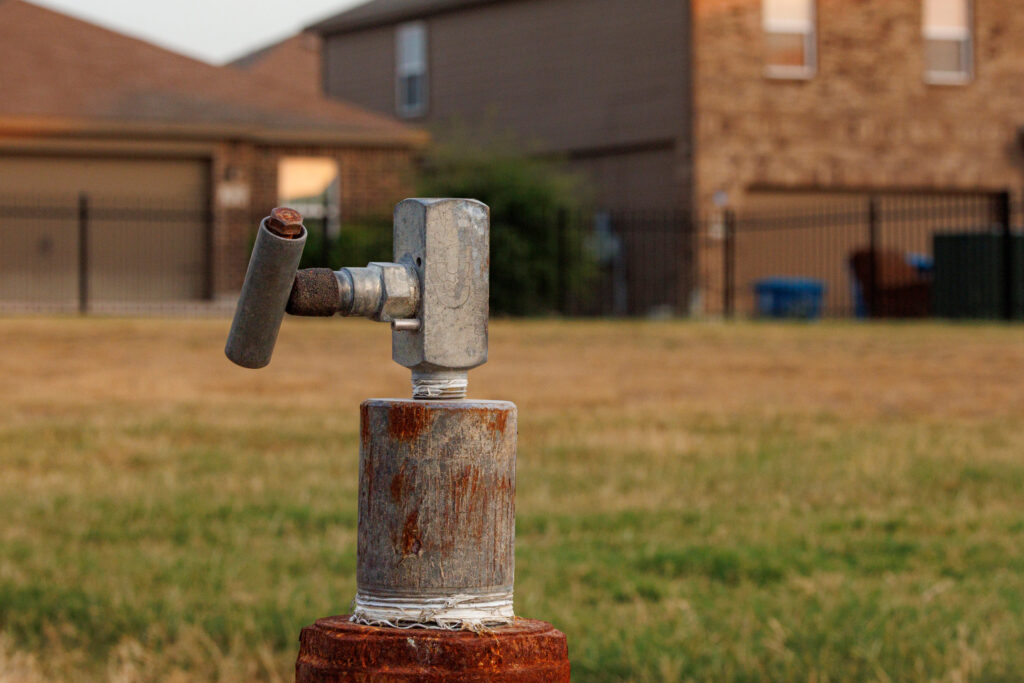
Oil hasn’t flowed from the Thompson Callaway Spears #1 well since it was plugged in 2006. But in recent years, the well has vexed Texas regulators and nearby residents. The state has replugged it five times, yet gas continues to leak. Since a housing subdivision rose around the well in the early 2020s, residents have filed repeated complaints.
Soil and air monitoring near the well has detected leaking methane and hydrogen sulfide. In June, contractors told the Railroad Commission, the state’s oil and gas industry overseer, that plumes of methane gas were moving through the soil toward homes in the subdivision, which could trigger an explosion.
“We had no idea when we moved here,” said Krystal Solis, who lives across the street with her husband and three children. “No one told us anything.”
Plugged wells are usually safe, but several in Texas have failed catastrophically in recent years, including at a Baptist church in the Permian Basin town of Grandfalls. From Canada to Southern California, legacy oil and gas wells have been linked to leaks, fires and explosions in residential areas.
Prospective homebuyers rarely know about old oil and gas wells before they buy property. Texas has no statewide laws regulating construction around plugged oil and gas wells. Real estate developers are not required to disclose legacy wells to potential buyers. This means that many people unknowingly end up living near plugged or orphan wells that could present future liabilities.
Laura Lopez, a spokesperson for the Texas Commission on Environmental Quality, which regulates air pollution, said the hydrogen sulfide levels detected at the well could cause odors and trigger adverse health effects including headaches and nausea.
Developers of the Preserve at Medina and home builders D.R. Horton and LGI Homes did not respond to requests for comment.
“The well will be re-plugged using a different strategy and materials,” said Bryce Dubee, spokesman for the Railroad Commission, which has plugged the well five times. “This proposed operation is currently under review.”
Dubee said the RRC has conducted joint inspections with the TCEQ and county emergency personnel, which confirmed gas was emanating from the well.
“Both the RRC and TCEQ are now conducting regular monitoring of the area,” he said.
Old Oilfields Cause Fresh Problems
The Austin Chalk formation, from which the limestone walls of the Alamo were quarried, also produces oil and gas. A company called J.D. Collins drilled the Thompson Callaway Spears #1 well in 1955 on what was then the rural edge of San Antonio.
As the decades passed, the well changed hands many times. By the turn of the century, it was producing little oil. Rainer Energy sold the lease to Arben Oil, which sold it to Black Jack Services. February 2004 was the last month the company reported oil flowing at the well.
Black Jack Services plugged the well in 2006.
That same year, Toyota opened a manufacturing plant on San Antonio’s South Side, and development slowly encroached on the rural area along the Medina River. The well was forgotten until 2019, as construction began on the Preserve at Medina.
Developers discovered gas leaking at the site in 2019, according to a Railroad Commission document. In April 2019, commission inspectors confirmed hydrogen sulfide and methane were coming out of the ground near the well. The agency replugged the well later that year. By then the former operator, Black Jack Services, was in delinquent status with the Railroad Commission, so the state assumed the costs.
A staffer wrote in a subsequent report that the fix “seemed to have worked this time around.”
But the problems were only beginning.
The subdivision’s location among plugged oil wells—there are at least three more in the Preserve at Medina —is not unique. From Pittsburgh to Midland to Los Angeles, many residential developments are dotted with old wells.
“Unfortunately, people are buying property, including homes, and have no idea that it could have been built on top of a plugged well,” said Blake Scott, who through his Texas-based company Waste Analytics provides information about legacy oil and gas activities to people buying property.
Both plugged and unplugged wells have caused problems. On Aug. 26, 2021, an explosion ripped through downtown Wheatley, Ontario, Canada, injuring 20 people. Hydrogen sulfide had migrated from a nearby legacy gas well into a downtown basement, triggering the explosion.
In 2007, in Trinidad, Colo., a house under construction blew up, sending a worker into cardiac arrest. Regulators said methane from an abandoned gas well under the house caused the explosion.
In Newport Beach, Calif., several homes were evacuated in October 2025 following a methane leak from a 1920s-era oil well.
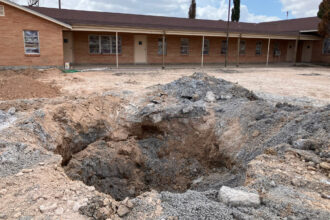
Earlier this year, a plugged well failed in the parking lot of the Baptist church in Grandfalls. The property was flooded with toxic wastewater.
“Plugged well failures seem to be rare,” said Adam Peltz, senior director and lead counsel at the Environmental Defense Fund. “But we also don’t know how often it happens.”
“If I had a message for homebuyers, it would be to do your own due diligence,” he said. “This is happening all over the country.”
Julie Range, policy manager for the Texas-based nonprofit Commission Shift, a watchdog that tracks the Railroad Commission, said disclosure of prior oil and gas activities should be required to protect home buyers.
“Requiring disclosure of past oil and gas activity and building setback standards from old wells may just save a family heartache,” she said. “Unfortunately, our lack of historic disclosure requirements by regulators make it more difficult for new owners to know the risks lurking on their property.”
Plugging Costs and Complaints Rack Up
At the Preserve at Medina, construction continued after the well was replugged in 2019. Three- and four-bedroom houses began to fill streets with names such as Mint Patch and Mistyrock.
In 2021, Railroad Commission inspectors returned and found the well was still leaking.
Contractors plugged it again in January 2022. An inspector wrote that during the plugging a welder found a flammable methane leak and refused to continue working.
The well was replugged once more that August.
People had started to move into the surrounding homes. The developers had left the plot where the well was located unoccupied. According to appraisal district records, the Preserve at Medina River Association Inc. owns the plot.
The well was plugged again—for the fifth time—in May 2023.
But complaints kept coming in.

Amanda and Anthony Pacheco were among the first to move into the neighborhood, arriving in July 2021 with their two daughters, now 12 and 14. As first-time homeowners from San Antonio, they were drawn by the rural atmosphere.
“When we qualified, we were so excited,” Amanda Pacheco said. “Little did we know what was happening.”
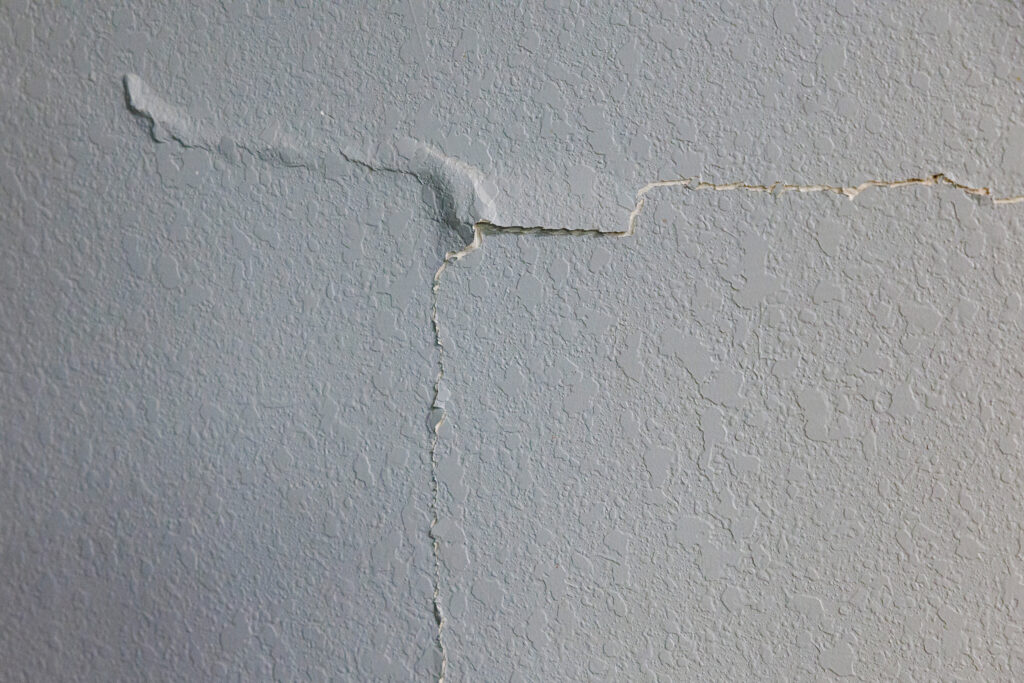
She said some days it “reeks” at her home, which is down the street from the well. She worries that someone lighting a cigarette could accidentally start a fire at the well. When it was re-plugged in 2024, vibrations from drilling equipment shook her house. She said cracks have formed in the concrete foundation.
Pacheco said they would have never bought the home if they had known about the problems with the well nearby. Nothing required the developers to disclose to potential buyers the locations of plugged wells in the subdivision, under state or local law.
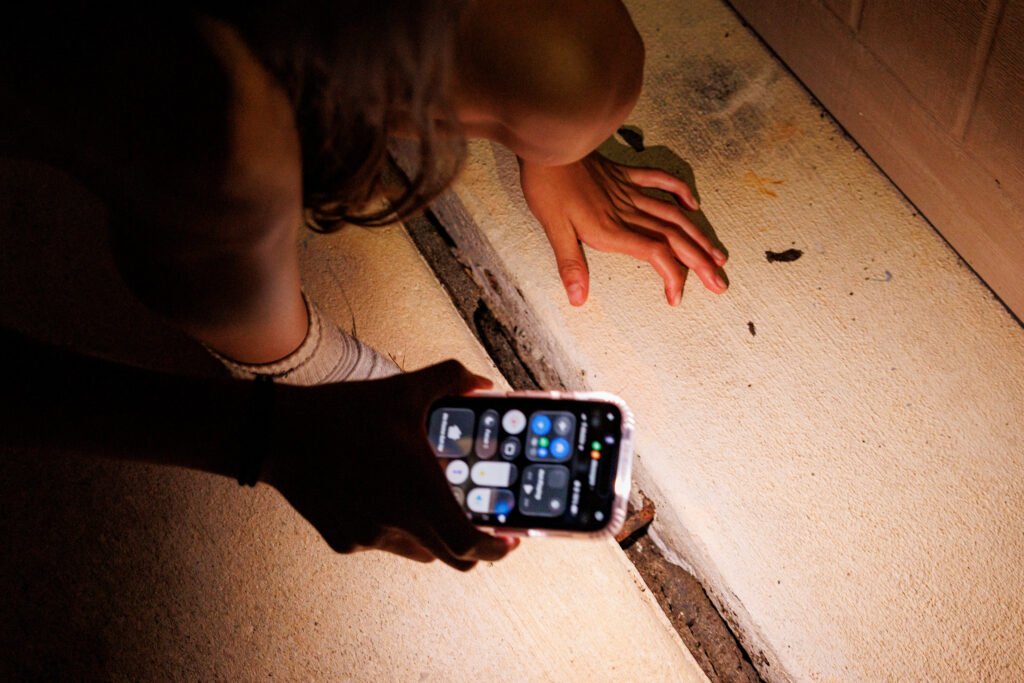
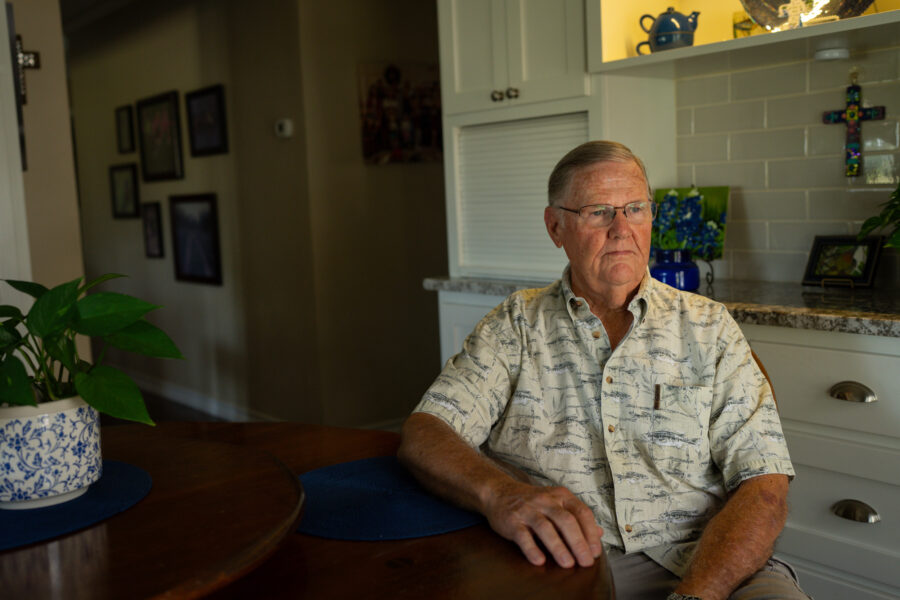
Krystal Solis moved to the Preserve at Medina with her husband and three teenage children in September 2023. Their house sits downwind and less than 60 feet from the well.
She started getting headaches from the fumes in 2024. She noticed that liquid would bubble up around the well after it rained and stain the pavement orange.
Neither her home owners association nor the local utility could answer her questions. It wasn’t until a Railroad Commission vehicle parked nearby that she learned who was responsible for the well.
“This well reared its ugly head again, and we’re reaching out to other contractors to help us in re-plugging the well,” Travis Baer, the Railroad Commission’s San Antonio district director, emailed colleagues in October 2024.
Another plugging job—the sixth—was completed that November.
By this time the Railroad Commission had spent more than $1 million on the repeated plugging operations.
This story is funded by readers like you.
Our nonprofit newsroom provides award-winning climate coverage free of charge and advertising. We rely on donations from readers like you to keep going. Please donate now to support our work.
Donate NowThe Railroad Commission is responsible for plugging oil and gas wells. TCEQ has jurisdiction over air pollution affecting public health, including the methane and hydrogen sulfide leaking from the well. TCEQ received complaints both before and after the 2024 plugging.
In October 2025, a TCEQ representative emailed Baer to ask whether the well would be plugged again.
“We are performing additional monitoring and data analysis of the geology and gas for the time being,” Baer replied. “I’ll let y’all know when a permanent solution is decided on.”
The Railroad Commission put up a permanent, black metal fence around the plot and a sign warning passersby of flammable gas in 2025.
Solis said that the sign and fence were an improvement. But it didn’t relieve her concerns. She said that on New Year’s Eve 2026 a firework set off in the neighborhood briefly set the well on fire.
Solis said regulators have never given her a clear answer as to whether her family is at risk.
“I just want to know if it’s dangerous,” she said.
Few Limits on Construction Near Old Wells
Blake Scott of Waste Analytics says that neither the oil and gas nor real estate industries have an incentive to disclose the location of old wells to homeowners.
“It’s tragic to me that they are knowingly building developments on top of this stuff,” he said. “And they don’t feel compelled to say anything about it.”
Since the oil industry in Texas began in the 1800s, hundreds of thousands of wells have been drilled around the state. Many were abandoned by their operators without being plugged. Others were plugged but with subpar practices compared to modern industry standards.
This complicates efforts to locate old wells. Locations on the Railroad Commission GIS map for wells are often inaccurate. The GIS map shows the Thompson Callaway Spears #1 well 110 feet northeast of its actual location, according to an analysis by oilfield surveyor Jackie Portsmouth of G-Forensic, which investigates old oil wells for property owners.
Often there is no indication at the surface that a plugged well lies underground. Inside Climate News visited the locations of other plugged wells at Preserve at Medina and could not find any surface markers.
Scott said that, to his knowledge, New Mexico is the only state that bans building on top of plugged wells. The state prohibits permanent structures on plugged wells without written approval from the state regulator.
Texas counties lack legal authority to adopt building codes of this nature. Texas cities are limited in their ability to regulate oil and gas activities after the passage of HB 40 in 2015. The law prohibits municipalities from regulating oil and gas activities, except for “commercially reasonable” regulations related to surface-level activities.
Nonetheless, several Texas cities have restrictions on building near plugged wells. Fort Worth prohibits construction on top of, or within five feet of, an abandoned gas well. Midland city code says that structures shall not be built on top of abandoned wells.
The City of San Antonio does not have any ordinances related to plugged wells. The city referred questions to the Railroad Commission. Bexar County officials declined to comment.
Gas Exposure and Unanswered Questions
TCEQ and Railroad Commission monitoring has detected hydrogen sulfide, volatile organic compounds, and methane leaking at the Thompson Callaway Spears #1 wellhead and from the soil nearby. The flammable gas emitted from the wellhead is above the Lower Explosion Limit, indicating the gas could combust.
The TCEQ spokesperson said that during the agency’s investigations in 2023 and 2025, the levels of volatile organic compounds in the air were detected below levels that would cause concern for short-term health and welfare. She acknowledged that the odors from hydrogen sulfide could cause “indirect” health effects.
The Railroad Commission spokesperson said its investigation found evidence that gas is migrating along the outside of the well to the surface.
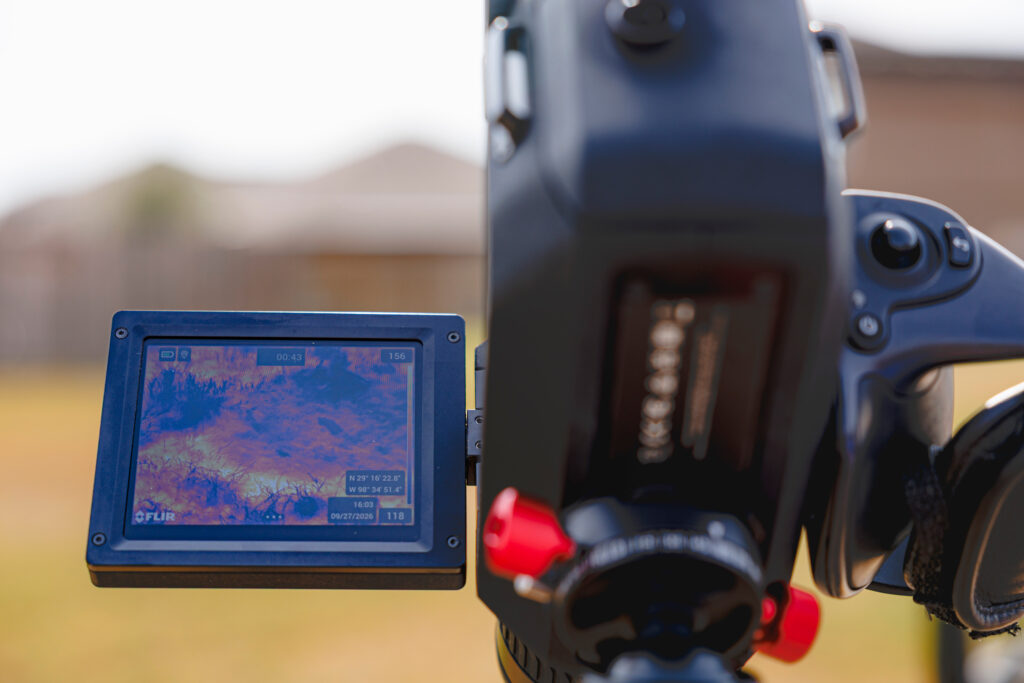
James Tim Doty, president of TCDH Consulting and former mobile monitoring team leader at the TCEQ, visited the Preserve at Medina in late September. Using an optical gas imaging camera, he documented hydrocarbon emissions from the wellhead and the ground nearby. Doty, who spent 28 years at TCEQ, said a “substantial” amount of gas was leaking, which could present a safety risk.
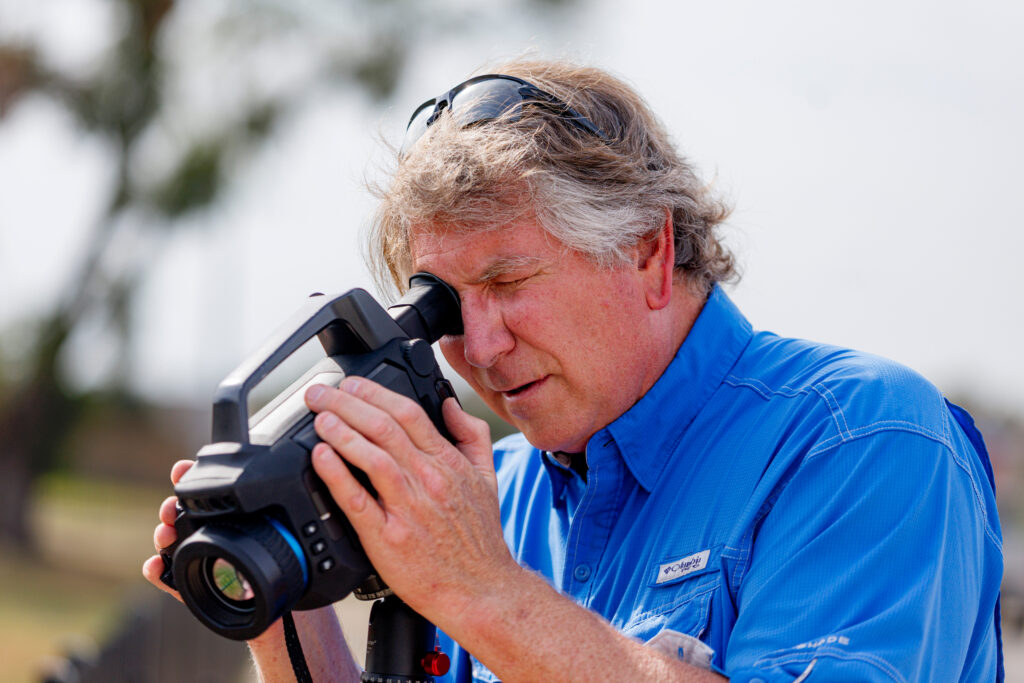
Gunnar Schade, an atmospheric scientist at Texas A&M University who reviewed some of the monitoring data, said that high concentrations of gas next to the wellhead are a cause for concern.
“Nobody should be very close to the wellhead for more than a few minutes without protective breathing equipment,” he wrote in an email.
Perhaps the most concerning observations have been made underground. The engineering firm Kleinfelder, contracted by the Railroad Commission, wrote in a June 2026 email to agency staff that two plumes of methane gas in the soil are migrating toward houses. The email warned that heating, ventilation or air conditioning equipment could be drawing the methane toward the homes.
“If enough methane is pulled into a home, there is a risk of fire or explosion to the home,” the project manager wrote.
“This is a preliminary investigative report, and the matter is still under evaluation,” RRC spokesman Dubee said. “No matter how small the risk, the RRC is committed to protecting public safety and Texas communities.”
Railroad Commission inspectors returned to the well on Oct. 7 in preparation to plug it again.
Solis and Pacheco were not aware there was methane in the soil. Solis is still hoping for answers from regulators after two years of gas fumes and frequent headaches.
“If it’s dangerous, we’re going to pack up and move,” she said.
About This Story
Perhaps you noticed: This story, like all the news we publish, is free to read. That’s because Inside Climate News is a 501c3 nonprofit organization. We do not charge a subscription fee, lock our news behind a paywall, or clutter our website with ads. We make our news on climate and the environment freely available to you and anyone who wants it.
That’s not all. We also share our news for free with scores of other media organizations around the country. Many of them can’t afford to do environmental journalism of their own. We’ve built bureaus from coast to coast to report local stories, collaborate with local newsrooms and co-publish articles so that this vital work is shared as widely as possible.
Two of us launched ICN in 2007. Six years later we earned a Pulitzer Prize for National Reporting, and now we run the oldest and largest dedicated climate newsroom in the nation. We tell the story in all its complexity. We hold polluters accountable. We expose environmental injustice. We debunk misinformation. We scrutinize solutions and inspire action.
Donations from readers like you fund every aspect of what we do. If you don’t already, will you support our ongoing work, our reporting on the biggest crisis facing our planet, and help us reach even more readers in more places?
Please take a moment to make a tax-deductible donation. Every one of them makes a difference.
Thank you,

Martha Pskowski
Reporter, El Paso, Texas
Martha Pskowski covers climate change and the environment in Texas from her base in El Paso. She was previously an environmental reporter at the El Paso Times. She began her career as a freelance journalist in Mexico, reporting for outlets including The Guardian and Yale E360. Martha has a B.A. in Environmental Studies from Hampshire College and a master’s degree in Journalism and Latin American Studies from New York University. She is a former Fulbright research fellow in Mexico. Martha can be reached on Signal at psskow.33.