

FAIRFAX, Iowa—Nearly 50 people gathered at the American Legion Post on a July evening to learn about a proposed natural gas plant less than three miles from town. Seated in folding chairs, they pulled out their phones and typed responses to a simple question: How are you feeling?
The words “angry,” “disgusted” and “scared” flashed across a TV screen at the front of the room.
For many, the meeting drudged up a familiar feeling of frustration.
Nine months earlier, Interstate Power and Light, an Iowa-based subsidiary of Alliant Energy, had abandoned plans to build a natural gas-fired power plant in Fairfax after fierce opposition from residents and leaders at the nearby Eastern Iowa Airport.
But the reprieve was short-lived. In March, Alliant announced plans to instead purchase land just outside of town for a new plant.
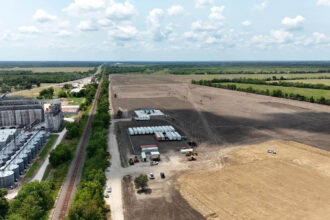
The proposed 160-acre site is in unincorporated Linn County territory, right over the border from neighboring Benton County. The cities of Fairfax, Atkins and Cedar Rapids, home to a combined 140,000 residents, all fall within three miles of the proposed plant. The facilities’ 150-foot-tall exhaust towers would emit carbon dioxide, carbon monoxide, nitrogen oxides, particulate matter and volatile organic compounds.
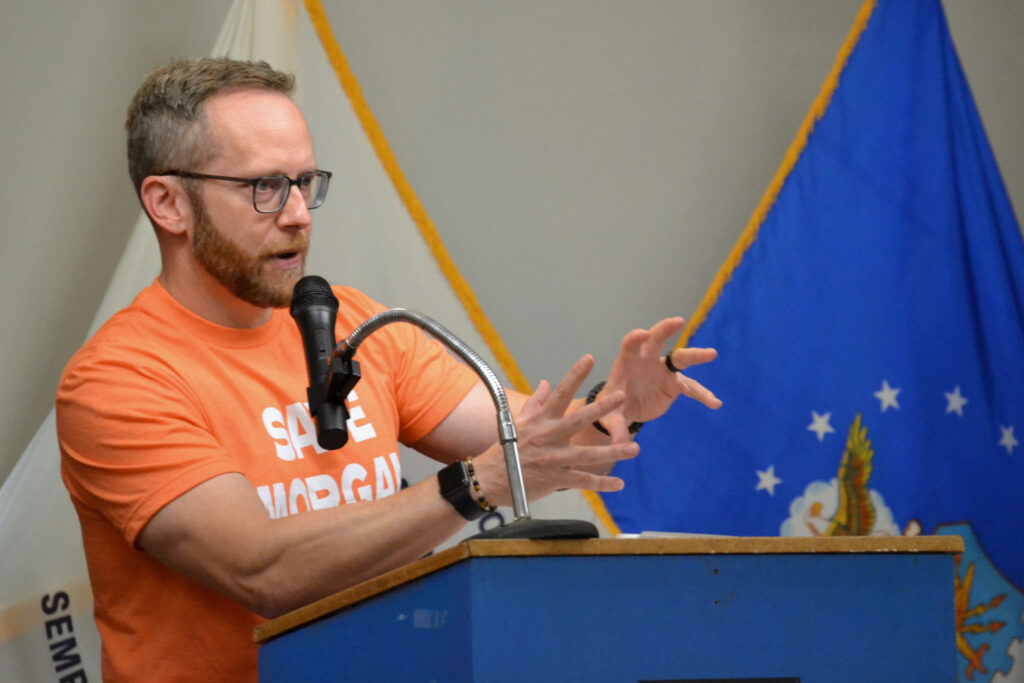
From the podium at the American Legion, Jon Lee, a spokesperson for the grassroots group Save Morgan Valley, urged his neighbors to remain engaged with plans for the plant. “Big decisions like this deserve real answers,” Lee said. “Stay informed, and keep showing up.”
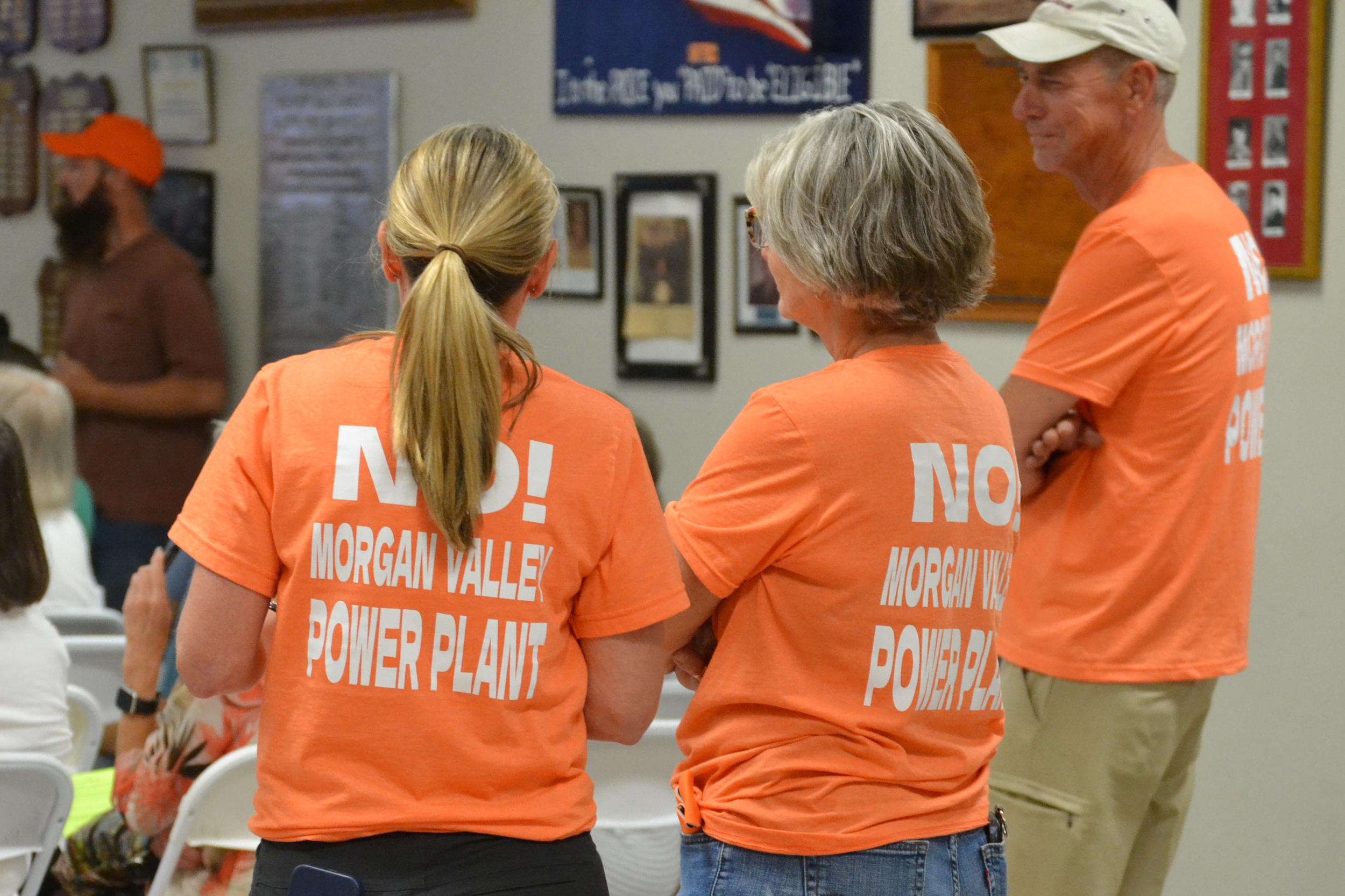
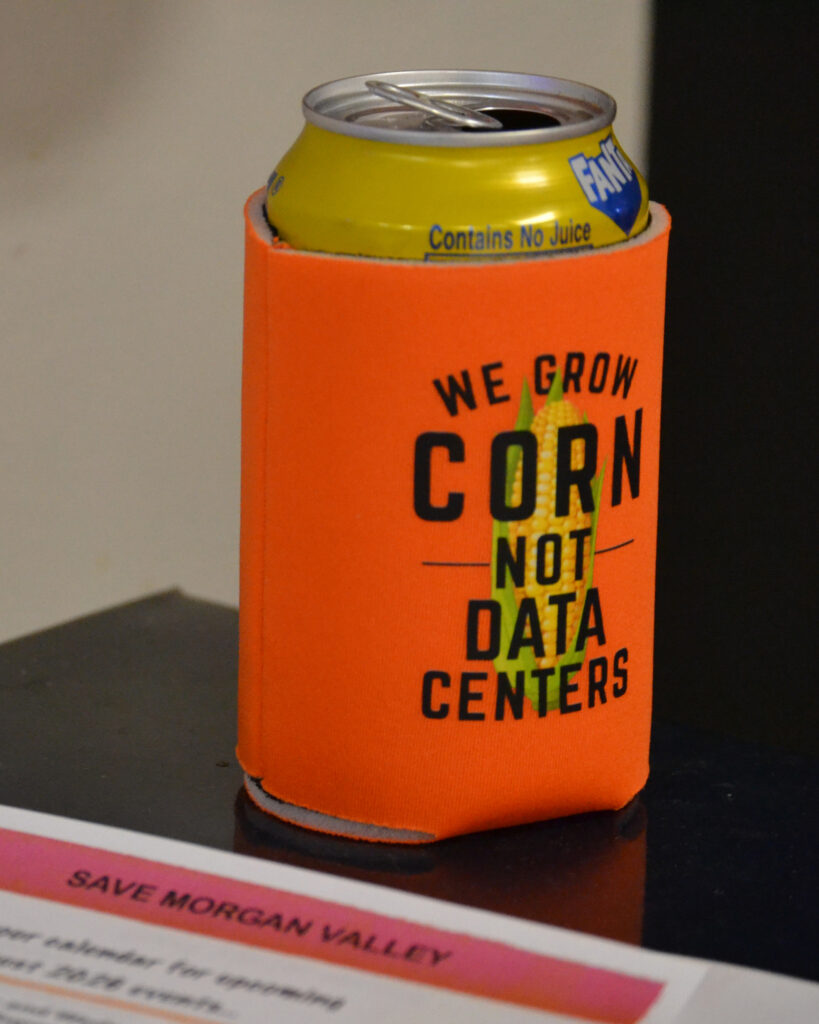
All summer long, the group mobilized opposition. Members invited neighbors to town halls, filed testimony with the Iowa Utilities Commission and presented a united front in matching orange shirts at county zoning commission and board of supervisor meetings.
Their persistence is paying off.
In October, the three-person Linn County Board of Supervisors voted unanimously to reject Alliant’s rezoning request for the proposed site, after nearly four hours of comments from residents and Alliant representatives.
Concerns raised by residents at the hearing spanned land use, water use and utility rates. But comments repeatedly returned to the projected emissions of the proposed plant.
“We’re living in an era of extraordinary technological advancement, and yet when it comes to powering that advancement we’re being told that building another fossil fuel power plant is the answer,” Jenny Kellison, of Fairfax, told the supervisors. “I find that incredibly disappointing.”
Supervisor Sami Scheetz voted against the rezoning request, arguing that Alliant’s proposal failed to meet county requirements for water and wastewater infrastructure. Still, he told Inside Climate News, the board’s decision reflected “overwhelming,” bipartisan community opposition to the plant being built.
“What was really important for me was a constituent just asking me, ‘Do you think this is good for the community?’ And I really didn’t feel comfortable saying yes to that,” Scheetz said.
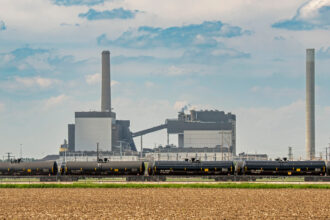
According to Alliant’s filings with the Iowa Utilities Commission, the Morgan Valley Energy Center would consist of three single-cycle combustion turbines, designed to start up quickly during periods of high load demand. The application notes possible plans to expand to a combined-cycle facility in the future.
“We are disappointed with the Linn County Board of Supervisors’ decision not to approve the Morgan Valley Energy Center application,” Alliant wrote in a statement to Inside Climate News.
“We’re living in an era of extraordinary technological advancement, and yet when it comes to powering that advancement we’re being told that building another fossil fuel power plant is the answer.”
— Jenny Kellison, Fairfax resident
The proposed power plant “is critical to meeting growing energy demand and supporting the reliable electric service that customers and communities depend on,” the utility added. “Alliant Energy has decades of experience safely operating energy infrastructure under rigorous regulatory and environmental oversight.”
Single-cycle gas “peaker” plants are significantly less fuel-efficient than combined-cycle plants, resulting in higher carbon dioxide emissions per unit of power generated. The Morgan Valley Energy Center would produce roughly one and a half million tons of carbon dioxide equivalents each year, according to Alliant’s air construction permit application with the state Department of Natural Resources.
While Alliant has not directly linked the additional generation to multiple hyper-scale data centers under development in and around Cedar Rapids, several company representatives acknowledged during the October hearing that the data centers have driven load growth across their service area.
“Alliant Energy does not build generation to serve a single customer or industry,” said Ben Rogers, a senior community and public affairs specialist for Alliant and a former Linn County supervisor. “Data centers are an important source of new demand, but they are not the only reason the electric system must continue to evolve.”
This story is funded by readers like you.
Our nonprofit newsroom provides award-winning climate coverage free of charge and advertising. We rely on donations from readers like you to keep going. Please donate now to support our work.
Donate NowGoogle and QTS are currently building side-by-side data center campuses on a 1,000-acre industrial lot in Cedar Rapids. When completed, the two campuses will use a combined 1.6 gigawatts of electricity.
This summer, the Linn County Board of Supervisors approved an 18-month moratorium on rezoning applications for large-scale data centers in unincorporated county territory. But the pause doesn’t apply to data centers in incorporated cities, including those in Cedar Rapids.
Google also moved to annex unincorporated Linn County land for a second hyper-scale data center campus into the small city of Palo this year, effectively freeing the project from county jurisdiction. That campus will purchase energy generated by the restarted Duane Arnold Energy Center, Iowa’s only nuclear facility.
The electricity demand spurred by data centers being built in Linn County cannot be overstated, said John Zakrasek, director of the nonprofit organization Linn Clean Energy District and board member of the Clean Energy Districts of Iowa.
If all three hyperscale campuses are built to full capacity, they will increase Linn County’s projected electricity demand nearly fivefold. “How are we going to meet that electricity demand? If we’re going to do it with fossil fuel plants, gas plants, and so on, we’re going to go ahead and push emissions way up,” Zakrasek said.
In 2019, Linn County adopted a climate resolution setting a goal of net-zero carbon dioxide emissions by 2050.
The proposed Morgan Valley Energy Center would run anywhere from 1,230 to 3,950 hours a year, according to filings with the Iowa Utilities Commission. At the high end, the facility would more than double Linn County’s current annual natural gas consumption, Zakrasek calculates.
The project fits into a nationwide trend of utilities turning to natural gas power plants to meet load growth from data centers. In states like Iowa with significant renewable energy infrastructure, gas peaker plants are proposed as easily dispatchable generation sources that can supplement the grid when demand spikes or wind and solar generation wane.
The Iowa Utilities Commission approved Alliant’s application for a 720-megawatt natural gas peaker plant in Marshalltown, Iowa in December.
Next month, roughly a year later, the Commission will hear arguments for and against the Morgan Valley power plant. The three-person utilities commission can overrule Linn County’s zoning decision, but the move would be unprecedented, Lee said.
Lee is one of more than 50 official intervenors in the docket, including Benton County, the Linn County Board of Supervisors and Iowa’s Office of the Consumer Advocate. In his testimony, he asked the commission to mandate a human health impact study for the proposed facility before approving the application.
“There is no reason for us to build power plants or data centers or anything if we’re harming the future generation, if we’re harming our environment,” he said.
About This Story
Perhaps you noticed: This story, like all the news we publish, is free to read. That’s because Inside Climate News is a 501c3 nonprofit organization. We do not charge a subscription fee, lock our news behind a paywall, or clutter our website with ads. We make our news on climate and the environment freely available to you and anyone who wants it.
That’s not all. We also share our news for free with scores of other media organizations around the country. Many of them can’t afford to do environmental journalism of their own. We’ve built bureaus from coast to coast to report local stories, collaborate with local newsrooms and co-publish articles so that this vital work is shared as widely as possible.
Two of us launched ICN in 2007. Six years later we earned a Pulitzer Prize for National Reporting, and now we run the oldest and largest dedicated climate newsroom in the nation. We tell the story in all its complexity. We hold polluters accountable. We expose environmental injustice. We debunk misinformation. We scrutinize solutions and inspire action.
Donations from readers like you fund every aspect of what we do. If you don’t already, will you support our ongoing work, our reporting on the biggest crisis facing our planet, and help us reach even more readers in more places?
Please take a moment to make a tax-deductible donation. Every one of them makes a difference.
Thank you,

Anika Jane Beamer
Reporter, Iowa
Anika Jane Beamer covers the environment and climate change in Iowa, with a particular focus on water, soil and CAFOs. A lifelong Midwesterner, she writes about changing ecosystems from one of the most transformed landscapes on the continent. She holds a master’s degree in science writing from the Massachusetts Institute of Technology as well as a bachelor’s degree in biology and Spanish from Grinnell College. She is a former Outrider Fellow at Inside Climate News and was named a Taylor-Blakeslee Graduate Fellow by the Council for the Advancement of Science Writing.